What is a Modular Synthesizer?
A modular synthesizer is a highly customizable musical instrument made up of separate modules that can be interconnected using patch cables. Each module performs a specific function, such as generating sound waves, filtering frequencies, modulating signals, or controlling timing and sequencing. By physically connecting these modules in various configurations, musicians can create complex sounds and unique signal flows that are impossible to achieve with traditional fixed-architecture synthesizers.
The beauty of modular synthesizers lies in their flexibility. Users can select individual eurorack modules or other format modules based on their personal preferences, sonic goals, and available space. This modularity allows for continuous expansion and modification, enabling musicians to tailor their system to their evolving creative needs. Unlike conventional synthesizers with preset signal paths, modular synths empower users to define the entire signal flow, from sound sources like oscillators to processing units like filters and effects.
Modular synthesis encourages exploration and experimentation. By patching modules in unconventional ways, users can discover new textures, rhythms, and timbres, making each modular system a unique musical instrument. This hands-on approach fosters a deep understanding of synthesis principles and sound design, making modular synthesizers highly regarded in the synth world for their creative potential and sonic versatility.
While modular synths offer immense power and customization, they often require a learning curve due to the complexity of patching and signal routing. However, this challenge is part of the appeal for many enthusiasts, who enjoy the tactile and interactive nature of modular synthesis. As users gain experience, they often expand their systems by adding more modules, creating a personalized eurorack system or other modular setups that reflect their musical identity.
Key Features of Modular Synths
Flexibility and Customization
Modular synthesizers stand out for their unparalleled flexibility and customization. Unlike traditional synthesizers with fixed signal paths, modular synths consist of individual modules—such as oscillators, filters, envelope generators, sequencers, and effects—that users can connect in virtually any configuration using patch cables. This modularity enables musicians to craft unique sounds and complex signal flows tailored precisely to their creative vision.
Expandability and Evolution
A defining characteristic of modular synths is the ability to continuously expand and modify the system. Users can add more modules over time, integrating new sound sources, modulation options, and processing units to enhance their setup’s capabilities. This ongoing evolution means that a modular synthesizer is never truly finished; it grows with the musician’s skills and artistic goals.
Hands-On Sound Design
The hands-on nature of modular synthesis encourages experimentation and deep engagement with sound design. By manually routing control voltages and audio signals, users develop a thorough understanding of synthesis principles, paving the way for innovative sonic exploration. The tactile interface—knobs, switches, and patch cables—provides an interactive experience that many musicians find inspiring and rewarding.
Learning Curve and Creative Freedom
Despite their power, modular synths often require a learning curve, especially for newcomers unfamiliar with concepts like control voltage, signal flow, and patching techniques. However, this complexity is balanced by the creative freedom and sonic possibilities offered. Many enthusiasts appreciate the active role they play in shaping every aspect of their sound, contrasting with the preset-based approach of many conventional synthesizers.
Formats and Compatibility
Modular synths also vary widely in format and size. The Eurorack standard is particularly popular due to its compact dimensions and vast ecosystem of compatible modules from numerous manufacturers. Other formats, such as Moog or MOTM, offer different physical sizes, connection types (e.g., banana jacks), and design philosophies, catering to diverse user preferences.
Integration with External Gear
Integration with external gear is another key feature. Modular systems often include MIDI interfaces or can be connected to MIDI-to-CV converters, allowing control via MIDI keyboards, sequencers, and drum machines. This connectivity expands performance options and facilitates blending modular synthesis with other music-making tools.
Best Modular Synthesizers
Behringer System 55 Complete Eurorack Modular Synthesizer

- Complete Eurorack Modular Synthesizer with 38 Modules
- MIDI-to-CV Converter
- 2 Eurorack Go Cases
The Behringer System 55 is a comprehensive Eurorack modular synthesizer that offers a rich palette of classic analog sounds inspired by the legendary Moog modular systems. Designed for both enthusiasts and professionals, this complete system provides a wide array of modules including oscillators, filters, envelope generators, and modulation sources, all housed in a spacious Eurorack case with reliable power connectors.
One of the standout features of the System 55 is its faithful recreation of vintage Moog modules, delivering the warm, rich tones that have defined electronic music for decades. The system includes multiple VCOs (voltage-controlled oscillators) that serve as versatile sound sources, capable of generating complex sounds ranging from deep basses to soaring leads. Its filters, modeled after the iconic Moog ladder filter, offer smooth and musical tone shaping, essential for crafting dynamic and expressive patches.
The modular design allows users to experiment extensively with signal flow using patch cables, enabling unique combinations and creative sound design. With a high functional density, the System 55 supports complex modulation routings, including connections to external sources like MIDI keyboards and sequencers through its MIDI interface, expanding its integration into modern setups.
This modular synthesizer is ideal for musicians seeking a complete system that balances classic analog character with the flexibility of Eurorack modules. Whether used in the studio or on stage, the Behringer System 55 offers great value and a powerful toolset for exploring the depths of modular synthesis. Its design encourages ongoing expansion and customization, making it a worthy centerpiece for any modular journey and a strong contender among the popular modular synths available today.
Moog Grandmother Semi-Modular Analog Keyboard Synthesizer

- Inspired by MOOG Classics - Monophonic semi-modular analog keyboard...
- No Patching Required 256 Note Sequencer - Record and playback sequences...
- Analog Spring Reverb - Add lush, expansive ambience to any sound; hardware...

The Moog Grandmother is a semi-modular analog synthesizer that offers a rich blend of classic Moog sound and modern playability. Designed with both beginners and experienced musicians in mind, the Grandmother features two voltage-controlled oscillators (VCOs) capable of producing a wide range of tones, from deep basses to bright leads. Its architecture combines traditional subtractive synthesis with a semi-modular signal path, allowing users to play the instrument straight out of the box or explore complex patching possibilities.
One of the Grandmother’s standout features is its iconic 24dB/octave Moog ladder filter, renowned for its warm and musical character. The synthesizer also includes a spring reverb tank, adding vintage-style ambiance and depth to sounds, which is a rare feature in modern semi-modular synths. With a patch bay comprising 41 points, users have extensive options for modulation, audio routing, and integration with other modular gear or Eurorack modules.
The instrument’s 32-note Fatar keyboard provides expressive control, supporting velocity and aftertouch, which enhances performance dynamics. Additionally, the built-in sequencer and arpeggiator enable creative rhythmic and melodic pattern generation without needing external devices. MIDI input and output facilitate seamless connectivity with other MIDI-compatible instruments and DAWs, making the Grandmother a versatile centerpiece in both studio and live setups.
Thanks to its flexible design, the Moog Grandmother serves as an excellent entry point into the modular world, offering hands-on experience with patch cables and control voltages while delivering the classic Moog sound that has shaped electronic music for decades. Its combination of user-friendly features, high-quality components, and sonic versatility makes it a highly regarded semi-modular synthesizer for musicians seeking both inspiration and exploration.
Pittsburgh Modular Taiga Semi-modular Paraphonic Synthesizer

- Semi-modular Analog Paraphonic Desktop Synthesizer with 3 oscillators...
- 2 ADSR/Envelope Generators
- Bucket Brigade Delay
The Pittsburgh Modular Taiga is a semi-modular paraphonic synthesizer that offers a unique blend of classic analog synthesis and modern modular flexibility. Designed with both beginners and seasoned synth enthusiasts in mind, the Taiga features two voltage-controlled oscillators (VCOs) capable of producing rich and complex sounds. Its paraphonic architecture allows users to play up to two notes simultaneously, with a shared filter and amplifier section, making it ideal for creating lush chords and evolving textures.
One of the standout features of the Taiga is its extensive patch bay, which provides numerous patch points for modulation, audio routing, and control voltage manipulation. This design encourages experimentation, allowing users to override the default signal path and explore creative sound design possibilities. The semi-modular nature means that while the synth can be played straight out of the box, it also integrates seamlessly with Eurorack modules and other modular systems, expanding its sonic capabilities.
The Taiga includes a classic 24dB/octave low-pass filter with resonance, adding warmth and character to the sound. Additionally, it features an ADSR envelope generator and a low-frequency oscillator (LFO) for modulation tasks, which can be routed internally or externally via patch cables. Its compact form factor makes it suitable for small spaces, while its robust build quality ensures reliability in both studio and live settings.
With MIDI input and a dedicated MIDI-to-CV interface, the Taiga can be controlled via MIDI keyboards and sequencers, bridging the gap between traditional digital control and analog sound generation. This makes it a versatile instrument for musicians looking to integrate modular synthesis into their existing setups.
Pittsburgh Modular Taiga offers great value and functional density, making it a compelling choice for those embarking on their modular journey or seeking a powerful semi-modular synth with paraphonic capabilities. Its combination of classic analog sound, flexible patching options, and MIDI control positions it as a highly regarded instrument in the semi-modular synth world.
Arturia MiniBrute 2S Semi-Modular Analog Synthesizer
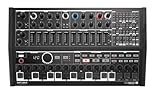
- Analog Synthesizer with 2 VCO's and 2 LFO's
- Steiner Parker filter with 4 modes: Low Pass, High Pass, Band Pass, Notch
- 1 ADSR envelope and 1 AD envelope
The Arturia MiniBrute 2S is a standout semi-modular analog synthesizer that combines classic analog sound generation with modern flexibility. Designed as a powerful base for both beginners and experienced musicians, it features two oscillators, a Steiner-Parker multimode filter, and a comprehensive 48-point patch bay that opens up vast possibilities for sound design and modulation.
One of the key strengths of the MiniBrute 2S is its built-in sequencer and arpeggiator, which allow for intricate rhythmic patterns and melodic sequences without the need for external gear. The sequencer is highly programmable, offering step editing, parameter locking, and multiple play modes, making it a versatile tool for live performance and studio work. The semi-modular design means that while the instrument has a default signal flow, users can override it with patch cables to explore complex routing and modulation options, encouraging experimentation and creative exploration.
Connectivity is another highlight, with MIDI input and output allowing seamless integration with other synths, drum machines, and DAWs. The presence of power connectors and a robust build quality ensure reliability during extended sessions. The MiniBrute 2S also offers excellent bang for your buck, delivering a rich analog sound with a wide palette of tones, from warm basses to aggressive leads and evolving textures.
Whether you’re embarking on your modular journey or looking to add a versatile semi-modular synth to your setup, the Arturia MiniBrute 2S provides a great value instrument that balances hands-on control with expansive sonic potential. Its intuitive front panel layout makes it accessible, while the extensive patch bay invites deeper exploration, making it a pretty unique and powerful tool in the semi-modular synth world.
Conclusion
Modular synthesis opens up a world of sonic possibilities, inviting musicians to dive into hands-on creativity and endless experimentation. Whether you’re crafting intricate textures, sculpting unique tones, or exploring new musical landscapes, the modular world offers a dynamic playground where your imagination sets the limits. Embracing the journey means embracing constant growth, innovation, and the thrill of discovering sounds that are truly your own.
FAQ
How do modular synths differ from semi-modular synths?
Modular synths require users to manually patch virtually all connections between modules, offering maximum flexibility and customization. Semi-modular synths, on the other hand, come with a pre-wired signal path that can be overridden with patch cables, making them more accessible for beginners while still allowing for creative patching.
Can I integrate MIDI devices with modular synths?
Yes. Many modular synthesizers include MIDI interfaces or can be connected to external MIDI-to-CV converters. This enables control of modular systems using MIDI keyboards, sequencers, and other MIDI-enabled gear, expanding performance and sequencing possibilities.
What are control voltages (CV) in modular synthesis?
Control voltages are electrical signals used to control parameters within a modular synthesizer, such as pitch, filter cutoff, or amplitude. By varying the voltage levels sent through patch cables, users can create dynamic modulations and complex sound behaviors.
How do I start building my own modular system?
Begin by identifying your musical goals and the types of sounds you want to create. Start with essential modules like oscillators, filters, and envelope generators. Choose a format (such as Eurorack) and ensure your power supply matches your modules’ requirements. Expand your system gradually as you become more familiar with patching and synthesis.
Are modular synthesizers suitable for beginners?
While modular synths can seem complex, many beginners find them rewarding due to their hands-on nature and creative potential. Starting with semi-modular synths or small Eurorack systems can ease the learning curve. Additionally, online communities and tutorials provide excellent support for newcomers.
What is the difference between East Coast and West Coast synthesis?
East Coast synthesis, pioneered by Bob Moog, typically involves subtractive synthesis with oscillators, filters, and envelopes to shape sounds. West Coast synthesis, associated with Don Buchla, emphasizes wavefolding, complex modulation, and unique signal processing techniques. Many modern modular synths blend elements of both styles.
How important is power supply in a modular system?
A reliable power supply is critical for stable operation. Different modules may require various voltages (+12V, -12V, +5V), and incorrect power can damage modules. When building a modular system, ensure your power supply provides the correct voltages and sufficient current for all modules.
Can modular synthesizers be used live?
Absolutely. Many musicians use modular synths in live performances due to their expressive capabilities and unique sounds. Portable cases and compact Eurorack systems make it feasible to bring modular setups on stage. However, live use may require careful planning of patching and power management.