What is a Bass Synth?
A bass synth is a type of synthesizer specifically designed to produce low-frequency sounds, such as bass lines and deep bass tones, which form the foundation or “bottom end” of many music genres. Unlike general synthesizers that cover a wide range of frequencies and sounds, a dedicated bass synth focuses on delivering powerful, punchy, and well-defined bass sounds that can be felt as much as heard. These instruments are capable of generating a variety of bass tones, from smooth and warm sub-bass to aggressive and growling textures, making them essential tools for music production, especially in electronic, hip-hop, techno, and pop music.
Bass synths typically feature one or more oscillators—often two oscillators and a sub oscillator—that generate the raw waveforms used to create bass sounds. The filter section plays a crucial role in shaping the sound, allowing the user to sculpt the tone by adjusting parameters like cutoff frequency and resonance. Modulation capabilities, such as envelopes and LFOs, add movement and expression to the bass lines. Many bass synths also include features like arpeggiators and sequencers to facilitate complex bass patterns and grooves.
The design of a bass synth often emphasizes ease of use and quick access to key sound-shaping controls, enabling musicians to dial in the perfect bass tone efficiently. Some bass synths come with a keyboard, while others may be controlled via MIDI or CV/Gate from external devices or computers. Whether in hardware or software form, bass synths have become indispensable gear for musicians and producers aiming to create compelling and dynamic bass parts that anchor their tracks with depth and power.
Types of Bass Synths
Bass synths come in various types, each offering distinct characteristics and advantages depending on the sound and workflow you desire.
Analog Bass Synths
Analog bass synths use continuous electrical signals to generate sound, producing warm, rich, and organic tones that are highly prized in many music genres. These synths often feature voltage-controlled oscillators (VCOs), filters, and amplifiers, which contribute to their characteristic sound. Classic examples include the Moog Minitaur and Roland SH-101. Analog synths are known for their thick, punchy bass tones and the ability to create dynamic, expressive sounds through hands-on control.
Digital Bass Synths
Digital bass synths use digital signal processing (DSP) to generate sounds. This allows for a wider range of sonic possibilities, including complex waveforms, wavetables, and built-in effects. Digital synths often come with preset storage, making it easy to recall sounds during live performance or studio sessions. They tend to have a cleaner and more precise sound compared to analog synths. Popular digital bass synths include the Novation Bass Station II and various software synthesizers used as virtual instruments in digital audio workstations (DAWs).
Hybrid Bass Synths
Hybrid bass synths combine analog and digital technologies to offer the best of both worlds. They may use analog oscillators with digital modulation or effects, or vice versa. This approach allows for warm, rich tones alongside modern versatility and features. Instruments like the Arturia Minibrute 2/2S exemplify this category, providing semi-modular designs and extensive modulation capabilities.
Monophonic vs. Polyphonic Bass Synths
Most bass synths are monophonic, meaning they play one note at a time, which suits bass lines that typically require single-note melodies. However, some bass synths offer polyphony, enabling multiple notes to be played simultaneously, which is useful for creating more complex bass chords or layering bass sounds with leads.
Hardware vs. Software Bass Synths
Hardware bass synths are physical instruments that offer tactile controls, often preferred by musicians who value hands-on sound design and live performance. Software bass synths, on the other hand, run within a computer environment as virtual instruments, providing vast flexibility, preset libraries, and integration with DAWs. Many producers use a combination of both, leveraging hardware for unique sound textures and software for convenience and versatility.
Key Features of Bass Synths
Bass synths are specifically designed to deliver the low-frequency sounds that form the foundation of many music genres. Several key features distinguish a great bass synth and contribute to its ability to produce deep, powerful bass tones.
Oscillators and Sub Oscillators
At the heart of any bass synth are its oscillators, which generate the raw waveforms used to create sound. Most bass synths feature two oscillators, allowing for richer and more complex bass tones through detuning, layering, or blending different waveforms such as sine, sawtooth, square, or pulse waves. A sub oscillator often complements the main oscillators by producing a tone one or two octaves below, adding extra depth and weight to the bass sound.
Filter Section
The filter section is crucial for shaping the tonal character of the bass. Low-pass filters are commonly used to remove higher frequencies, emphasizing the deep low end. Adjustable parameters like cutoff frequency and resonance allow musicians to sculpt the sound from smooth and warm sub-bass to aggressive, growling textures. Some bass synths offer multi-mode filters or switchable filter types, providing additional versatility in tone shaping.
Modulation Capabilities
Modulation options such as envelopes and low-frequency oscillators (LFOs) add movement and expression to bass sounds. Envelopes control how the sound evolves over time, affecting parameters like amplitude and filter cutoff. LFOs can modulate pitch, filter, or amplitude to create vibrato, wah effects, or rhythmic pulsing. Advanced bass synths may include multiple modulation sources and destinations, enabling intricate sound design possibilities.
Performance Features
Many bass synths include performance-oriented features such as arpeggiators and sequencers, which automate note patterns and enable complex bass grooves. Velocity-sensitive keyboards, aftertouch, and pitch/modulation wheels provide expressive control during live playing. Some synths also offer preset storage for quick recall of favorite bass patches.
Connectivity and Control
Connectivity options like MIDI, USB, and CV/Gate support are important for integrating bass synths into modern studio and live setups. This allows control from external keyboards, sequencers, or DAWs, facilitating hybrid hardware-software workflows. Some bass synths come with built-in audio inputs to process external signals through their filters and effects.
Build and Interface
A well-designed user interface with dedicated knobs and sliders for key parameters makes it easier to quickly dial in the desired bass sound. Hardware bass synths often emphasize tactile control and durability, catering to musicians who value hands-on sound shaping and reliable performance gear.
Best Bass Synths
Moog Subsequent 37 Paraphonic Analog Synthesizer

- Ultra-Powerful Analog Synthesizer - Subsequent 37's control panel includes...
- Enhanced Playability - Featuring a 2-note paraphonic keybed that includes...
- Multiple Sound Sources - 2 Variable Waveshape Oscillators, 1 Square Wave...

The Moog Sub 37 is a powerful paraphonic analog synthesizer that builds on the legacy of the original Minimoog while introducing modern enhancements. It features two oscillators per voice, allowing for rich and complex bass tones that can be thick, warm, and punchy. The paraphonic design means it can play two notes simultaneously, which adds versatility for bass lines and leads, making it stand out among primarily monophonic bass synths.
One of the key strengths of the Subsequent 37 is its legendary Moog ladder filter, renowned for its smooth, musical resonance and ability to shape bass sounds with precision. This filter section is particularly effective at producing deep bass tones with a characteristic warmth and growl that many musicians seek. The synth also offers extensive modulation capabilities, including multiple envelopes and LFOs, enabling dynamic and evolving bass lines with expressive control.
Performance features such as aftertouch, pitch and modulation wheels, and a responsive keyboard make the Subsequent 37 ideal for live playing and studio production. Its robust build quality and intuitive interface provide a hands-on experience that appeals to both beginners and seasoned synth enthusiasts.
Connectivity options include MIDI, USB, and CV/Gate, ensuring seamless integration with a wide range of hardware and software setups. This makes the Subsequent 37 a versatile choice for musicians who want the classic analog sound of the original Minimoog combined with modern flexibility.
Moog Sub 37 is considered one of the best bass synths available, delivering the iconic Moog bass sound with enhanced features and paraphonic capabilities. It is well-suited for genres ranging from techno and house to funk and beyond, making it a valuable addition to any music production or live performance rig.
Erica Synths Bassline DB-01 Desktop Bassline Synthesizer

- Analog Synthesizer Module
- 64 Pattern Save Slots
- Pattern Randomizer
The Erica Synths DB-01 is a groovebox-style bass synthesizer designed specifically for creating dynamic, pattern-driven basslines with a bold analog sound. Featuring a trio of oscillators that output saw, square, and triangle waves simultaneously, the DB-01 delivers a thick and harmonically rich bass foundation. Its powerful sub oscillator adds extra depth and punch, ensuring that the bass cuts through any mix with authority.
One of the standout features of the DB-01 is its resonant low-pass filter, which is well-suited for producing classic acid-style squelches as well as smooth, cutting tones. This filter section offers precise control over resonance and cutoff, allowing musicians to sculpt bass sounds ranging from deep and mellow to aggressive and growling. The built-in sequencer is another highlight, enabling users to craft intricate, evolving bass patterns with ease. Performance features such as accent and slide add expressivity and groove, making the DB-01 ideal for live sets and studio production alike.
Beyond its sonic capabilities, the DB-01’s compact desktop design makes it highly portable and easy to integrate into various setups. Its MIDI and CV/Gate connectivity ensure compatibility with modern DAWs, external controllers, and modular systems. Whether you’re producing techno, acid house, or other bass-heavy electronic genres, the Erica Synths DB-01 stands out as a versatile and powerful tool for crafting compelling bass lines.
In addition to its core features, the DB-01 encourages experimentation through its hands-on interface and modulation options. Users can manipulate parameters in real-time, creating evolving textures and rhythmic variations that keep bass parts fresh and engaging. Its analog circuitry imparts a warmth and character that digital synths sometimes lack, making it a favorite among musicians seeking authentic analog bass tones.
Novation Bass Station II Analog Monosynth

- Create a huge variety of sounds- Two tuneable, analogue oscillators offer a...
- Enormous bass and shrieking leads- Switch the Classic Filter between low...
- Improved analogue filter stage- Two distinct analogue filter types: the...
The Novation Bass Station II is a highly versatile analog bass synth that has earned its reputation for delivering punchy, rich bass tones with impressive harmonic depth. It features dual oscillators and a sub oscillator, which together provide a thick and powerful low end suitable for a wide range of music genres. Its filter section is particularly notable, offering a dual-mode filter that can switch between classic smooth tones and more aggressive, acid-style resonant sounds, making it adaptable to various styles from techno to funk.
One of the standout features of the Bass Station II is its extensive modulation capabilities, including multiple envelopes and LFOs, which allow users to craft dynamic and evolving bass sounds with ease. The onboard arpeggiator and step sequencer add performance flexibility, enabling musicians to create complex bass patterns and grooves without external gear. Additionally, its velocity-sensitive keyboard with aftertouch enhances expressive playing, making it a favorite for live performance and studio work alike.
Connectivity options such as MIDI and USB ensure seamless integration with modern DAWs and hardware setups, allowing producers to incorporate the Bass Station II into hybrid workflows effortlessly. Despite its powerful feature set, the Bass Station II remains relatively affordable, offering excellent value for musicians seeking a dedicated bass synth that sounds great and is easy to use. Its robust build and intuitive interface make it accessible for beginners while still satisfying the needs of experienced synth enthusiasts.
Novation Bass Station II stands out as a reliable and flexible instrument, capable of producing everything from deep, smooth sub-bass to aggressive, growling bass lines. Its combination of analog warmth, digital control features, and performance tools make it one of the best bass synths available for both studio electronics setups and live music production.
Roland TB-03 Bass Line Boutique Synthesizer
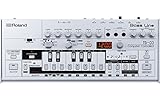
- Realistic recreation of the iconic tb-303 bass line Synth
- New features not found on the original tb-303, including four-digit LED...
- Retains the sound, character, and user interface of the original tb-303
The Roland TB-03 is a modern boutique recreation of the iconic TB-303 bass synthesizer, famed for its distinctive acid house basslines and squelchy, resonant sounds. Released as part of Roland’s Boutique series, the TB-03 packs the classic character of the original 303 into a compact, portable form factor with updated features suited for contemporary music production and live performance.
At its core, the TB-03 features a single oscillator capable of producing both sawtooth and square waveforms, which can be routed through a resonant low-pass filter reminiscent of the original’s signature squelch. The filter’s cutoff and resonance controls allow for expressive shaping of the bass tone, from smooth and rounded lows to aggressive, biting acid sounds that have become synonymous with electronic dance music.
One of the TB-03’s highlights is its built-in sequencer, which lets users program intricate bass patterns with accent and slide functions that add groove and movement to basslines. This sequencer is faithful to the original’s style but enhanced with modern conveniences such as real-time tempo sync, shuffle, and pattern chaining, making it easier to create evolving sequences on the fly.
Despite its small size, the TB-03 offers versatile connectivity options including MIDI and USB, allowing seamless integration with DAWs, external controllers, and other hardware gear. Its compact design and battery-powered operation make it ideal for mobile setups and live performances where portability is key.
Korg Volca Bass Analog Synthesizer

- Powerful analog bass sound creation with three oscillators for a variety of...
- Electribe-inspired sequencer for generating ultimate bass lines and grooves
- Aggressive sounds that stand up to the drums; fat sounds that support the...
The Korg Volca Bass is a compact, affordable analog bass synthesizer that packs a surprising amount of power for its size. Designed with portability and ease of use in mind, it features three oscillators that can be combined to create thick, rich bass tones. Each oscillator offers different waveforms, including sawtooth and square waves, which can be layered and detuned for a wide range of classic analog bass sounds. The Volca Bass also includes a resonant low-pass filter, giving users the ability to shape the tone with warmth and character, from smooth sub-bass to aggressive growls.
One of the standout features of the Volca Bass is its built-in sequencer, which allows for hands-on creation of complex bass patterns and grooves. This makes it a popular choice for live performers and producers who want to quickly sketch out bass ideas without needing external gear. The compact size and battery-powered operation make it ideal for musicians on the go or those with limited studio space.
Despite its affordable price point, the Korg Volca Bass sounds great and holds its own against larger, more expensive bass synths. It’s generally considered a bit hard to master at first due to its straightforward but limited control layout, but with some practice, it becomes a highly versatile tool capable of delivering everything from punchy, driving bass lines to deep, rumbling sub frequencies. Its distinctive analog sound and portability make it a cool addition to any synth setup, especially for those seeking a dedicated bass synth that is both cheap and powerful.
Korg Volca Bass is a great entry point for musicians looking to explore analog bass synthesis without a significant investment. It offers a unique blend of classic analog character, performance features, and portability, making it a valuable synth bass instrument for both beginners and experienced users alike.
Conclusion
Whether you’re laying down the foundation of a pulsating dance track or adding subtle depth to a smooth groove, a bass synth brings the low end to life with rich, dynamic tones and endless sonic possibilities. Its power to shape the mood and drive the rhythm makes it an essential tool for musicians and producers looking to create basslines that resonate and captivate. Embrace the creative journey of crafting bass sounds that not only fill the space but also define the heartbeat of your music.
FAQ
What is the difference between analog and digital bass synths?
Analog bass synths generate sound using continuous electrical signals, resulting in warm, rich tones with strong low-end presence. Digital bass synths use digital signal processing to create sounds, offering greater versatility, onboard effects, and preset storage. Analog synths are often favored for their organic character, while digital synths provide more features and easier integration with modern production setups.
What features should I look for in a bass synth?
Look for a synth with well-defined, deep, and powerful bass sounds, versatile oscillators (often dual oscillators plus a sub-oscillator), a flexible filter section with resonance control, and modulation capabilities such as envelopes and LFOs. Additional features like arpeggiators, sequencers, and connectivity options (MIDI, CV/Gate) enhance creative possibilities.
What is the role of the filter section in a bass synth?
The filter shapes the tonal character of the bass sound by cutting or boosting frequencies. Adjusting cutoff frequency and resonance can create everything from smooth, deep subs to sharp, growling bass tones. It is a crucial component for sound design and expression.
How do oscillators affect bass synth sounds?
Oscillators generate the raw waveforms (sine, saw, square, pulse) that form the basis of the sound. Having multiple oscillators, including sub-oscillators, allows for richer, thicker bass tones and more complex sound design.
What is the benefit of having an arpeggiator or sequencer in a bass synth?
Arpeggiators and sequencers automate note patterns, enabling complex and rhythmic basslines that might be difficult to play manually. They are valuable tools for live performance and music production.