Harman IEM Tuning Explained
Harman tuning is a sound balance informed by Harman’s in-ear listener-preference research, associated with researchers including Sean Olive. It describes a frequency-response target, not a particular driver technology.
For this guide, the reference is the Harman IE 2019 target, commonly displayed as Harman IE 2019 v2 in measurement databases. Its characteristic sound combines an elevated bass shelf with prominent upper midrange.
In practical terms:
1. Bass elevation gives electronic bass lines, kick drums, and cinematic effects weight.
2. Upper-midrange presence brings vocals and instrumental attacks forward.
3. The overall balance aims to keep bass impact from overwhelming vocal intelligibility.
“Harman-tuned” is not a certification. Some IEMs closely resemble the target through much of the audible range; others are merely Harman-inspired. Neither description guarantees that you will enjoy the sound, particularly if you prefer warmer vocals or restrained presence
Best Harman-Tuned IEMs
Simgot SuperMix 4

The Simgot SuperMix 4 combines a dynamic driver, balanced-armature driver, micro-planar driver, and piezoelectric transducer in each earpiece. This four-driver arrangement gives the designer several tools for shaping the response, but it is not proof of superior sound.
Its value proposition lies in offering a broadly Harman-oriented balance at a mid-range position. Deep bass accompanies clearly projected vocals, making it relevant to buyers seeking an engaging presentation without moving into premium territory.
SuperMix 4 is reasonably described as a close Harman-style match through much of the bass and midrange. That label needs a frequency-range qualification: upper treble is more dependent on the fixture, insertion depth, and individual ear canal than the lower-frequency response.
The most important tonal caveat is upper-midrange intensity. Vocals and brass can sound vivid and immediate, but listeners who prefer relaxed presence may hear that same quality as thinness or shoutiness. Raising the volume can make the difference more noticeable.
This concern is separate from sibilance. A forceful vocal fundamental and a sharp “s” sound involve different frequency regions, so one broad “brightness” label does not tell the whole story.
Source compatibility also deserves more attention than it does with many conventional IEMs. SuperMix 4 has a very low nominal impedance, approximately 7.2 ohms, making a low-output-impedance source desirable. A capable dongle can be sufficient; an expensive amplifier is not inherently necessary.
Its detachable cable supports replacement, while tip selection provides scope to improve seal and comfort. Neither cable upgrades nor driver variety should take priority over getting those basics right.
Verdict: A compelling mid-range option for listeners who enjoy lively Harman-style vocals and can pair it with a suitably low-output-impedance source.
Moondrop Variations

- Seek for the perfect compatibility of Tribrid IEM :The development of...
- 0.78mm universal detachable interface ,Standard PCC coaxial single crystal...
- Low non-linear distortion, accurate and clean sound:With the reasonable...
The Moondrop Variations is a premium hybrid IEM using one dynamic driver, two balanced-armature drivers, and two electrostatic-type treble drivers per side. Its design aims to combine low-frequency extension, clear mids, and extended high-frequency reproduction.
For a Harman-tuning buyer, the central attraction is its familiar tonal structure: substantial sub-bass, restrained lower-midrange warmth, and prominent vocal presence. It is a close Harman-style candidate, rather than a promise of exact adherence throughout the treble.
Variations makes the most sense for listeners who already know they enjoy this balance. Buying it as a first experiment is less prudent than first establishing whether you like pronounced sub-bass alongside leaner lower mids.
What can spending more offer? Its dedicated bass driver, multi-way acoustic design, and treble system provide a different implementation of the target-oriented sound. Buyers may value its presentation of bass texture, separation, and high-frequency detail. Those qualities remain listening judgments, however, and are not guaranteed by its driver specifications.
The important limitation is that bass extension does not necessarily mean abundant warmth. Variations emphasizes deep bass more than the upper-bass region that gives instruments weight. Male vocals and acoustic instruments can therefore sound lighter than expected despite impressive rumble.
The substantial shells and nozzle fit also deserve consideration. A premium IEM that causes discomfort is poor value, regardless of its acoustic design. Use a seller with a clear return policy if you cannot establish fit beforehand.
Verdict: Consider Variations when you already enjoy its sub-bass-focused, clear-vocal balance and want a premium implementation—not simply because it costs more.
Truthear x Crinacle ZERO
- Glue-Dropping Molding Capping Process: ZERO whole cavity adopts a sandwich...
- Age range descriptionAdult
- Excellent Objective Indicators: ZERO has a proper low-frequency gain and...
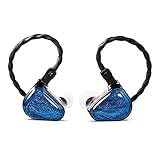
The original blue Truthear x Crinacle ZERO is a dual-dynamic-driver IEM designed around a Harman-style balance. It is distinct from ZERO: RED, which uses a different tuning approach. Do not assume that recommendations for one automatically apply to the other.
Its defining feature is a division of labor between the dynamic drivers: one handles the lowest frequencies, while the other covers the remaining range. The practical benefit is a pronounced bass shelf alongside clear vocal presence, rather than bass that broadly thickens the entire midrange.
For buyers exploring original blue Truthear ZERO Harman tuning, this makes it a more straightforward proposition than the Castor. There are no tuning switches to configure. You choose the appropriate ear tips, connect the cable, and hear its intended tonal balance.
The ZERO is a close Harman-style match across substantial portions of its response, although “close” should not be mistaken for identical at every frequency. Bass transitions and treble behavior still distinguish it from other target-oriented IEMs.
Its bass presentation suits listeners who want rumble and impact without consistently warm, heavy vocals. Conversely, people who prefer fuller lower mids may find the contrast between the bass shelf and vocal region less natural.
Fit deserves particular attention. The original ZERO is associated with relatively broad nozzles, but a single diameter can be misleading because the nozzle shaft and retaining lip differ. Confirm dimensions for the exact model if you already know your preferred fit; it should not be assumed comfortable for narrow ear canals.
A detachable cable adds replacement flexibility, but fit remains the more important everyday consideration.
Verdict: Choose the original blue ZERO for a fixed, bass-forward Harman-style presentation, provided its nozzle and shell geometry suit your ears.
Truthear Nova

- Adopting the polyurethane suspension composite liquid crystal dome...
- Efficient Driver-configuration. NOVA is a 1DD+4BA in-ear headphone with...
- Accurate Hybrid Frequency Division. The acoustic waveguide structure with...
The Truthear Nova is a hybrid IEM combining one dynamic driver with four balanced-armature drivers per side. Its strongest reason for inclusion is its target-oriented frequency response—not the number of drivers inside each shell.
For listeners prioritizing IEMs that follow the Harman IE 2019 target, Nova is a particularly relevant candidate. Its response shows the familiar combination of elevated low bass, relatively restrained lower-midrange warmth, and a clear upper-midrange rise.
That balance makes it suitable for buyers who want vocals to remain intelligible over powerful bass lines. Electronic music and modern pop can benefit from the separation between low-frequency weight and vocal presence. However, this is a tonal preference, not a genre restriction: acoustic recordings can also sound engaging if you enjoy a clean, forward presentation.
Nova belongs in the close-match category, with the important qualification that target alignment varies by frequency, measurement setup, and fit. An excellent-looking bass-to-midrange overlay cannot establish that every treble peak will behave identically in your ears.
Its principal tonal trade-off is reduced warmth relative to richer alternatives. Lower-pitched voices, guitars, and piano may have less body than listeners accustomed to warmer IEMs expect. The upper-midrange emphasis can also become tiring if you are sensitive to prominent vocals.
The shells require attention as well. Multiple drivers and internal acoustic passages occupy space, so assess both nozzle fit and how the body rests against your outer ear. A secure seal should not require uncomfortable pressure.
Verdict: A strong mid-range candidate for buyers who prioritize Harman-target similarity and accept a relatively lean, vocal-forward balance.
Choosing a Harman-Tuned IEM
Upper-Midrange Sensitivity
Upper-midrange presence helps vocals sound clear and immediate. Too much for your preferences can make singers seem forceful or shouty, especially at higher volumes.
This differs from treble sibilance, which emphasizes “s” and “sh” sounds. If vocals are uncomfortable but cymbals are acceptable, a modest upper-midrange EQ reduction may help more than broadly lowering treble.
Fit and Ear-Tip Seal
An inadequate ear-tip seal reduces bass, potentially turning a balanced IEM into something thin and bright. Insertion depth also changes ear-canal resonances and the treble you hear.
Prioritize comfortable, repeatable placement and practical return options. Do not force deep insertion to imitate a graph.
When reading frequency-response measurements, compare compatible fixtures and target curves. An IEC 60318-4 ear simulator, often called a 711-style coupler, and a B&K Type 5128 do not produce directly interchangeable results. Unadjusted overlays can mislead, particularly at high frequencies.
Source Compatibility
A separate DAC or amplifier is unnecessary when your existing source supplies adequate clean volume without hiss or tonal changes.
Consider sensitivity, impedance, output impedance, and listening level together. Sensitivity figures expressed per volt and per milliwatt are not interchangeable.
Low-output-impedance dongles are often practical for multi-driver IEMs. More power is useful only when needed; it is not a universal upgrade. Parametric EQ can adjust tonal balance more directly than changing an already suitable source.
Harman vs New Meta Tuning
Harman-style IEMs typically combine a distinct bass shelf with strong upper-midrange presence. Depending on the implementation, that can produce satisfying rumble, clean separation, and forward vocals.
“New Meta” is an informal umbrella term, not one standardized target. It often describes tunings informed by newer measurement approaches, including B&K 5128-based references, with less prominent upper mids and a fuller transition through the lower midrange.
Neither approach is universally superior. Consider Harman when you enjoy clear vocal projection and low-bass contrast. Explore other balances if you prefer warmer instruments or find vocal presence tiring. Individual implementations matter more than the label, and EQ can narrow many tonal differences.
FAQ
What does Harman-tuned mean for IEMs?
Harman-tuned means an IEM’s sound balance is informed by Harman’s in-ear listener-preference targets. A close match resembles a specified target across much of its measured response; Harman-inspired tuning follows the general bass-and-vocal balance more loosely. The label is not certification, and the target version should be identified.
Are Harman-tuned IEMs too bright?
Not necessarily. Some listeners find Harman’s upper-midrange emphasis intense, while others hear welcome vocal clarity. Brightness also depends on treble behavior, recording quality, listening volume, and seal. Products differ substantially, so distinguish forceful vocals from sibilant consonants before deciding whether a tuning adjustment would help.