New Meta Tuning Explained
Meta tuning in IEMs is an informal term for a recent tuning trend often associated with JM-1-based references and listener-preference adjustments. Many examples combine elevated bass, a balanced midrange, and restrained upper-midrange energy. It is not an official standard, and individual models—and listener preferences—still differ.
In practical terms, many new meta IEMs aim for a warm-to-neutral balance. A bass shelf supplies low-frequency weight, while comparatively restrained upper mids can make vocals and guitars less forceful. Implementations vary: some emphasize deep sub-bass, others add more mid-bass warmth, and treble can still be energetic.
JM-1 as a Tuning Reference
JM-1 provides an anatomical reference derived from a population-average diffuse-field HRTF. A head-related transfer function describes how anatomy changes sound reaching the eardrum; diffuse-field refers to sound arriving from many directions.
Preference adjustments turn that reference into a listening target. The commonly discussed “10 dB downward tilt” describes a broad low-to-high-frequency slope across a specified frequency span—not a standalone 10 dB bass boost. Different tilts and bass adjustments produce different balances.
Consequently, the best JM-1 IEMs for one listener need not follow the same adjustment as another listener’s favorites.
Meta Tuning vs. Harman IE 2019
Many meta-associated implementations sound warmer and less upper-midrange-forward than typical Harman IE 2019 implementations. Harman-style tuning can make vocals more prominent, while a warmer balance may give instruments greater body.
Neither approach is inherently better. Compare frequency-response graphs using compatible references and measurement conditions: a B&K 5128 measurement and a traditional 711-style coupler graph cannot be treated as directly equivalent.
Best New Meta Tuning IEMs
Kiwi Ears Astral
No products found.
Buyer verdict: Consider the Kiwi Ears Astral if you want an upper-mid-range hybrid with a substantial low-frequency foundation and are willing to examine its treble balance carefully.
The Astral uses one dynamic driver and six balanced-armature drivers per earpiece. That configuration gives its designers several ways to distribute frequency reproduction, but it is not proof of better resolution or imaging. The meaningful buying question is whether its bass, vocal presence, and high-frequency energy match your preferences.
Its bass-supported balance places it within the conversation around modern meta-associated tuning. However, it should not be mistaken for an automatically dark or fatigue-free option. A less aggressive upper midrange can coexist with noticeable upper-treble energy, so listeners seeking restrained sparkle should be particularly cautious.
For electronic music, pop, and cinematic recordings, a substantial bass foundation can provide satisfying scale. With acoustic material, the important question becomes whether the added weight preserves the degree of vocal and instrumental separation you enjoy. More bass does not necessarily mean less clarity, but its distribution matters.
The Astral makes more sense than an inexpensive entry-level option when you already know that you enjoy this general balance and want a more ambitious hybrid implementation. Buying it solely because it has seven drivers per side misses the point.
Fit deserves equal attention. A multi-driver shell must accommodate considerable internal hardware, and its shape may matter more than its appearance. Check documented shell and nozzle measurements where available, and choose a seller with a workable return policy.
Main limitation: Its high-frequency presentation may not suit listeners who interpret “meta” as synonymous with soft treble.
Verdict: A worthwhile upper-mid-range candidate for bass-supported listening, provided treble tolerance and physical fit take priority over driver-count expectations.
THIEAUDIO Hype 4 MKII

- Completely Redesigned for Performance: The HYPE 4 MKII is not just a...
- Gen 2 IMPACT2: The HYPE 4 MKII incorporated the latest generation of the...
- Imported Knowles BA Drivers: The MKII design was developed from the ground...
Buyer verdict: Consider the THIEAUDIO Hype 4 MKII if you want a premium hybrid, conventional analog playback, and a substantial build without making DSP part of your listening routine.
The listed MKII configuration combines two dynamic drivers with four balanced-armature drivers in CNC-machined aluminum shells. Its positioning combines an engaging presentation with studio-neutral aspirations. That description signals its intended direction, but it does not establish an exact JM-1 match or guarantee the same sound as other neutral-tuned IEMs.
The main appeal is a premium all-rounder approach. Rather than choosing a deliberately lean monitor or an overtly bass-dominated earphone, the intended buyer wants low-frequency authority alongside clear mids. That balance can be useful across varied libraries, where one highly specialized signature may become limiting.
Nevertheless, two dynamic drivers are not inherently superior to one. Bass control, distortion, acoustic loading, and crossover integration determine whether additional hardware produces a useful result. Likewise, balanced armatures do not automatically make vocals more accurate.
The MKII suffix deserves attention when researching. Measurements, accessories, shell information, and sound descriptions for the original Hype 4 should not automatically be applied to this revision. Confirm that any graph or product specification you use names the exact model.
Its aluminum construction is a practical distinction, but material alone does not establish comfort or longevity. Shell contours, weight distribution, connector construction, and cable strain relief remain important. A premium purchase should also come with clear warranty support.
Compared with a DSP-centered approach, conventional analog playback keeps device setup simpler. You still need a suitable headphone output or dongle, but no particular equalization preset is required merely to use the earphones.
Main limitation: Premium positioning does not establish superior imaging or an ideal tonal match.
Verdict: A sensible premium shortlist entry for buyers prioritizing an analog hybrid, exact-version research, and dependable ownership support.
DUNU DN142

- 【Professional Audiophile In-Ear Monitor】Engineered for critical...
- 【Dual Planar Magnetic Driver Technology】Experience electrostatic-like...
- 【Neutral-Reference Tuned Earphones】DN142 follows a "relaxed and...
Buyer verdict: Consider the DUNU DN142 if you want an ambitious hybrid architecture and are prepared to judge its complete tuning rather than the novelty of its driver combination.
The DN142 is listed with one dynamic driver, four balanced-armature drivers, and two planar drivers per earpiece. That makes it one of the more elaborate configurations here. Its interest lies in how those elements are integrated—not in the assumption that three driver technologies necessarily outperform one.
Different transducer types can give designers different tools for shaping frequency response and managing output. However, the crossover and acoustic implementation determine the result. You cannot infer deep bass, smooth treble, or superior transient performance simply from the component list.
This is particularly important when shopping for meta-tuned in-ear monitors. A sophisticated hybrid may have relaxed vocal presence but lively treble, or a bass shelf that feels substantial without adding much lower-midrange warmth. Those distinctions have more influence on everyday enjoyment than the number of technologies inside the shell.
The DN142 should therefore appeal most to an enthusiast who already has a clear preference profile. Know whether you want deep rumble, punchier mid-bass, forward vocals, or softer percussion before treating its architecture as an upgrade.
It is also important to distinguish the DN142 from DUNU x Gizaudio DaVinci. They are separate products, and the DaVinci’s reputation for a fuller bass presentation should not be transferred to the DN142. Shared branding is not evidence of shared tuning.
Physical fit is another potential deciding factor. Check nozzle diameter, nozzle length, and shell dimensions where documented. Without those measurements, there is no sound basis for calling it universally comfortable or suitable for small ears.
Main limitation: Its complex specification offers little buying guidance unless matched with exact-model response information and fit details.
Verdict: An enthusiast-focused hybrid worth considering when its verified tuning matches your priorities—not merely because its driver arrangement looks impressive.
7Hz x Crinacle Divine
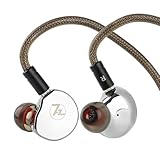
- Diablo vs Divine: Two tunings: hellish bass or heavenly neutrality. The...
- Otherworldly Collaboration: 7Hz was founded in 2012 by young Hi-Fi...
- One Driver, Two Tunings: Both the Diablo and Divine feature the same...
Buyer verdict: Consider the 7Hz x Crinacle Divine if you want a mid-range planar alternative rather than another multi-driver hybrid.
The Divine uses a 14.5 mm two planar drivers. A single full-range transducer avoids the need to divide reproduction among several driver types, although that does not eliminate acoustic tuning challenges or guarantee perfect coherence.
Its strongest reason for inclusion is choice: listeners exploring the best meta IEMs should not assume that a hybrid architecture is mandatory. A planar design can deliver an appealing balance, but “planar” describes the transducer, not a fixed sound signature.
Be careful with listings that group Divine and Diablo together. These are distinct versions, and the selected variant matters. Check the product name at checkout and use measurements belonging to that version. A collaboration name or shared shell cannot establish that two variants have identical bass and treble.
The same caution applies to older planar comparisons. Impressions of earlier 7Hz products do not automatically describe the Divine. Planar IEMs are not universally bright, bass-light, or difficult to drive; those characteristics depend on the specific implementation.
For the buyer, the useful questions are straightforward: does its upper-midrange balance feel comfortable, is cymbal energy acceptable, and does bass retain enough weight at normal listening levels? Those answers are more relevant than generalized claims about planar “speed.”
Check the published sensitivity and impedance before choosing a source. Sensitivity figures need their units to be meaningful, and driver diameter alone tells you nothing dependable about volume requirements. A quiet, adequate dongle is preferable to unnecessary amplifier spending.
Main limitation: The planar label does not establish meta tuning, smooth treble, or better detail retrieval.
Verdict: A compelling category alternative for buyers interested in a single-planar design, provided they confirm the Divine variant and its specific tonal balance.
Choosing a Meta-Tuned IEM
Bass Preference
Sub-bass emphasizes deep rumble; mid-bass gives kick drums and bass instruments punch and warmth. A bass shelf’s height matters, but so does where it returns to the midrange.
The Zero:2 suits an accessible warm starting point, while the Astral warrants attention for a more ambitious bass-supported presentation. Do not infer the DN142’s bass balance from the DaVinci, or compare Hisenior Mega5EST versus DaVinci solely by price.
Treble Sensitivity
Upper-midrange intensity and treble peaks are different problems. Ear gain influences vocal projection and the bite of guitars; higher-frequency peaks can emphasize sibilance, cymbals, or metallic overtones.
Lower ear-gain IEMs may help listeners who dislike forceful vocals, but they are not automatically fatigue-free. Examine exact-model response information, especially for treble-sensitive buying decisions, and keep volume moderate.
Fit and Seal
A comfortable shell with an unreliable seal is not a good match. Leakage reduces bass, while insertion depth and ear-tip geometry can change treble perception.
Compare shell dimensions, nozzle diameter, and nozzle length where documented. None of these five deserves a universal “best for small ears” label without supporting evidence. Return options are particularly valuable when an audition is unavailable.
Analog vs. DSP Playback
Digital signal processing changes frequency response through equalization; analog playback does not require a DSP preset. This distinction matters when comparing Kiwi Ears KE4 versus DUSK or considering a DSP-based recommendation.
For USB-C cables, confirm audio compatibility with your particular device, preset-loading requirements, and app support. A USB-C socket alone guarantees none of those things. Analog alternatives generally require a headphone output or compatible DAC dongle.
Conclusion
Meta tuning is useful because it gives listeners another way to describe the balance they want—not because it replaces every earlier approach to sound. The right purchase combines suitable bass weight, comfortable vocal presence, tolerable treble, dependable fit, and compatible playback. Spend more only when you can identify a meaningful improvement you want. If your current earphones already make your music enjoyable, a newly popular target is not a reason to replace them.
FAQ
Is Meta Tuning Better Than Harman Tuning?
Not universally. Meta-associated tuning often appeals to listeners wanting more warmth and less forceful upper mids, while Harman-style tuning can suit those seeking clearer vocal prominence. Individual implementations vary substantially. Compare compatible measurements and your own preferences rather than assuming that the newer approach must be more accurate or enjoyable.