What makes a headphone right for your listening habits: its driver design, comfort, or the room where you use it? Finding the best fit means balancing all three. Fostex offers both planar magnetic and dynamic designs, with choices ranging from accessible studio-style headphones to premium open-back models.
Top Fostex Headphones
Fostex TH909

- Open-backed stereo headphones with detachable cable system; optional...
- Dual-layer etched metal structure for housing opening diversifies resonance...
- Neodymium magnetic circuitry with 1.5 tesla magnetic flux for wide dynamic...
The Fostex TH909 is aimed at listeners considering the upper end of the brand’s dynamic headphone range. Its combination of lacquer-finished wood cups, a 1.5-tesla magnetic circuit, and open-back construction gives it a more luxurious positioning than the RP options.
The 50 mm Bio-Dyna drivers work within housings featuring a dual-layer etched-metal opening. This distinguishes the TH909 from simply being a closed headphone with its back removed: the enclosure is an intentional part of the acoustic design.
Its 25-ohm impedance and 100 dB/mW sensitivity mean that enormous amplifier power is not a prerequisite. A clean, low-noise output with suitable volume control is more important than chasing the largest advertised wattage. At this sensitivity, excessive amplifier gain can make comfortable adjustment unnecessarily difficult.
The detachable cable system is another practical benefit. It supports replacement if the cable becomes damaged and allows an optional compatible balanced cable. Balanced operation remains a connection choice, however, rather than an automatic sound-quality upgrade.
For the intended buyer, the TH909’s appeal is a premium open-back listening experience supported by distinctive construction. It belongs in a quiet room where leakage does not inconvenience anyone else. An open enclosure alone cannot guarantee wider imaging or more accurate reproduction, so those preferences still deserve an audition.
The principal drawback is value risk: this is a substantial purchase, and personal tuning preferences matter more as the financial commitment rises. Replacement pads and cables should also be included in long-term ownership planning.
Verdict: The high-end choice here for buyers committed to open-back home listening. Its construction and specifications justify consideration, but an audition is more valuable than buying solely on flagship positioning.
Fostex TH808

- Equipped with in-house crafted driver units from the TH900 series.
- Ingenious open housings made of solid black walnut and aluminum.
- TH808 original high-purity OFC unbalanced cable included.
The Fostex TH808 moves away from RP planar technology and into the brand’s premium dynamic-driver range. It combines open-back construction with solid black walnut and aluminum housings, offering a distinctly different ownership proposition from the utilitarian RP models.
Its 50 mm Bio-Dyna dynamic drivers are derived from the TH900 family. That heritage explains its place in the lineup, but it should not be interpreted as proof that every model in the family has identical tuning.
The published 25-ohm impedance and 96 dB/mW sensitivity make source matching relatively approachable. Nevertheless, impedance alone does not establish whether a phone adapter or laptop output will provide sufficient headroom. A competent headphone output is still useful, especially with quiet recordings or equalization.
The TH808 makes the most sense for someone building a dedicated home-listening setup. Its open housing allows sound to escape and outside noise to enter, so it is poorly suited to public transport, shared offices, or tracking vocals near an active microphone.
Premium materials are a tangible reason to consider it, but they do not settle questions of tonal preference. Buyers sensitive to treble or particular about vocal balance should prioritize an audition or a useful return policy rather than choosing by wood finish.
Check the supplied cable termination against your amplifier, too. A suitable adapter may be all you need; replacing the entire cable should not be the default response to a connector mismatch.
Verdict: A compelling premium option for buyers who want open-back dynamic headphones with walnut construction. Choose it for private listening and its overall design—not an assumption that luxury materials guarantee better sound.
Fostex T50RP mk4

- Completely redesigned RP planar magnetic driver
- Connector is equipped with a 4-pole 3.5mm connector which supports balanced...
- The cable uses high-quality OFC conductors

The Fostex T50RP mk4 is the logical starting point for listeners who want Regular Phase planar magnetic technology without moving into the brand’s luxury range. Its appeal is the redesigned fourth-generation driver, rather than expensive housing materials or elaborate finishes.
This generation matters. The mk4 is rated at 28 ohms and 97 dB/mW, so advice about powering the older, less sensitive MK3 should not automatically carry over. Those specifications make it a more practical candidate for modest headphone amplifiers, although the output capability of your particular source still matters.
The semi-open enclosure makes the T50RP mk4 better suited to a desk or quiet listening room than a commute. It is not designed to shut out substantial background noise, and nearby people may hear your music. Buyers seeking the best Fostex headphones for sound isolation should look beyond its studio-style appearance.
A detachable cable connects through a four-pole 3.5 mm headphone socket that supports compatible balanced connections. That provides flexibility, but a balanced cable is optional—not a prerequisite for enjoying the headphones. Check the exact wiring and connector compatibility before buying an alternative cable.
The main compromise is ownership cost beyond the headphone itself. A weak headphone output may justify an amplifier, while comfort preferences can lead buyers toward replacement pads. Start with the stock configuration rather than assuming modifications are necessary.
Verdict: The strongest value-focused candidate here for buyers prioritizing current-generation RP technology. Choose it for quiet-room listening, not isolation, and assess your existing source before budgeting for extra equipment.
Fostex Dekoni Blue
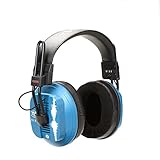
- Only Fostex Sanctioned T50RP MK3 Mod
- Built in Partnership with Fostex
- Comes with 2 sets of Dekoni Audio Ear Pads - One Hybrid and one Elite...
The Fostex/Dekoni Blue is a sanctioned modification of the T50RP MK3, developed through a partnership between Fostex and Dekoni Audio. It is not a modified mk4, and its older-generation foundation is an important part of the buying decision.
Its clearest advantage is the included pad selection: one pair of hybrid pads and one pair of Elite Velour pads. That gives listeners two ways to adjust contact feel and fit without immediately purchasing aftermarket accessories.
This makes the Blue particularly relevant to buyers who enjoy the idea of RP headphones but are concerned about long-session comfort. Pad material, opening size, and cushioning can make a substantial difference to how headphones sit around the ears. However, neither pad set guarantees a better fit for every listener.
The pads also influence acoustics. Changing their material and geometry can alter the seal, ear-to-driver distance, and perceived bass or treble balance. Treat the two included sets as alternative configurations, not acoustically interchangeable replacements.
Because the Blue is based on the MK3, do not apply the T50RP mk4’s sensitivity or amplifier guidance to it. Check the Blue’s documentation and your amplifier’s output before purchase. A dedicated headphone amplifier is a more sensible consideration here than an expensive cable bought for its own sake.
Its semi-open construction also limits its usefulness around microphones or in shared spaces. Despite the professional ancestry, it is not automatically the right recording headphone.
Verdict: Worth considering when included pad options and a ready-made, sanctioned modification matter more than owning the newest RP platform. Compare its total cost with the mk4 before paying a premium.
Choosing the Right Fostex Headphones
The most useful buying decision starts with your environment and existing equipment, not the driver label.
RP Planar Magnetic vs Dynamic Drivers
Regular Phase is Fostex’s planar magnetic driver technology. A thin diaphragm carrying conductive traces moves within a magnetic field. Dynamic drivers instead use a voice coil attached to a diaphragm.
Neither approach is inherently superior. Tuning, damping, pads, and enclosure design all influence the result. When comparing the best Fostex planar headphones with dynamic alternatives, prioritize tonal balance, comfort, and usable amplifier headroom over technology alone.
Open, Semi-Open, and Closed-Back Designs
Match enclosure type to your room:
1. Open-back headphones suit quiet, private spaces where leakage is acceptable.
2. Semi-open headphones still exchange sound with the room; they are not dependable isolation tools.
3. Closed-back headphones may reduce leakage, but actual isolation depends on the particular design and fit.
None of the shortlisted models is the obvious choice for noisy travel. For recording, check microphone bleed rather than assuming a professional-looking headphone will contain playback.
Amplifier Matching by Model
Read sensitivity units carefully: dB/mW and dB/V are not interchangeable. Compare amplifier output at a load close to the headphone’s impedance, rather than relying on its headline power figure.
For illustration, 97 dB/mW sensitivity implies approximately 20 mW for a theoretical 110 dB peak. That is a headroom calculation, not a recommended listening level; actual results vary with fit and measurement conditions.
Allow additional headroom for EQ. Use the exact model’s specifications, particularly when comparing fourth-generation RP headphones with MK3-based designs.
Older Fostex Generations Need Careful Comparison
An older-generation headphone can offer good value when its condition, accessories, and total cost are favorable. However, a discounted purchase becomes less attractive if it immediately needs pads, a cable, or additional amplification.
For the T50RP MK3 platform, distinguish stock examples from modified versions. Changes to pads, damping, or cup vents can substantially affect sound, making comparisons unreliable unless the configuration is clear.
The mk4’s redesigned driver and revised electrical specifications are meaningful differences, but they do not establish that every existing owner needs to upgrade. Keep a comfortable, well-matched setup unless the replacement solves a specific problem.
Conclusion
Choosing Fostex headphones is ultimately about matching the design to your listening life. A quiet room makes open and semi-open construction practical, while suitable amplification helps preserve useful headroom. Prioritize comfortable fit, compatible connections, and a tonal balance you enjoy before spending on finishes, cables, or modifications.
FAQ
Do planar magnetic headphones need a headphone amplifier?
Not always. Amplifier requirements depend on sensitivity, impedance, listening level, and the source’s output capability—not simply the driver technology. Check specifications for the exact generation. A dedicated amplifier becomes useful when your existing output lacks clean volume headroom, especially after applying equalization.
Are open-back headphones suitable for mixing and studio monitoring?
Open-back headphones can be useful for mixing in quiet rooms, but their leakage makes them less suitable for recording near sensitive microphones. Reference suitability depends on frequency response and familiarity, not enclosure type alone. Check important decisions against familiar recordings and another reliable playback system.
Do replacement ear pads change headphone sound?
Yes. Pad thickness, material, opening shape, and seal can change bass response, treble balance, and perceived space. Even visually similar pads may behave differently. Confirm exact compatibility, retain the original pair for comparison, and reassess any equalization after changing pads rather than assuming the previous settings remain appropriate.