Bone Conduction IEMs Explained
Bone conduction IEMs combine conventional sound-producing drivers with transducers designed to transmit mechanical vibrations through contact with the ear. Their contribution depends on implementation and fit. Unlike open-ear bone-conduction headphones, these IEMs sit inside the ear canal and may isolate listeners from surrounding sounds.
A bone-conduction transducer is not necessarily bass-only. Designs can target different frequency ranges. A piezoelectric transducer, or PZT, is also not automatically proof of meaningful bone-conduction operation. Manufacturer claims about immersion or improved fidelity require evidence beyond the component name.
Bone Conduction IEMs vs. Open-Ear Headphones
Bone conduction IEMs and Shokz-style headphones solve different problems. Open-ear designs leave the ear canal unobstructed; sealed audiophile IEMs prioritize controlled sound delivery and isolation.
Adding a vibration-producing driver does not restore outdoor awareness. These earphones are not inherently suitable for traffic-heavy exercise, nor should they be treated as hearing-assistance devices. Choose the form factor around your listening environment first.
Fit and Shell Contact
Ear seal affects bass response, while insertion depth can change perceived treble. Shell contact may influence mechanical coupling, but tighter pressure does not guarantee stronger or better bone conduction.
Try different eartip sizes without forcing deeper insertion. Stop if you experience soreness, pressure, or distracting vibration. A comfortable, repeatable fit matters more than maximizing contact.
Value Beyond Driver Count
Pay more for tuning, comfort, support, and return flexibility—not “quadbrid” branding alone.
Best BC IEMs
Tipsy M5 Ultra

- END WITH TIPSY M5 ULTRA — THE FINAL STEP: 5‑driver hybrid (bone...
- About Tipsy: Since 2015, Tipsy has built stage‑grade IEMs for frontline...
- Driver config and what you’ll hear: Sub‑bass — Bone Conduction: Felt...

Tipsy M5 Ultra marks a bold step forward for the brand, utilizing a complex five-driver “quadbrid” architecture to achieve a deeply immersive listening experience. While it seamlessly blends a dynamic driver, two balanced armatures, and a planar magnetic tweeter, the true centerpiece of this earphone is its dedicated 10mm bone conduction driver.
By assigning the sub-bass and lower-midrange frequencies to a physical bone conduction system, the Tipsy M5 Ultra manages to decouple structural vibration from traditional acoustic sound pressure. The result is a low-end presentation that you don’t just hear, but actively feel as a physical sensation against the ear cartilage. This driver handles the deep rumble and atmospheric scale of lower frequencies without causing any of the muddy bloom or mid-bass bleed that often plagues traditional dynamic-driver setups. It provides a tactile, springy sub-bass extension that anchors the soundstage with incredible authority.
Crucially, the bone conduction technology operates in perfect harmony with the other drivers via a precise 4-way crossover. It injects a lifelike, organic density into the lower midrange and vocals without adding artificial warmth or coloration. Instead of traditional stereo imaging, the bone conduction driver creates a spherical, three-dimensional stage where instruments and ambient cues feel fixed in a holographic space around the listener’s head.
Wrapped in hand-polished resin shells designed to optimize contact with the ear canal for maximum vibrational transfer, the Tipsy M5 Ultra avoids the clinical detachment of standard reference monitors. For audiophiles seeking a visceral, tactile connection to their music, its masterfully integrated bone conduction driver delivers a transformative, physically engaging sonic landscape
ISN Audio EBC80
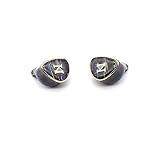
- Ergonomic Design: The EBC80 in-ear wired earphone adopted medical grade...
- Driver Configuration: The EBC80 audiophile IEM earphone equipped 2 Sonion...
- Sound Features: ISN C2, H2, S2 cable options, you can choose the sound...
The ISN Audio EBC80 is the premium option in this selection, aimed at enthusiasts considering a complex hybrid IEM rather than an inexpensive introduction to bone conduction. Its advertised configuration combines two dynamic drivers, two balanced armature drivers, two electrostatic drivers, and two bone-conduction drivers per side.
That arrangement gives the designer several ways to divide frequency reproduction, but eight drivers do not automatically outperform a simpler, well-tuned earphone. The relevant question is whether its overall tonal balance and presentation justify the investment for your music.
Its principal compromise is purchase risk: a premium multi-driver design deserves an audition or a dependable return policy. Confirm connector options, seller authorization, warranty handling, and shell dimensions before ordering.
Verdict: A premium candidate for experienced listeners who can evaluate fit and tuning—not a sensible upgrade solely because it contains more drivers.
BQEYZ Wind

- Innovative Bone Conduction Technology For the first time, BQEYZ...
- Direct Sound Transmission BQEYZ WIND utilizes its bone conduction...
- Exquisite Soundstage with LCP Diaphragm At the heart of the WIND lies a...
The BQEYZ Wind suits listeners seeking a midrange dynamic-driver and bone-conduction IEM without moving into elaborate flagship configurations. Its advertised design pairs a conventional dynamic driver with BQEYZ’s self-developed 10 mm bass-and-midrange bone-conduction component.
Its strongest listening appeal is a substantial, textured low-frequency presentation with an emphasis on body rather than simply sharp outlines. That makes it worth considering for listeners who enjoy weight in instruments and vocals.
The compromise is that fullness may not satisfy someone seeking a lean, highly incisive presentation. Fit and source matching also deserve attention before assuming it represents an automatic improvement over budget models.
Do not confuse Wind with BQEYZ Winter Ultra: their bone-conduction implementations differ.
Verdict: A worthwhile midrange candidate when tonal richness matters more than maximum perceived sharpness.
Sound Rhyme SR6

- 【Flagship Hybrid Driver System】— Featuring a rare 6-driver hybrid...
- 【Premium Cable & Universal Compatibility】— Detachable 2-pin 0.78mm...
- 【All-Day Comfort & Excellect Craftsmanship】— Ergonomic earbud shells...
Sound Rhyme SR6 is a standout release in the mid-range portable audio landscape, showcasing an ambitious six-driver “quadbrid” architecture. This complex setup packs a 10mm Liquid Crystal Polymer (LCP) dynamic driver, two custom balanced armatures, two micro planar magnetic drivers, and a piezoelectric (PZT) bone conduction driver into an ergonomic, medical-grade 3D-printed resin shell.
The defining characteristic of the Sound Rhyme SR6 is how seamlessly it integrates its diverse hardware. Rather than acting as a detached gimmick, the piezoelectric bone conduction driver operates subtly across the spectrum, acting as a unifying force that binds the acoustic output of the other drivers together. It injects a unique sense of physical vibration and weight into the low end, pairing with the LCP dynamic driver to create an exceptionally rich, deep, and authoritative sub-bass foundation. The bass hits with tactile force and texture, yet it remains perfectly controlled without bleeding into the mid frequencies.
The mid-range frequencies, managed by the balanced armatures, sound lush, thick, and forward. Vocals—particularly female vocals—are rendered with natural warmth and an intimate presence. Up top, the dual micro planar drivers handle the treble with a finely diffused, airy shimmer. It provides excellent micro-detail and upward sparkle while carefully suppressing harsh or piercing sibilance.
Thanks to the PZT driver’s unique spatial contribution, the SR6 avoids a flat stereo plane. Instead, it pushes the music forward to construct a wide, holographic, and deeply immersive 3D soundstage. Instrument separation and layering are top-tier, making it easy to isolate complex notes even in dense arrangements. Complete with a premium, silver-plated single crystal copper modular cable featuring swappable 3.5mm and 4.4mm plugs, the Sound Rhyme SR6 delivers a beautifully cohesive, highly musical, and engaging multi-driver experience.
Kinera Celest Plutus Beast

- Meet The Plutus Beast: Celest takes design and tuning inspirations from the...
- Unique Three-Driver Config: Celest Plutus Beast features a uniquely...
- Rich & Smooth Tuning: Celest Plutus Beast is tuned by a professional team...
The Kinera Celest Plutus Beast targets listeners curious about an affordable hybrid IEM with an unconventional driver combination. Its advertised configuration uses one bone-conduction driver, one balanced armature, and one square planar driver, commonly abbreviated SPD.
The concrete reason to consider it is its fuller, weightier approach to music. It offers an alternative to budget earphones that prioritize a lighter balance or prominent treble. Its decorative, hand-painted faceplates also distinguish it from more utilitarian designs.
The reason to pass is equally practical: listeners wanting neutral tonal balance or an especially open, airy presentation may prefer a simpler conventional IEM. Its driver combination is a design choice, not evidence of superior performance.
Verdict: Consider it for its overall presentation and styling, not merely as an inexpensive route to three driver technologies.
FAQ
Are bone conduction IEMs better than regular IEMs?
Not inherently. Tuning, fit, distortion, and integration between drivers matter more than the technology label. A conventional IEM can sound more natural or suit your preferences better. Evaluate the complete earphone rather than assuming an additional vibration component produces superior detail, bass, or soundstage.
Are bone conduction IEMs the same as open-ear sports headphones?
No. Audiophile bone conduction IEMs generally place eartips inside the ear canal and combine vibration components with conventional acoustic drivers. Open-ear sports headphones leave the canal unobstructed. Choose according to fit and isolation needs rather than expecting both categories to provide the same environmental awareness.
Do bone conduction IEMs need a DAC or amplifier?
Requirements vary by model. A compatible headphone output or dongle may provide sufficient volume and clean playback; other designs benefit from additional headroom. Check sensitivity, impedance, connector compatibility, and audible hiss. Bone conduction alone does not mean an IEM needs unusually powerful amplification.
Are bone conduction IEMs safer for hearing?
Bone conduction does not eliminate hearing risks from excessive volume or prolonged exposure. Hybrid IEMs also produce conventional acoustic sound inside the ear canal. Listen moderately, take breaks, and reduce exposure duration. These consumer earphones are not hearing aids or substitutes for professional hearing care.
Conclusion
Bone-conduction technology is worth exploring, but it should remain secondary to tuning, comfortable fit, and dependable purchase support. The most satisfying choice is an earphone that works with your ears, music, and source—not one whose driver description promises the most novelty.