EST Drivers Explained
EST Tweeters in Hybrid IEMs
EST is commonly used for the miniature electrostatic tweeters found in hybrid earphones. Sonion-style units typically reproduce high frequencies while other drivers handle bass and much of the midrange.
Their operation uses electret technology: a permanently charged material maintains the electrical field needed for electrostatic motion. A miniature transformer raises the incoming audio signal to the voltage required by the tweeter.
The terminology is straightforward:
1. Hybrid: An IEM combining more than one driver technology.
2. Tribrid: A design combining three technologies, commonly dynamic, balanced armature, and EST.
3. Quadbrid: A design combining four technologies, potentially including bone conduction.
None of these labels establishes sound quality. Advertised ultrasonic frequency limits also do not demonstrate superior audible detail.
EST Hybrids vs Full Electrostatic IEMs
An ordinary EST-equipped hybrid is not equivalent to a full electrostatic system. It normally connects to a conventional headphone output because its necessary transformer arrangement is built into the earphone.
Their architecture and practical requirements should not be transferred to conventional EST hybrids. Owning an EST-equipped tribrid does not normally mean carrying an external energizer.
Best Electrostatic Driver IEMs
Moondrop Variations

- Seek for the perfect compatibility of Tribrid IEM :The development of...
- 0.78mm universal detachable interface ,Standard PCC coaxial single crystal...
- Low non-linear distortion, accurate and clean sound:With the reasonable...
The Moondrop Variations uses one dynamic driver, two balanced armature drivers, and two EST tweeters per earpiece. This established tribrid sits in the premium midrange and is particularly relevant to listeners who distinguish deep bass rumble from mid-bass warmth.
Best suited to: Electronic, pop, and cinematic-music listeners who enjoy substantial low-frequency extension without a thick lower midrange. Its bass profile also appeals to buyers who want a clear separation between deep bass and vocals.
Sound character: The emphasis falls toward sub-bass rather than an evenly elevated bass region. Synthesizer fundamentals and low electronic effects can therefore carry weight while the presentation around bass guitar body and lower vocals remains leaner. The upper midrange is relatively forward, contributing clarity but potentially making some vocals more insistent.
The EST tweeters are part of that overall balance; they do not independently determine whether the earphone sounds smooth. A listener bothered by vocal intensity may still find the tuning fatiguing even if upper-treble extension is appealing.
The principal compromise is instrument body. Those who prefer warm male vocals, full-bodied guitars, or punch concentrated higher in the bass may not enjoy the contrast between deep rumble and leaner lower mids. “Strong bass” is therefore an incomplete description of this model.
Fit is another practical consideration. The nozzle and shell may feel substantial in smaller ears, and a compromised seal can remove the very sub-bass extension that makes the tuning attractive.
- Pro: Distinctive sub-bass emphasis suits electronic low-frequency content.
- Pro: Leaner lower mids help avoid an overly thick presentation.
- Con: Reduced warmth and forward vocals will not suit every listener.
Buying verdict: Choose Variations for deep rumble and clarity, not for uniformly warm or full-bodied bass.
ISN Audio EBC80
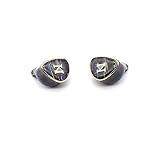
- Ergonomic Design: The EBC80 in-ear wired earphone adopted medical grade...
- Driver Configuration: The EBC80 audiophile IEM earphone equipped 2 Sonion...
- Sound Features: ISN C2, H2, S2 cable options, you can choose the sound...
The ISN Audio EBC80 takes a different approach: two dynamic drivers, two balanced armature drivers, two EST tweeters, and two bone-conduction drivers per side. That eight-driver arrangement makes it a quadbrid rather than a conventional dynamic–BA–EST tribrid.
Best suited to: Enthusiasts interested in a premium, bass-capable design that combines several transducer technologies. It is less compelling as a purchase motivated solely by the desire to hear what EST tweeters contribute.
Sound character: Dynamic drivers provide the low-frequency foundation, balanced armatures handle part of the central spectrum, and EST tweeters support high-frequency reproduction. The bone-conduction elements add another implementation variable. Their contribution cannot be isolated simply by reading the driver count, and eight drivers should not be interpreted as eight independently audible improvements.
Its attraction is the combined presentation, not a promise that every technology supplies a unique sonic advantage. Listeners seeking weight alongside treble extension have a reason to investigate it, but should evaluate vocal placement and bass balance as carefully as upper-frequency detail.
The principal compromise is complexity. More driver types make crossover and acoustic integration especially important, while the shell must accommodate multiple components. The design also leaves buyers with more variables than a simpler hybrid when comparing fit and tuning preferences.
Pay particular attention to shell contact, insertion, and comfort. Bone-conduction implementation does not eliminate the need for a dependable ear-tip seal, and its effectiveness should not be assumed from the label alone.
- Pro: Combines dynamic bass drivers with dedicated EST tweeters.
- Pro: Offers an alternative to conventional three-technology hybrids.
- Con: Driver complexity does not establish superior coherence or comfort.
Buying verdict: Consider the EBC80 for its complete quadbrid design, but audition it rather than paying extra for its component count alone.
Hisenior MEGA5EST

- Ergonomic Design: The shell of Mega5EST earphone is made of high-quality...
- Driver Configuration: Mega5Est in-ear earphone equipped with custom 10mm...
- Harman Tuning: The essence of the Harman tuning is achieved by striking a...
The MEGA5EST 7th Anniversary Edition is the version discussed here. It combines one dynamic driver, two balanced armature drivers, and two Sonion EST tweeters per side. Its appeal is a balanced, gently warm presentation rather than conspicuous treble sparkle. The original standard edition and the separately tuned Bass+ should not be treated as interchangeable.
Best suited to: Listeners seeking an upper-midrange and treble presentation that does not constantly demand attention. It is a sensible premium candidate for mixed playlists, vocals, and extended listening, particularly when aggressive brightness is already a concern.
Sound character: Bass gives instruments a foundation, while the midrange avoids the thinness that can accompany a sharply separated bass shelf. The treble emphasis is comparatively restrained: the EST implementation supports extension without making a bright presentation the main attraction. Smoothness, however, is not a guarantee against every recording or individual sensitivity.
The principal compromise is excitement. Someone who associates detail with sharply outlined percussion or forward cymbals may find this approach too relaxed. Choosing it for comfort with difficult recordings makes more sense than expecting it to turn every track into a treble showcase.
Check the edition name before purchasing. The Bass+ adds bass emphasis, and impressions of that tuning should not determine expectations for the 7th Anniversary model. Accessories and fit revisions also deserve attention when comparing older and newer listings.
- Pro: Coherent tonal balance supports a broad range of music.
- Pro: Restrained treble makes it a useful smooth-treble candidate.
- Con: Its relaxed presentation may underwhelm listeners wanting pronounced sparkle.
Buying verdict: Choose this edition when tonal cohesion and listening ease matter more than maximum apparent brightness.
Choosing the Right EST IEM
Treble Tuning and Sensitivity
Separate lower-treble sharpness from upper-treble air. An earphone can sound airy yet comfortable, or relatively subdued at the highest frequencies while still producing irritating sibilance lower down.
Hearing, insertion depth, and listening level change that balance. When consulting frequency-response graphs, identify the measurement system and avoid treating high-treble peaks as exact predictions for your ears. Those measurements are particularly sensitive to fit and equipment limitations.
Fit and Seal
Shell size, nozzle diameter, and insertion depth affect comfort and sound. A weak seal reduces bass, which can make treble seem disproportionately strong. Different tips can alter insertion and resonance as well.
Check return terms and prioritize comfortable, repeatable placement. The best EST IEM for small ears may simply be the model that seals securely without pressure—not the one with the largest driver array.
Source Compatibility
Choose a source using the complete IEM’s sensitivity and impedance, not its EST count. Adequate clean output, low noise, and low output impedance matter more than impressive amplifier specifications.
Balanced output is not inherently better; it may merely provide additional power that the earphone does not need. For iPhone use, select a compatible USB-C DAC or an appropriate Lightning audio adapter, depending on the phone’s connector.
EST Driver Count
More EST drivers do not automatically improve detail. Crossover design, acoustic damping, and integration determine how the tweeters contribute.
Other shortlist candidates illustrate the importance of matching tuning to purpose. SoundRhyme DTE500 combines one dynamic, two BA, and two EST drivers and deserves consideration for value-oriented tribrid shopping. DUNU SA6 EST uses six BA and two EST drivers, unlike non-EST SA6 models. HiBy Zeta combines one dynamic, four BA, and four EST drivers for buyers considering a bass-focused alternative.
Check current availability and the complete purchase cost before describing any option as affordable.
EST IEMs vs Non-EST Alternatives
Excellent treble is possible without electrostatic tweeters. Balanced armature drivers can deliver well-controlled highs, while planar and dynamic designs can also provide convincing extension and detail when appropriately tuned.
When deciding whether EST drivers are worth the premium, compare the complete sound signature, fit, support, and source requirements. There is no universal EST advantage in speed, resolution, or soundstage. A well-matched non-EST model can be the more satisfying purchase.
FAQ
Are EST drivers worth it in IEMs?
EST tweeters can be worthwhile when their high-frequency contribution is well integrated with the other drivers. However, their presence alone does not establish better sound or value. Pay for an enjoyable complete implementation, not an assumed electrostatic advantage. Fit and tuning usually matter more than the technology label.
Do EST IEMs need an energizer or powerful amplifier?
Ordinary EST-equipped hybrids generally do not need an external energizer because their transformer arrangement is incorporated into the earphone. Amplifier requirements depend on the complete IEM’s sensitivity and impedance. Full electrostatic systems are different and use dedicated electronics. A quiet, compatible DAC is often more useful than excessive power.
Conclusion
Choosing an EST IEM is ultimately an exercise in matching sound and usability to personal preference. Treble extension matters only when it works with the bass, midrange, fit, and listening level you enjoy. Treat driver technology as useful design information, not a quality guarantee, and prioritize a comfortable earphone that remains satisfying across your everyday music.