What are Cajon Drums?
The cajon’s design is deceptively simple yet highly effective. Typically constructed as a six-sided wooden box, the front panel, known as the tapa, is made from thinner wood to enhance resonance. Players sit on the cajon and use their hands to strike different areas of the front panel, producing a variety of sounds ranging from deep bass tones to sharp snare-like slaps. The sound hole at the back allows the sound to project outward, giving the instrument its distinctive voice. The cajon originated in colonial Peru as a result of the ban on traditional drums imposed on enslaved Africans, leading to its development as a versatile percussion instrument. Cajóns were improvised from crates and boxes due to restrictions on playing traditional musical instruments, showcasing the resourcefulness of the Afro-Peruvian community. In Cuba, the Cajón was adapted from candle crates as a substitute for traditional drums due to music restrictions, further demonstrating its adaptability.
Beyond traditional hand playing, some cajons incorporate additional features such as internal snare wires or guitar strings that vibrate against the tapa, adding a snare sound similar to a drum kit. This versatility allows the cajon to emulate multiple percussion sounds, making it a favorite for acoustic performances, street music, and studio recordings. Cajons with adjustable snare wires, such as the MEINL Snarecraft Pro, offer more tonal versatility, allowing players to customize their sound. Its compact size and light weight make it easy to transport, which adds to its popularity among musicians who travel or perform in various settings. Quality joints, reinforcements, and finishing are essential to ensure the durability of cajons, especially for frequent use. Additionally, rubber feet are essential to prevent cajons from sliding during play and to protect floors.
Additionally, the cajon’s simplicity makes it accessible to beginners, while its dynamic range and tonal possibilities offer depth for advanced players to explore complex rhythms and techniques. Whether used solo or as part of a band, the cajon provides a rhythmic foundation that can complement many musical styles, from flamenco and Afro-Peruvian music to contemporary pop, rock, and jazz. The cajon gained popularity in flamenco music in the 1970s, largely due to musicians like Paco de Lucia, who helped integrate it into this genre. In Peru, the Cajón became a core element of Afro-Peruvian music during the 19th century, further solidifying its cultural significance.
Types of Cajon Drums
Cajon drums come in several distinct types, each offering unique sound characteristics and features tailored to different musical styles and player preferences. Understanding these types can help you choose the best cajon drum to suit your needs. Cuban cajons, for example, are typically five-sided and pitched in various tones, differing from the Peruvian style which is snare-less. Peruvian Cajons produce a cleaner, woodier tone compared to Flamenco Cajons, making them ideal for traditional music styles that emphasize natural percussion sounds.
Peruvian Cajons
Peruvian cajons are considered the original style of cajon drums. Traditionally, they are simple wooden boxes without any internal snares or strings, producing a clean, woody tone. Their design emphasizes a pure bass sound and crisp slaps, making them ideal for traditional Afro-Peruvian music and other genres that favor a natural, unembellished percussion sound. These cajons usually feature solid wood construction, often made from durable hardwoods like Baltic birch, which contributes to their rich resonance and durability. High-density hardwood, particularly Finnish birch, is known for producing a wide frequency range with deep bass and bright highs, enhancing the tonal quality of these instruments. Top-tier cajons are often made by brands like Schlagwerk, Meinl, and LP, featuring high-quality materials like birch or walnut. Schlagwerk is a respected manufacturer known for their quality Cajons, such as the ‘2inOne,’ which offers a switch between different sound styles. Latin Percussion’s Black Box Cajon is built from a combination of Baltic Birch and Poplar for a warm musical tone. The Americana Groove Wire Cajon by Latin Percussion provides good sound quality at a reasonable price point.
Flamenco Cajons
Flamenco cajons evolved from the Peruvian style and are distinguished by the addition of internal snare wires or guitar strings that rest against the tapa (front panel). This setup produces a distinctive snare sound, similar to that of a snare drum in a drum set, with a sharp, buzzing snap that complements the deep bass tones. Flamenco cajons are particularly popular among flamenco guitarists and percussionists for their ability to add rhythmic complexity and texture. Many flamenco cajons allow players to adjust the tension of the internal strings or snares, providing greater control over the sound and enabling more sensitive and technical playing. The strings added to Flamenco cajons create a sizzle sound, enhancing their versatility and appeal for intricate playing styles. The El Artesano Cajon by A Tempo Percussion is handmade and combines characteristics from both traditional and flamenco cajons, offering a unique blend of features.
Snare Cajons
Snare cajons are designed to emulate the sound of a traditional drum set, featuring one or more sets of internal snare wires that can often be adjusted or even turned off completely. This flexibility allows musicians to switch between a snare-like buzz and a more open, Peruvian-style tone. Snare cajons typically offer a wider sound range, making them suitable for genres like pop, rock, and jazz, where a fuller drum kit sound is desired. Models such as the Meinl Snarecraft series are well-regarded for their adjustable snare systems and balanced tonal qualities. Beginners may prefer a versatile, mid-range model like the MEINL Snarecraft, which offers a good balance of features and affordability. Entry-level cajons from Meinl and LP are available for under $150. The Meinl JC50B is an entry-level Cajon that is compact and portable, making it ideal for beginners and acoustic gigs. Snare Cajons typically produce a wider sound and aim to emulate the bass and snare drum of a drum kit.
Benefits of playing Cajon
Accessibility and Portability
Playing the cajon offers numerous benefits that extend beyond just making music. For beginners, the cajon is an accessible percussion instrument that requires minimal setup and no complex equipment, making it easy to start learning rhythms and timing. Its compact size and portability allow musicians to take it anywhere, from casual jam sessions to professional gigs. YouTube is a great resource for listening to different cajón models before buying.
Versatility Across Musical Styles
For more experienced players, the cajon provides a versatile platform to explore a wide range of musical styles, from traditional Afro-Peruvian and flamenco rhythms to contemporary pop, rock, jazz, and blues. The instrument’s dynamic range enables players to produce both deep bass tones and sharp snare-like slaps, allowing for expressive and intricate rhythmic patterns.
Skill Development and Physical Benefits
Additionally, playing the cajon can improve hand coordination, timing, and rhythm skills, which are essential for all percussion instruments and beneficial for drummers in a full drum set. The physical act of sitting on the cajon and using body movements to enhance sound production also promotes better posture and core strength.
Acoustic Performance Advantages
The cajon’s ability to mimic the sounds of a full drum kit, especially when equipped with internal snare wires or guitar strings, makes it a valuable tool for acoustic performances where space and volume constraints exist. Its relatively quiet sound compared to a full drum set makes it ideal for small venues, recording sessions, and street performances. The Meinl Jumbo Subwoofer Cajon, for instance, features a forward projecting sound port that enhances the bass tones directly towards the audience, making it particularly effective in such settings. The Pearl Boom Box is ideal for un-mic’d acoustic sets due to its strong projection.
Cultural Connection and Inspiration
Finally, the cajon’s rich cultural heritage and historical significance offer players a meaningful connection to the music and traditions of Afro-Peruvian and flamenco cultures, enriching the playing experience and inspiring creativity. The use of the cajon expanded worldwide during the 20th century as it spread to other Spanish colonies and Cuba, further solidifying its place in global music traditions. Forums and communities can offer valuable advice and recommendations for cajón purchases.
Top Cajon Drums
Roland EC-10 ELCajon Electronic Layered Cajon
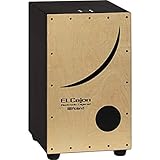
- Unique hybrid instrument combining an authentic acoustic Cajon with...
- Standard Cajon size (50 x 30 x 30 cm), with quality playing surface made of...
- Runs on AC power (cable included) or up to 12 hours of continuous playing...

The Roland EC-10 EL Cajon adds layers of electronic tones to your music. The EC-10 EL Cajon comes with 30 electronic kits, including traditional percussion instruments like tambourines and snares, as well as out-of-this-world electronic drums and sound effects. The EC-10 EL Cajon’s natural acoustic sounds are supplemented by studio-optimized cajon sounds, giving your performances exceptional depth and punch. The EC-10 EL Cajon is a completely self-contained unit. On six AA batteries, it can last up to 12 hours of playtime. The Roland EC-10 EL Cajon is a one-of-a-kind percussion instrument with a wide range of applications.
The Roland EC-10 EL Cajon is a top-notch acoustic instrument in and of itself, but it’s also equipped with a Roland sound module, giving you access to a wide range of sounds. With layered tambourine and djembe sounds, you may construct a backbeat, create a backbeat with acoustic or electronic snare sounds, or add low-end drama with an electronic kick. Studio-optimized cajon tones complement the natural sounds of the EC-10 EL Cajon. Sweetwater is impressed with the EC-10 EL Cajon’s excellent sapele playing surface and independent head and edge sensors, which deliver a genuine touch reaction.
The sound controls on the Roland EC-10 EL Cajon are located on the top of the instrument for easy access. Other buttons pick particular instruments, while dedicated buttons browse between sound categories. The intensities of your electronic noises are controlled by a rear-mounted Volume knob, and the balance between head and edge sensors is adjusted by a Trigger Balance knob. The trigger sensitivity can also be adjusted. This is the Best Cajon Drums in 2026.
Meinl Jumbo Bass Subwoofer Cajon with Internal Snares

- OUR BIGGEST AND BASSIEST CAJON: delivers deep, subwoofer bass—with more...
- WHY IT MATTERS: deep bass moves people; this cajon brings that power to...
- HOW IT WORKS: the jumbo body and internal bass reflex channels create...
The Meinl Percussion Jumbo Subwoofer Cajon gives you greater bass note projection for live and unplugged gigs thanks to its internal reflex channel and front sound port instead of a standard rear-facing one. Internal snare wires that are fixed provide a crisp, cutting sound that intensifies corner slaps and creates contrast to bass notes. The Jumbo Bass Cajon is meant to produce massive, deep bass tones that swell as you play harder and respond like a bass drum with a gentle thump behind quiet notes, similar to a bass drum.
This is Meinl’s biggest and baddest Cajón, capable of delivering the kind of low-end punch that everyone craves. The large bass Cajón is shorter than the LP Black Box, measuring 13.5 x 19.75 x 13.75 inches. It has forward-facing sound ports, which is an intriguing aspect to note. These ports allow you to really feel the drum and bass if you’re sitting on top. The bass note is deep, resonant, warm, and full. This box drum, unlike any of the others we tried, sounds like a real bass drum. It’s so strong that you can feel it in your ribcage.
The booming tone is produced by the medium-density fiberboard (MDF) structure paired with a very strong walnut soundboard. That sound is amplified within and broadcasted to your audience through the sound ports. MDF construction is necessary for the bass sound, but be mindful that it is less durable in the long term, necessitating extra caution. Never, ever, ever get this drum wet because the MDF may swell and begin to crumble!
Two sets of internal wire snares offer a lovely moderate sizzle to the snare tone. The attack differs significantly from a string Cajon sound. This drum is less forceful and heavily focused on the bass.
Pyle String Cajon
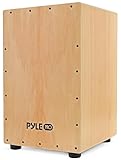
- PERFECT HANDCRAFT : Introducing Pyle string Jam Cajon, a perfect musical...
- ADJUSTABLE GUITAR STRINGS : Pyle string Jam Cajon is exquisitely engineered...
- COMPACT AND LIGHTWEIGHT : Comes in a compact size (LxWxH) : 12.0" x...
It’s made of birch wood and has a lovely natural tone to it. It’s a strung Cajon, which adds a little distortion to the slap. Because the strings are changeable, you may customise the buzzing to your liking.
It’s a rectangular shape with a good amount of surface area and thickness. It’s not as tall as some other models on the market, but it’s still playable. Rubber-capped feet reduce resonance interference and allow users to tilt the box into a professional playing stance.
Meinl Cajon Box Drum

- DREAM FOR DRUMMERS: it takes no time to set up, and you get the same kick...
- WHY IT MATTERS: a lot of musical settings don't allow for the space or...
- BE SMART: we craft this cajon from 100% Baltic birch wood, which also used...
Meinl Cajon, is a percussion instrument made in Germany. This is a “string Cajon,” you can expect a very pronounced snappy snare sound, which you will get. That’s up at the corners and at the top of this box. The sound of rim shots is slightly duller and tappy. Because the snare note is loud and forceful, it may not be appropriate for many types of music, particularly gentler, mellower kinds.
The Cajon’s soundboard (or playing surface) adds to both the snare and bass sounds. This box is composed of siam oak plywood, which gives the bass notes a dense and so rich warm tone. Let’s talk about quality now. We can confidently state that every Meinl Cajon we tested is well-made and plainly put together with care. The Headliner includes gently curved shoulders for comfort in the hand, as well as thick, robust rubber feet to protect the box and raise it for even greater boom.
Latin Percussion LP Americana Box String Cajon
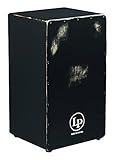
- Antique Black Blatic Birch Soundboard
- Spanish String Cajon with Adamas Phosphor Bronze Strings
- Enhanced Attack and Sustain
The black box is precisely what it says it is: a black box containing a mystery. First and foremost, what is it made of? On top of a black MDF body is a Baltic birch soundboard that has been black-stained and distressed. The MDF construction, as expected, helps to fill out the bass sound, but we’re still concerned about durability.
Instead of snares, there’s a guitar-like string system inside. With that fast snare sound, this Cajon, like the Meinl Headliner Series, packs a tremendous punch. In contrast to the sizzle of snares, it attacks with force and clarity.
Despite this, the instrument’s tone is still well-balanced. It sounds great and looks fantastic. If you’re gigging a lot around town or out on the road, you’ll want to take special care of that MDF body. That means you’ll very certainly need a carrying case, pushing the moderate price into the expensive range.
Schlagwerk CP404BLK 2inOne Series Snare Cajon

- Birch Front Plate
- Body Constructed of 8 Ply's of Birch
- 2inOne Technique with 40 Snares
With a moniker that literally means “percussion,” Schlagwerk enters the German percussion maker’s competition (or blow factory, literally). This two-in-one Cajon drum appears to be well-made and well-designed. This is a colossal, commanding instrument. And it has a nice industrial design that pays homage to the Cajon’s crate roots. We can add that because it is the tallest of the box drums, it is more suitable for larger players to play without crouching.
The sound is also excellent. The drum is made of birch, which gives it a pleasant tone similar to that of a traditional drum kit. The bass is deep and rich, though not as loud as the Meinl Headliner. A 40-wire snare system controls the snare tone on this box drum. It has a distinctive sizzle with less aggression and a more blended sound as a result of this.
The 2-in-1 in the name, on the other hand, refers to the ease with which the snares can be removed. This allows for a conventional sound, with the snare-like tone being created by the loosely fixed soundboard being slapped into the box body. In this regard, the 2-in-1 creates a wider spectrum of sounds, which makes it more compatible with a wider range of musical styles.
The feet were one item that we didn’t care for. The feet are constructed of felt, similar to the feeling on cymbal stands, and are rubber-coated. We’re concerned about the felt tearing because you’ll most likely be moving and dancing while sitting on this box.
Conclusion
Whether you’re drawn to its rich history, versatile sound, or the simple joy of creating rhythm with your hands, the cajon offers an irresistible blend of tradition and innovation. This compact percussion instrument invites players of all levels to explore a world of dynamic beats and expressive tones, making every performance a unique celebration of music and culture. Build-your-own cajon kits come with all necessary materials including glue and sanding pads.
FAQ
How do internal snare wires affect the sound?
Internal snare wires or guitar strings vibrate against the tapa when the cajon is played, creating a snare-like buzzing or rattling sound. This adds texture and complexity to the percussion, allowing the cajon to mimic the sound of a drum set’s snare drum. Many modern cajons feature adjustable snare wires so players can customize the sound.
Can a cajon be amplified?
Yes. Some cajons include built-in electronics or sound ports designed for microphone placement, allowing amplification through PA systems or amplifiers. This is particularly useful for live performances or louder band settings where natural cajon volume may not suffice. Roland’s ELCajon EC-10 features integrated electronics and offers 30 different sounds including percussion and effects, making it a versatile option for amplified performances.
What should I consider when buying a cajon?
Consider your skill level, budget, and the style of music you want to play. Think about whether you want a traditional Peruvian cajon with a pure wooden tone or a flamenco or snare cajon with internal wires for added snare sounds. Size, weight, build quality, and brand reputation are also important factors. Test different models of cajón in a local music shop to find the one you feel most comfortable playing. Sawtooth Harmony Series Cajon is a budget-friendly choice that is well-built and easy to play.
Are cajons suitable for beginners?
Absolutely. Cajons are accessible percussion instruments that are easy to start playing, requiring no complex setup. Their compact size and straightforward playing technique make them ideal for beginners while still offering depth for advanced players.
What genres of music can I play with a cajon?
The cajon is extremely versatile and used in genres such as flamenco, Afro-Peruvian music, pop, rock, jazz, blues, and folk. Its ability to produce both bass and snare-like sounds makes it suitable for many musical styles and settings.