Balanced Armature IEMs Explained
An all-BA IEM produces sound exclusively with balanced armature drivers. Here is how balanced armature drivers work in IEMs:
1. An audio signal passes through a coil, changing the magnetic forces acting on a small armature.
2. The armature moves, transferring motion through a drive linkage to a diaphragm.
3. The diaphragm moves air, producing sound that reaches your ear canal.
A single-BA model uses one driver per ear. A multi-BA model uses several, often assigned different frequency ranges through electrical crossovers and acoustic filtering. “All-BA” describes the driver types, not their quantity.
Diaphragm materials and acoustic arrangements vary. Neither a particular material nor the BA mechanism guarantees neutral tuning, stronger detail, or better sound.
Balanced Armature vs Dynamic and Hybrid IEMs
Choose the complete earphone rather than treating driver technology as a sound-quality ranking.
- All-BA IEMs: Compact drivers allow several frequency-specific units within one shell. The trade-offs include crossover complexity and, in some models, sensitivity to source output impedance.
- Dynamic-driver IEMs: A voice coil moves a diaphragm directly. A single driver can cover the full range, but bass quality, clarity, and timbre still depend on implementation.
- Hybrid IEMs: Combine driver technologies, commonly dynamic and balanced armature units. They offer design flexibility but require careful integration.
Choosing a Balanced Armature IEM
Sound Signature and Listening Preference
Neutral tuning aims for an even perceived balance; warm tuning adds body, often through bass and lower-midrange emphasis. Vocal-forward earphones emphasize Vocal-forward earphones, while bass-emphasized designs prioritize low-frequency weight.
Choose according to what bothers you in your current earphones. Thin vocals, sharp cymbals, and overwhelming bass suggest different solutions. For gaming, prioritize comfort, intelligible cues, and suitable tuning. BA technology alone does not promise superior positional accuracy or a competitive advantage.
Fit and Isolation
Shell size, nozzle angle, insertion depth, and tip material all affect comfort. Deep-insertion designs can isolate strongly but may be unsuitable for people who dislike pressure inside the canal.
Try different tip sizes, including different sizes for each ear if needed. A stable seal should survive ordinary jaw movement without pain. Check return policies before buying, since opened earphones may face hygiene-related restrictions. Universal IEMs offer replaceable tips; custom IEMs require impressions or scans and a fitting process.
Source Compatibility and Hiss
High sensitivity can reveal amplifier noise as hiss, particularly from powerful headphone outputs. Impedance alone does not tell you how loud an IEM will play; sensitivity specifications also matter, and their units must be compared correctly.
Some multi-BA models have frequency-dependent impedance, so source output impedance can change their frequency response. A quiet, low-output-impedance dongle is often more useful than a powerful amplifier. Balanced electrical connections are separate from balanced-armature technology and are not automatically necessary.
Top Balanced Armature IEMs
FiiO FA7 — Premium Pick for Warm Everyday Listening

- Consumer Alert: Most users do not need a license to operate this wireless...
The FiiO FA7 is a strong option for listeners who want a warm presentation, substantial bass presence, and an over-ear fit. Its appeal is relaxed everyday listening rather than strict tonal neutrality. Within this selection, it occupies the premium end, although it is an older model whose seller support deserves attention.
Each earpiece contains four Knowles balanced armature drivers, with a crossover dividing the frequency range among them. The resin shells use a contoured, ear-filling design, and the detachable MMCX cable makes replacement possible without replacing the earphones themselves.
The FA7’s warm balance suits listeners who find leaner earphones tiring or insufficiently full-bodied. Vocals and instruments gain weight from that emphasis, while the low end provides a more substantial foundation than the stereotype of thin-sounding BA earphones suggests. This character can work well for casual listening across pop, rock, and electronic music.
Comfort remains personal. The shaped shells may sit securely in some ears but create pressure in smaller outer ears. Tip selection matters both for physical comfort and for keeping bass consistent between the left and right channels. Detachable cables are useful, but frequent unnecessary cable swapping can wear connectors.
The main drawback is its tonal emphasis: listeners seeking an uncolored reference may find the warmth excessive. Its age also means that remaining stock, accessory condition, and warranty eligibility should be checked carefully.
Buy if you want premium all-BA earphones with a warm, full presentation and replaceable cables. Skip if you prefer restrained bass, highly exposed upper mids, or the reassurance of a recently released model.
Verdict: The FA7 makes sense as a comfort-conscious, warm-listening choice—not as a universal reference standard.
Xvive T9 — Monitoring-Focused Pick for Musicians
- Consumer Alert: Most users do not need a license to operate this wireless...
The Xvive T9 is the most explicitly monitoring-oriented choice here. Its dual Knowles balanced armature drivers per ear and over-ear cable arrangement make it worth considering for musicians who need a practical universal-fit monitor rather than an elaborate audiophile accessory.
The T9’s purpose is hearing useful information within a performance mix. For a singer, that might mean keeping a vocal intelligible against backing instruments. For a guitarist or keyboard player, it means following the relationship between the instrument, rhythm section, and cues. None of those jobs requires a huge driver count.
Its dual-driver architecture divides reproduction between drivers, while the detachable cable offers a repair path for a component that experiences regular handling. The universal shells also avoid the initial expense and fitting process associated with custom IEMs. That makes them easier to share across rehearsals only with appropriate hygiene and separate tips, or to replace when necessary.
The practical benefit depends heavily on fit. An unstable seal can reduce bass and change how a musician judges the mix. Before taking any universal-fit monitor onstage, check that it remains secure while speaking, singing, and moving your jaw. Cable routing and a properly positioned bodypack matter as well.
The main drawback is that monitoring suitability is not the same as personal listening enjoyment. A musician may value intelligibility and consistency while a casual listener wants stronger bass or a more spacious presentation. Universal fit also cannot guarantee custom-level stability.
Buy if you need an all-BA monitor for rehearsals or stage work and want a straightforward design. Skip if your priority is bass-heavy leisure listening or you already know universal shells will not stay sealed.
Verdict: The T9 is a sensible monitoring-focused option when secure fit and a usable mix matter more than driver-count marketing.
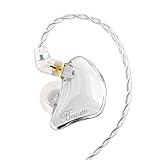
BASN Bmaster — Hybrid Alternative for Bass-Oriented Buyers
- Good Sound Isolation: This sound isolation in ear monitors headphone could...
- HiFi Stereo Sound: This in-ear earbuds headphone monitor is full of low...
- Comfortable & Secure Fit: Ergonomic in-ear earbuds shape is based on...
The BASN Bmaster belongs here as a hybrid alternative, not an all-BA recommendation. Its advertised configuration combines one balanced armature and two dynamic drivers per ear. That distinction matters if you are specifically shopping for balanced-armature-only earphones.
Its appeal is to listeners who want BA-containing IEMs but are not committed to one driver technology. Hybrid designs can assign different frequency regions to different transducers, giving designers another route to their intended tonal balance. The presence of dynamic drivers does not automatically establish stronger bass, but it makes this a relevant alternative for buyers exploring that preference.
The Bmaster listing includes two detachable MMCX cables, which can be useful as a spare or for different connection needs, depending on the supplied versions. Replaceable cables are especially practical for rehearsal and daily commuting, where snagging or connector damage can otherwise end the useful life of an earphone.
Its noise isolation is passive: the shell and ear tips reduce outside sound by sealing the ear canal. It does not mean active noise cancellation. For musicians, dependable isolation can make a monitor mix easier to hear, but it should never be used as a reason to increase playback to unsafe levels.
The main drawback is scope and complexity. It cannot satisfy a strict all-BA requirement, and a three-driver hybrid still depends on effective crossover and acoustic integration. The included cable count is a convenience feature, not evidence of superior sound.
Buy if you are open to hybrid IEMs, want replaceable cables, and prefer evaluating the complete earphone over its driver label. Skip if your goal is specifically an all-balanced-armature design.
Verdict: The Bmaster is a useful comparison option for buyers whose real priority is bass preference and everyday practicality rather than BA exclusivity.
FAQ
Which IEM has the most balanced sound?
There is no universally most balanced IEM because perceived tonal balance depends on frequency response, fit, listening volume, and personal preference. A secure seal is essential for assessing bass correctly. Balanced-armature technology does not mean neutral tuning; look for a tonal balance that keeps bass, vocals, and treble proportionate to your needs.
Is it better to have balanced or unbalanced IEMs?
Balanced-armature drivers and balanced electrical connections describe different things. A balanced output uses separate signal paths for each channel, while a conventional single-ended output shares a return connection. Neither is automatically better for IEMs. Noise, output impedance, available volume, and compatibility matter more than choosing a 4.4 mm connector over 3.5 mm.
Are balanced armature IEMs good for bass?
Balanced armature IEMs can reproduce substantial, extended bass when their drivers and acoustic design support it. Bass quantity, impact, and texture vary considerably between models. A poor seal can remove low-frequency output regardless of driver type, so correct tips and fit should be checked before concluding that BA bass is inadequate.
Do more balanced armature drivers mean better sound?
No. Driver count alone does not establish sound quality. Additional drivers can increase output capability or divide frequency ranges, but they also introduce integration challenges. Crossover design, acoustic filtering, distortion, frequency response, and fit determine the result. A well-designed single-driver earphone can be preferable to a poorly integrated multi-driver model.
Conclusion
Balanced armature IEMs are worth considering for their range of designs, compact driver arrangements, and suitability for both everyday listening and monitoring. The right purchase begins with your preferred tonal balance and a comfortable, repeatable seal. Treat driver counts and connector types as supporting specifications, then prioritize source compatibility, dependable support, and an earphone you can enjoy wearing for the full listening session.