What is an Analog Mixer?
Analog mixers are devices that mix multiple audio signals from various sound sources such as mics, guitars, and drums into a single or multiple outputs. Unlike digital mixers, which process audio signals digitally, analog mixers handle signals in their original analog form. This can result in a distinct sound quality and output that many professionals and enthusiasts find appealing.
One of the main reasons sound engineers prefer analog mixing is the tactile, hands-on experience it offers. The physical faders, knobs, and switches provide intuitive control over input channels, making it easier to adjust levels and effects in real time. This ability is particularly valuable during live mixing and live performances, where quick adjustments are crucial. Analog mixers are also known for producing unique sounds, often described as warm and full of character, which many users find desirable.
Moreover, analog mixers often deliver superior audio quality due to their straightforward signal path and high-quality preamps. The absence of digital conversion can reduce latency and preserve the natural character of the sound. For musicians and producers who prioritize warmth and authenticity in their mixes, analog mixers remain an excellent choice.
Types of Analog Mixers
Analog mixers come in various types, each suited to different applications and user preferences. Understanding these types can help you choose the best analog mixer for your specific needs.
Compact Analog Mixers
Compact analog mixers are small, portable units designed for home studios, podcasting, and small live performances. They typically offer a limited number of input channels but include essential features such as built-in effects, USB connectivity, and phantom power. These mixers are ideal for beginners and musicians who need a straightforward, user-friendly device without overwhelming complexity.
Large Format Analog Consoles
Large format analog consoles are professional-grade mixers commonly found in recording studios and live sound venues. These consoles provide a high channel count, extensive routing options, and premium preamps and EQ sections. They often feature motorized faders and advanced signal processing capabilities. Large format consoles deliver superior audio quality and flexibility, making them suitable for complex music production and post production tasks.
Summing Mixers
Summing mixers are specialized analog mixers used primarily to combine multiple digital audio tracks from a DAW into a single stereo output. They offer minimal processing and focus on preserving audio quality by providing a clean and transparent summing path. Summing mixers are favored by audio engineers seeking the warmth and character of analog mixing while working within a digital workflow.
Hybrid Analog-Digital Mixers
Hybrid mixers combine analog mixing components with digital features such as built-in audio interfaces, multitrack recording, DAW control, and digital effects. These mixers offer the tactile experience of analog mixing with the convenience and flexibility of digital technology. Hybrid mixers are popular in home studios and rehearsal spaces where users require both hands-on control and seamless integration with digital audio workstations.
Rackmount Analog Mixers
Rackmount analog mixers are designed to fit into standard equipment racks, making them ideal for mobile setups, broadcast applications, and installations where space is limited. They provide essential mixing capabilities in a compact form factor and often include features like USB connectivity and phantom power. Rackmount mixers offer a practical solution for users needing portability without sacrificing audio quality.
Key Features of Analog Mixers
Input Channels and Connectivity Options
Understanding how many channels you need is fundamental. Inputs and input channels determine how many sound sources—such as microphones, instruments, and other sources—you can connect simultaneously. For example, a rehearsal space or home studio setup might require fewer input channels, while a live performance or multitrack recording session demands more extensive input options.
Connectivity options are equally important. Many modern analog mixers come with USB connectivity or a built-in audio interface, allowing seamless integration with digital audio workstations (DAWs) for easy recording and post production. Some mixers even offer Bluetooth connectivity for wireless audio streaming, enhancing flexibility.
Onboard Effects and Outboard Gear Compatibility
While analog mixers traditionally focus on raw sound control, many models now include built-in effects such as reverb, delay, and compression. These onboard effects can enhance your sound without the need for additional outboard gear, streamlining your setup.
However, the ability to connect external processors remains valuable for sound engineers who want to tailor their audio precisely. Flexible routing options ensure you can integrate outboard gear effortlessly, expanding your creative possibilities.
Phantom Power and Preamps
Phantom power is essential if you plan to use condenser mics, which require external power to operate. Most quality analog mixers include this feature on select input channels.
High-quality preamps are another critical aspect, as they amplify the audio signal with minimal noise and distortion. The best analog mixers feature robust preamps that preserve the integrity of your sound, contributing to overall sound quality.
Build Quality and User-Friendly Design
For frequent use, especially in live performances or touring, build quality is paramount. Durable construction ensures the mixer withstands the rigors of transport and handling.
User-friendly interfaces with clear labeling, ergonomic controls, and motorized faders (in some pro consoles) enhance the mixing experience. Beginners benefit from intuitive designs that reduce the head spin often associated with complex audio equipment. Beginner mixers are specifically designed to be user-friendly for those new to audio mixing, making it easier for novices to get started without feeling overwhelmed.
Benefits of Analog Mixers
Warm and Rich Sound Quality
Analog mixers offer several distinct advantages that make them a preferred choice for many musicians, sound engineers, and audio enthusiasts. One of the primary benefits is the warm, rich sound quality they provide. Unlike digital mixers, which process audio signals through digital conversion, analog mixers maintain the signal in its original electrical form. This often results in a more natural and pleasing tone, with subtle harmonic distortions that add character and depth to the audio.
Immediate and Tactile Control
Another significant advantage is the immediacy and tactile nature of analog mixing. The physical knobs, faders, and switches allow for quick, intuitive adjustments without navigating complex menus or software interfaces. This hands-on experience can be invaluable during live performances or fast-paced recording sessions, where real-time control and responsiveness are crucial.
Low Latency Performance
Analog mixers also tend to have lower latency compared to digital mixers because they do not rely on digital signal processing. This zero or near-zero latency is especially important for live sound applications and monitoring, where any delay can disrupt timing and performance.
High-Quality Preamps and Phantom Power
Many analog mixers come equipped with high-quality preamps and phantom power, ensuring that microphones and other sound sources are captured with clarity and precision. The straightforward signal path in analog mixers often means fewer components that can introduce noise or degrade audio quality, contributing to a cleaner sound.
Flexibility with Outboard Gear Integration
Flexibility is another key benefit. Analog mixers often feature multiple auxiliary sends, insert points, and routing options, allowing sound engineers to integrate outboard gear such as compressors, equalizers, and effects processors seamlessly. This capability provides greater creative control and the ability to tailor the sound to specific needs.
Durability and Reliability
Durability and reliability are also hallmarks of analog mixers. Built with robust components and simple circuitry, they are less prone to software glitches or failures, which can be critical in live sound environments where consistency is essential.
Simplified Workflow for Multiple Sources
Furthermore, analog mixers can simplify complex setups by allowing multiple sound sources to be connected simultaneously without the need for constant plugging and unplugging. This is particularly advantageous in home studios and rehearsal spaces, where ease of use and workflow efficiency matter.
Aesthetic and Inspirational Value
Lastly, analog mixers often appeal to those who appreciate the aesthetic and nostalgic value of classic audio equipment. The physical presence of a well-crafted analog console can inspire creativity and provide a satisfying, immersive mixing experience that digital interfaces sometimes lack.
Best Analog Mixers
Tascam Model 24
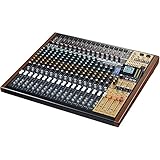
- A full set of familiar EQ and Auxiliary knobs remove the need to menu dive...
- Features 16 high-grade TASCAM mic preamps and multiple stereo line inputs...
- Capture up to 24 tracks simultaneously (at 24bit/48kHz resolution) directly...
The Tascam Model 24 is a versatile analog mixer ideal for home studios, content creators, and live performers seeking an all-in-one solution. It combines analog mixing with digital convenience via a built-in multitrack recorder and USB audio interface, allowing direct recording to an SD card or computer for DAW control.
Featuring 24 input channels—including 16 mono mic/line inputs with high-quality preamps and 4 stereo line inputs—each channel offers one-knob compression, three-band EQ, and flexible routing. Phantom power is available on all mic inputs, supporting various condenser microphones.
The mixer includes an onboard effects processor with 16 effects such as reverbs, delays, and modulation, reducing the need for external outboard gear while maintaining excellent audio quality.
Built with robust construction and a user-friendly interface, the Model 24 suits frequent use in studios, rehearsal spaces, and live performances. Its compact size fits well in home studios, and intuitive controls minimize the learning curve for beginners and professionals.
Additional features include multiple headphone and control room outputs for customized monitoring, USB connectivity for easy recording and playback, and compatibility with popular DAWs like Pro Tools and Logic Pro, making it a valuable tool for music production, post production, and live streaming workflows.
Mackie ProFX30v3

- Scales to full bands and small venues, 30 channels of analog control
- Big-desk control without a digital menu in sight
- Onyx Preamps: clean gain across every mic channel

The Mackie ProFX30v3 is a versatile analog mixer ideal for musicians, podcasters, and live sound engineers needing a powerful yet user-friendly solution. It features 30 input channels, including multiple XLR mic inputs, line inputs, and stereo channels, accommodating diverse sound sources like drums, guitars, vocals, and keyboards.
Equipped with renowned Onyx mic preamps, the mixer delivers clear, low-noise audio, enhancing overall sound quality. Its built-in GigFX effects engine offers high-quality reverbs, delays, choruses, and flangers, allowing creative shaping without extra outboard gear.
The ProFX30v3 includes a USB interface for easy recording and playback with computers, supporting seamless integration with popular DAWs for home recording, live streaming, and post production. Phantom power is available on all mic channels, enabling professional condenser mic use.
Built with rugged durability and a user-friendly layout, it suits frequent use in rehearsal spaces and live performances. Flexible routing options, such as multiple aux sends and subgrouping, provide extensive control and compatibility with other gear.
As an affordable option from one of the most popular brands, Mackie, the ProFX30v3 offers expert advice-backed features and reliable build quality, making it a top choice among best analog mixers for both beginners and experienced sound engineers.
Yamaha MG20XU
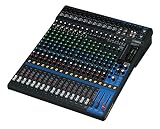
- 20-Channel mixer with USB and SPX digital effects
- Featuring studio-grade discrete class-A D-PRE preamps with inverted...
- 3-band EQ and high-pass filters give you maximum control and eliminate...
The Yamaha MG20XU is a robust analog mixer designed for live sound and studio use, featuring 20 channels with integrated USB audio interfacing. It combines professional-grade D-PRE preamps and a user-friendly layout, making it suitable for beginners and experienced sound engineers alike.
Key features include 16 mono and 2 stereo channels, built-in SPX digital effects such as reverb and delay, and flexible routing options for various setups including live streaming and podcasting. The USB interface enables easy recording and playback with computers, enhancing home studio and rehearsal space workflows.
Built with a durable metal chassis, the MG20XU withstands frequent use and transport. It offers phantom power on mic inputs for condenser microphones but lacks Bluetooth connectivity. While it doesn’t have a large touch screen or motorized faders, its intuitive controls minimize the learning curve and provide reliable performance for live mixing and music production.
Behringer Eurodesk SX2442FX Ultra-Low Noise Design

- Premium ultra-low noise, high-headroom analog mixer
- 16 state-of-the-art XENYX Mic Preamps
- Neo-classic "British" 3-band EQs with semi-parametric mid band
The Behringer Eurodesk SX2442FX is a classic analog mixer known for its ultra-low noise design, making it a reliable choice for live sound and studio use. It offers numerous input channels, including multiple mic and line inputs, to handle vocals, guitars, drums, and keyboards. Its high headroom and low noise floor ensure clear audio signals with minimal distortion, preserving excellent sound quality.
Key features include a comprehensive onboard effects processor with high-quality reverbs, delays, and modulation effects, reducing the need for external outboard gear. The ergonomic layout provides intuitive control over EQ with sweepable mids, auxiliary sends for flexible routing, and group buses for efficient channel management—ideal for sound engineers in live performances and music production.
Built with a robust chassis, the Eurodesk SX2442FX withstands frequent transport and heavy use, suitable for touring musicians and rehearsal spaces. It also offers multiple outputs and insert points, enabling seamless integration with compressors, effects units, audio interfaces, and other gear, ensuring compatibility with diverse audio setups including home studios and professional live sound rigs.
Applications of Analog Mixers in Different Settings
Home Studio and Music Production
In home recording environments, analog mixers provide easy recording and control over multiple channels. These mixers are specifically designed to meet the needs of the individual musician, offering features that cater to audio fidelity, versatility, and live performance requirements in a home studio setting. Their USB connectivity allows seamless integration with DAWs, making them a practical choice for musicians aiming to produce high-quality tracks without complicated setups.
Live Sound and Live Performances
For live mixing, analog mixers offer the immediacy and reliability that digital mixers may lack. Sound engineers appreciate the ability to quickly adjust levels and effects on the fly, ensuring optimal sound quality throughout the performance.
Rehearsal Spaces and Live Streaming
Analog mixers with Bluetooth connectivity and USB interfaces are increasingly used in rehearsal spaces and live streaming setups. The setup and acoustics of the room play a crucial role in determining how effectively these mixers perform, as room size and treatment can significantly impact sound quality. They facilitate flexible routing and easy integration with streaming software, enhancing the overall audio experience.
Conclusion
Analog mixers continue to hold a special place in the world of audio engineering, offering a hands-on, immersive experience that blends warmth, character, and intuitive control. Whether crafting music in a home studio, managing live sound, or enhancing a rehearsal space, their straightforward design and rich sound quality make them invaluable tools for musicians and sound engineers alike. Embracing the blend of classic analog charm with modern connectivity options, these mixers empower creativity and deliver authentic audio experiences that resonate with both artists and audiences.
FAQ
What is the difference between analog mixers and digital mixers?
Analog mixers process audio signals in their original electrical form, providing a tactile, hands-on experience with physical knobs and faders. This often results in a warm, natural sound favored by many sound engineers. Digital mixers convert audio signals into digital data, offering advanced features like built-in effects, scene recall, and software integration. While digital mixers provide greater flexibility and complex routing options, analog mixers are prized for their simplicity and immediacy, especially in live sound environments.
How many input channels do I need in an analog mixer?
The number of input channels depends on the number of sound sources you plan to connect simultaneously. For home studios or podcasting setups, a smaller mixer with 4 to 12 channels may suffice. Live performances or multitrack recording sessions typically require mixers with 16 channels or more to accommodate multiple microphones, instruments, and other sources.
Are onboard effects important in an analog mixer?
Onboard effects such as reverb, delay, and compression can enhance your sound and simplify your setup by reducing the need for external processors. However, if you prefer using specialized outboard gear or plugins, flexible routing options to integrate external effects are equally important.
What is phantom power, and why is it necessary?
Phantom power supplies 48 volts of DC power to condenser microphones, which require external power to operate. Most quality analog mixers provide phantom power on select input channels, enabling the use of a wide range of professional microphones.
Can analog mixers connect directly to a computer for recording?
Many modern analog mixers include USB connectivity or built-in audio interfaces, allowing you to connect directly to a computer for easy recording and post production. This feature is especially useful in home studios and rehearsal spaces, streamlining the workflow between analog mixing and digital audio workstations (DAWs).