What is a Multimeter?
A multimeter is a versatile electronic measuring instrument that combines several measurement functions into one device. It is primarily used to measure electrical properties such as voltage, current, and resistance, making it an indispensable tool for electricians, technicians, engineers, and DIY enthusiasts alike. Multimeters come in two main types: analog and digital. Analog multimeters use a needle and dial to display readings, which can be helpful for observing trends or fluctuations in the measured signal. Digital multimeters (DMMs), on the other hand, provide numeric readings on an LCD screen, offering greater precision and ease of use.
Multimeters are essential for diagnosing electrical problems, testing batteries, checking circuit continuity, and verifying the functionality of components like diodes and transistors. They allow users to safely measure both alternating current (AC) and direct current (DC) voltages, which are common in household wiring and electronic devices respectively. Many modern multimeters also include advanced features such as non-contact voltage detection, which helps identify live wires without direct contact, enhancing user safety.
The ability to measure multiple electrical parameters with a single tool makes the multimeter a practical and cost-effective device. Whether you are troubleshooting a broken wire, testing a battery’s charge, or verifying the output of a power supply, a multimeter provides the critical information needed to make informed decisions and repairs. With a range of models available—from basic handheld units for beginners to sophisticated true RMS meters for professionals—there is a multimeter suited for every level of expertise and application. This essential tool is battery powered for portability and convenience, making it perfect for use on a test bench or in the field. For those seeking to rely on just one tool, a high-quality multimeter can serve as the only meter needed for a wide range of electrical measurements, reducing the need for a few meters cluttering your tool bag.
Types of Multimeters
Analog Multimeters
Multimeters come in various types, each designed to cater to different user needs and applications. The two primary categories are analog multimeters and digital multimeters. Analog multimeters use a needle and dial to display readings, which can be advantageous for observing trends or fluctuations in electrical signals. However, they tend to be less precise and harder to read compared to their digital counterparts.
Digital Multimeters
Digital multimeters (DMMs) have largely replaced analog models due to their higher accuracy, ease of use, and clearer numeric displays on LCD screens. Within digital multimeters, there are further distinctions based on features and complexity. Basic digital multimeters typically offer measurements of voltage (both AC and DC), current, resistance, and continuity. More advanced models include additional functions such as capacitance measurement, frequency counting, temperature measurement via a temperature probe, diode testing, and duty cycle analysis.
Manual Range vs. Auto-Ranging Multimeters
Another important classification is between manual range and auto-ranging multimeters. Manual range meters require the user to select the appropriate measurement range, which can be challenging for beginners but offers more control for experienced users. Auto-ranging multimeters automatically detect and select the correct range for the measurement, simplifying operation and reducing the chance of user error.
Specialized Multimeters
Specialized multimeters also exist, such as clamp meters, which can measure current without direct contact by clamping around a conductor. These are particularly useful for measuring high currents safely and efficiently. Non-contact voltage detection is another feature found in many modern multimeters, allowing users to detect live wires without touching them, enhancing safety.
Choosing the Right Type
When selecting a multimeter type, consider the intended applications, the level of precision required, and user experience. For general household and hobbyist use, a basic digital multimeter with auto-ranging and non-contact voltage detection is often sufficient. For professional or industrial applications, true RMS meters with advanced measurement capabilities and robust construction are preferred.
Key Features of Multimeters
AC and DC Voltage Measurement
When choosing the best multimeters, it is important to understand the key features that make these tools versatile and effective for various electrical tasks. One of the fundamental features is the ability to measure both ac voltage and dc voltage. This dual capability allows users to work with household wiring (which typically involves ac voltage) as well as battery-powered and electronic devices that use dc voltage. A reliable digital multimeter will provide accurate readings for both types, ensuring safety and precision.
Large and Clear Display
Another critical feature is the presence of a large screen or LCD screen that clearly displays measurement results. A large screen enhances readability, especially in low-light conditions or when working at awkward viewing angles. Some advanced multimeters also offer backlighting or reverse contrast displays to improve visibility further.
Durability and Protection
Durability is also a key consideration, with many high-quality multimeters featuring a rubber sleeve or protective casing to absorb shocks and prevent damage from accidental drops. This rugged design is especially valuable for professionals who use their meters on job sites.
Non-Contact Voltage Detection for Safety
Non-contact voltage detection is a safety feature that allows users to detect live wires without making direct contact, reducing the risk of electric shock. This feature is often combined with a user-friendly interface that simplifies operation, making the multimeter accessible to both beginners and experienced users.
Auto-Ranging vs. Manual Range
Auto-ranging capability is another convenience offered by many modern multimeters. Auto-ranging meters automatically select the appropriate measurement range, eliminating the need for manual range selection and reducing user error. However, some users prefer manual range meters for the control they provide in specific applications.
Additional Measurement Functions
Additional measurement capabilities such as temperature measurement with a temperature probe, diode test, duty cycle analysis, capacitance, and frequency measurement add versatility to the multimeter. These extra functions enable users to perform comprehensive diagnostics on electrical components and circuits.
Current Measurement with Clamp Feature
For current measurements, clamp meters or multimeters with a current clamp feature allow safe and efficient measurement of ac and dc current without breaking the circuit. This is particularly useful for measuring high currents or in situations where circuit disruption is undesirable.
Optimal Viewing Angle
Lastly, the viewing angle of the multimeter’s screen can affect ease of use. A screen that maintains clarity from various angles allows users to take readings comfortably without needing to reposition themselves or the meter constantly.
Top Multimeters
FNIRSI 2C53T Upgraded Handheld Oscilloscope

- 【Newly Version】The 2C53T is an upgraded version of the 2C23T, which...
- 【2 Channel Oscilloscope】50 MHz bandwidth, 250 MSa/s sampling rate...
- 【4.5-Digit 19999 Counts Multimeter】AC Voltage: 0-750 V, DC Voltage...
The FNIRSI 2C53T is an upgraded handheld oscilloscope that combines the functionality of an oscilloscope with some multimeter features, making it a versatile tool for electronics enthusiasts and professionals alike. This device is particularly useful for those who want to analyze signal waveforms in addition to performing standard electrical measurements.
Equipped with a bright LCD screen, the FNIRSI 2C53T offers clear visualization of voltage waveforms, allowing users to observe signal behavior in real-time. Its portability and compact design make it convenient for fieldwork or use on a test bench. The oscilloscope function supports various trigger modes and adjustable time bases, which are essential for capturing and analyzing complex signals.
In addition to the oscilloscope capabilities, the FNIRSI 2C53T includes basic multimeter functions such as measuring ac and dc voltage, resistance, and continuity. This combination of features makes it a great meter for users who require both waveform analysis and electrical measurements without carrying multiple devices.
The device also boasts a user interface designed for fairly easy operation, with intuitive controls and menus that help users navigate through its various functions efficiently. Its durable build and rechargeable battery add to its appeal as a useful tool for both beginners and experienced users.
Overall, the FNIRSI 2C53T serves as a practical all-in-one instrument, offering component measurements and waveform analysis at a competitive meter cost. Its inclusion of a temperature measurement feature via an optional probe further expands its versatility, making it suitable for a wide range of diagnostic and troubleshooting tasks in electronics and electrical engineering.
Klein Tools 69149P Electrical Test Kit with Digital Multimeter
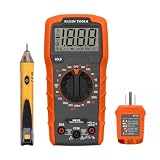
- VERSATILE MULTIMETER: Measures up to 600V AC/DC voltage, 10A DC current...
- CONTINUITY TESTING: MM320 multimeter with visual and audible indicators for...
- NON-CONTACT VOLTAGE TESTER: NCVT1P with bright LED indicating working...

The Klein Tools 69149P Electrical Test Kit is a comprehensive solution designed for electricians and serious DIYers who need a reliable and versatile digital multimeter. This kit includes a high-quality digital multimeter capable of measuring ac and dc voltage, current, resistance, continuity, and more. It also features advanced functions such as diode testing and capacitance measurement, making it suitable for a wide range of electrical troubleshooting tasks.
One of the standout features of the Klein Tools 69149P multimeter is its robust build quality, designed to withstand the rigors of daily use on job sites. The device includes a large, easy-to-read LCD screen with a backlight, ensuring clear visibility even in low-light conditions. Safety is a priority with this model, as it is rated for high voltages and includes features like overload protection to prevent damage to the meter or the circuit. The Klein Tools TRMS Auto-Ranging Slim Digital Multimeter is highly rated for visibility and ease of use.
Moreover, the Klein Tools 69149P supports true RMS measurements, which ensures accurate readings for both standard and complex waveforms commonly found in industrial and residential electrical systems. This feature is especially valuable when measuring ac voltage and current in environments with non-linear loads.
Overall, the Klein Tools 69149P Electrical Test Kit with Digital Multimeter offers great value by combining durability, a wide range of measurement capabilities, and user-friendly features. It is an excellent choice for anyone looking for a decent multimeter that can handle high voltages safely while providing precise and reliable measurements across various electrical components and circuits.
AstroAI Digital Clamp Meter Multimeter
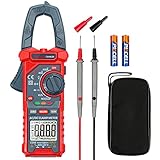
- Versatile Digital Clamp Meter: Accurately measures AC/DC Current, AC/DC...
- Non-contact Voltage Testing: This Clamp Meter features non-contact voltage...
- Multifunctional & Easy to read: Support Data Hold, Max/Min, Auto power off...
The AstroAI Digital Clamp Meter Multimeter is a versatile and user-friendly tool designed for both professionals and hobbyists who need to measure electrical parameters safely and accurately. This multimeter combines the traditional functions of a digital multimeter with the convenience of a clamp meter, enabling users to measure current without direct contact by clamping around a conductor. This feature is especially valuable when working with high currents or in situations where breaking the circuit is impractical.
Equipped with True RMS (Root Mean Square) technology, the AstroAI Digital Clamp Meter provides precise readings for both AC and DC voltages and currents, making it suitable for a wide range of applications, from household electrical troubleshooting to automotive and industrial maintenance. The meter also supports measurement of resistance, continuity, frequency, capacitance, and diode testing, offering a comprehensive set of functions in one device.
The unit features a large LCD screen with backlighting, ensuring clear visibility even in low-light environments or tight spaces. Its ergonomic design includes a comfortable rubber sleeve that enhances grip and protects the device from accidental drops. Additionally, the meter incorporates a magnetic hanger, allowing hands-free operation by attaching the device to metal surfaces, which is particularly useful when working in confined or awkward locations.
Safety is a priority with the AstroAI Digital Clamp Meter, which includes overload protection to prevent damage to the meter and the circuit under test. The device also has a non-contact voltage detection feature that helps users identify live wires without direct contact, further enhancing safety during electrical inspections.
Powered by a rechargeable lithium-ion battery, the AstroAI meter offers convenience and long-lasting use, reducing the need for frequent battery replacements. The package typically includes test leads and alligator clips, enabling secure and versatile connections for various measurement tasks.
Conclusion
A digital multimeter is an essential tool for anyone involved with electrical components, whether for professional, hobbyist, or home use. When selecting the best multimeters, consider key factors such as measurement functions, ease of use, durability, and budget. Reading reviews and comparing features will help you find a meter that offers a great balance of quality and price. With proper care and usage, a multimeter can provide accurate and reliable measurements of voltage, current, resistance, temperature, and more. Equip yourself with a quality digital multimeter and measure electrical components with ease and confidence.
FAQ
What is a multimeter used for?
A multimeter is used to measure various electrical properties such as voltage (both ac and dc), current, resistance, continuity, and sometimes additional parameters like temperature and capacitance. It is an essential tool for troubleshooting electrical circuits, testing batteries, and verifying component functionality.
How do I measure voltage with a multimeter?
To measure voltage, set your multimeter to the appropriate voltage setting (AC or DC), connect the probes to the circuit points where you want to measure, and read the value displayed on the screen. Always ensure you select the correct voltage type to avoid inaccurate readings or damage.
What is auto-ranging in a multimeter?
Auto-ranging multimeters automatically select the correct measurement range, simplifying use and reducing the chance of user error. Manual range meters require the user to select the range, offering more control but potentially making the device harder to use for beginners.
How does non-contact voltage detection work?
Non-contact voltage detection allows the multimeter to sense the presence of voltage in a conductor without direct contact, enhancing user safety by reducing the risk of electric shock. This feature is especially useful for quickly identifying live wires before beginning work.
Can a multimeter measure current without breaking the circuit?
Yes, clamp meters or multimeters with a current clamp can measure ac and dc current by clamping around a conductor, allowing current measurement without interrupting the circuit. This is particularly useful for high current measurements or when circuit disruption is undesirable.