What makes an acoustic guitar feel right from the first chord? Body proportions, neck shape, string tension, and the way the sound responds to your touch all matter. The best choice balances those qualities with your playing style—not simply a prestigious name or elaborate appointments. Martin’s range includes powerful dreadnoughts, comfortable smaller bodies, traditional all-solid instruments, and modern acoustic-electrics. Understanding those differences will help you choose a guitar that suits your music, your reach, and the way you actually play.
Top Martin Guitars
Martin D-28 Modern Deluxe

- Ebony Fingerboard - Natural with Aging Toner
- Acoustic Guitar with Spruce Top
- Rosewood Back Sides
The Martin D-28 is a compelling general-purpose recommendation for buyers seeking a traditional premium Martin. Its dreadnought body, spruce soundboard, and rosewood back and sides create the familiar combination of substantial bass, clear trebles, and harmonic richness associated with this design.
Key specifications
- Body: Dreadnought, 14-fret neck joint.
- Construction: Solid spruce top; solid East Indian rosewood back and sides.
- Scale length: 25.4 inches.
- Nut width: 1¾ inches on modern Standard Series versions.
- Electronics: None on the standard acoustic configuration.
The D-28’s first strength is its breadth of use. It can support singing, provide rhythmic weight in an acoustic ensemble, and deliver enough tonal complexity for exposed solo arrangements. Players moving between strumming and picked passages have good reasons to put it on their shortlist.
Its second strength is the combination of projection and tonal depth. A dreadnought offers considerable acoustic presence, while rosewood typically adds a broader overtone structure than mahogany. That can make open chords sound expansive and sustained.
Those same qualities are not automatically desirable in every setting. A bass-rich guitar can require a lighter touch or more careful microphone placement when recording. Its broad body and relatively deep sides can also make the picking arm uncomfortable during long seated sessions.
Check the production year when comparing examples. Martin Standard Series specifications have changed over time, and descriptions of older D-28 bracing or neck shapes should not be applied indiscriminately to newer instruments.
Choose this if you want a traditional all-solid dreadnought for accompaniment, strumming, and mixed playing, and its dimensions feel comfortable.
Verdict: The D-28 earns its overall recommendation through versatility rather than universal suitability.
Martin OM-28 Standard Series Acoustic Guitar
- Ebony Fingerboard - Natural with Aging Toner
- Acoustic Guitar with Spruce Top
- Rosewood Back Sides
The Martin OM-28 is a premium choice for players who want a responsive acoustic with substantial tonal depth but less physical bulk than a dreadnought. Its Orchestra Model body brings the picking hand closer to the player, while its full-length scale preserves a firm, articulate response.
Key specifications
- Body: OM, 14-fret neck joint.
- Construction: Solid spruce top; solid East Indian rosewood back and sides.
- Scale length: 25.4 inches.
- Nut width: 1¾ inches.
- Electronics: None on the standard acoustic configuration.
The OM-28’s appeal starts with balance. Rosewood contributes a complex, overtone-rich character, while the body format generally keeps the bass from overwhelming the middle and upper registers. That combination can help alternating bass lines, melody notes, and inner chord voices remain distinct.
Its fingerstyle suitability also comes from the relationship between neck width and string spacing. The nut provides useful room for fretting, although players should check bridge spacing separately: nut width alone does not tell you how much space the picking hand receives.
The longer scale is both a strength and a limitation. It supports clear attack and accommodates altered tunings well, but can feel firmer than a shorter-scale instrument with equivalent strings and setup. Players seeking the softest possible fretting feel should compare alternatives rather than assume a smaller body means lower tension.
This is also a capable strumming guitar. Body shape is not a genre restriction, and an OM can handle accompaniment beautifully without producing dreadnought-sized bass.
Choose this if you want a high-end Martin for fingerstyle, recording, and varied acoustic playing, and you value balance over maximum low-end impact.
Verdict: The OM-28 is the strongest fit here for players seeking premium rosewood complexity in a manageable body. Its principal compromises are cost, relatively firm string feel, and the absence of standard factory electronics.
Martin D-18 Satin Standard Series Acoustic Guitar

- Ebony Fingerboard - Satin Natural Aging Toner
- Acoustic Guitar with Spruce Top
- Mahogany Back Sides
The Martin D-18 suits players who want dreadnought power with a more direct, fundamental-focused character. Its spruce-and-mahogany construction makes it a natural alternative to the rosewood-bodied D-28, especially when clean note separation matters more than a broad wash of overtones.
Key specifications
- Body: Dreadnought, 14-fret neck joint.
- Construction: Solid spruce top; solid genuine mahogany back and sides.
- Scale length: 25.4 inches.
- Nut width: 1¾ inches on modern Standard Series versions.
- Electronics: None on the standard acoustic configuration.
For flatpicking, the D-18’s attraction is not simply volume. A clear initial attack and relatively uncluttered harmonic character can help quick runs remain intelligible. Bass notes, chord fragments, and melody lines can occupy distinct roles instead of merging into a sustained background.
That makes it an appealing choice for bluegrass, old-time accompaniment, and country playing. However, it is equally useful for singers who want rhythmic support without as much overtone density behind their voice.
Its second major strength is dynamic range. A well-set-up example can respond to restrained accompaniment while retaining room for a stronger picking attack. Strings, pick material, and technique all influence that response, so compare guitars using your normal equipment where possible.
The concrete drawback is physical rather than musical: this remains a full-size dreadnought. Choosing mahogany instead of rosewood does not reduce the reach over the lower bout or make the body shallower.
Players seeking lush sustain may also prefer the D-28. The D-18’s more direct presentation is a reason to choose it, not evidence that it is inherently superior.
Choose this if you prioritize articulate picked notes, strong rhythm, and a relatively dry, woody accompaniment sound.
Verdict: The D-18 is a persuasive premium Martin for flatpickers and rhythm players. Its clarity is the central attraction; dreadnought dimensions and the lack of onboard electronics are the main practical limitations.
Martin Guitar 000-15M Acoustic Guitar with Gig Bag
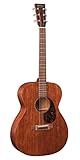
- The body size is 000-14 FretTop is solid genuine mahogany rosette.
The Martin 000-15M offers a different route into traditional Martin ownership. Instead of pairing a spruce soundboard with contrasting back and side woods, it uses mahogany throughout the body for a woody, mid-focused voice and understated appearance.
Key specifications
- Body: 000, 14-fret neck joint.
- Construction: Solid genuine mahogany top, back, and sides.
- Scale length: 25.4 inches.
- Nut width: 1¹¹⁄₁₆ inches.
- Electronics: None on the standard 000-15M.
Its tonal appeal lies in texture rather than brilliance. Compared with many spruce-topped instruments, the 000-15M tends toward a rounded attack and prominent midrange. That can complement intimate vocals, roots accompaniment, blues, and arrangements where a sharply sparkling top end would feel intrusive.
The smaller body is another meaningful benefit. It generally asks less of the picking shoulder than a dreadnought and can feel more natural during seated practice. Its restrained satin presentation also appeals to buyers who prefer functional simplicity over elaborate decoration.
However, the specifications contain an important surprise: despite its 000 body, this model uses a 25.4-inch scale. Do not assume that every Martin 000 has the shorter scale associated with certain other models.
Its narrower nut can suit players who like compact chord shapes, but may feel restrictive to fingerstylists wanting generous spacing. Neither preference is dictated by hand size alone; finger thickness, technique, and neck shape also matter.
The absence of factory electronics is a practical drawback for regular performers. Adding a pickup is possible, but the installation and supporting equipment should be part of the purchase decision.
Choose this if you want an all-solid Martin with a warm, woody personality and a comfortable body, rather than maximum brightness or bass.
Verdict: The 000-15M is a strong value-oriented choice among traditional all-solid Martins. Buy it for its distinctive voice—not as a less expensive substitute that will sound like a spruce-and-rosewood guitar.
Martin SC-13E Modern Road Series Acoustic-Electric Guitar

- Next-Level Playability: The SC body and Sure Align neck system eliminate...
- Premium Acoustic Tone: A gloss spruce top and koa fine veneer back and...
- Designed for Speed: The Low Profile Velocity neck taper provides effortless...
The Martin SC-13E approaches acoustic playing from a modern perspective. Its offset body, generous cutaway, and access-oriented neck arrangement address a familiar frustration: reaching beyond the neck joint on a conventional acoustic.
Key specifications
- Body: S-13 fret cutaway.
- Construction: Solid spruce top; layered back and sides with koa fine veneer.
- Scale length: 25.4 inches.
- Nut width: 1¾ inches.
- Electronics: Fishman MX-T on the original SC-13E configuration described here.
The main benefit is usable access. The cutaway and reduced heel obstruction make upper-register passages less awkward than on a traditional non-cutaway dreadnought. Players moving from electric guitar may appreciate that freedom, particularly for melodic fills, extended chord voicings, and lead work.
Its second strength is playing comfort. The asymmetrical design and neck treatment were developed around a less restrictive playing experience. That does not make fit universal, but it gives players a meaningful alternative to conventional acoustic proportions.
Factory electronics add practical value for rehearsals, open-mic appearances, and amplified performance. The original Fishman MX-T system includes a soundhole tuner, helping keep essential stage functions within reach.
The construction needs careful interpretation. A solid top does not make this an all-solid guitar, and koa veneer is not the same as solid koa back and sides. Buyers should understand that distinction rather than judge materials by appearance.
Similarly named SC variants can carry different woods or electronics. Confirm the full designation rather than assuming every SC-13E-related listing describes this configuration.
Choose this if upper-fret access and amplified usability matter more than owning a conventional Martin dreadnought.
Verdict: The SC-13E is the specialist choice for modern acoustic playing. Its limitation is equally clear: it is not intended to reproduce the construction, feel, or traditional identity of a Standard Series dreadnought.
Choosing the Right Martin Guitar
The best Martin acoustic guitar for the money is the one that meets your requirements without charging you for features you will rarely use. Start with physical fit, then narrow the construction and performance requirements.
Budget and Value
Think in relative tiers rather than treating every Martin as a step on one simple quality ladder.
- Budget-friendly instruments often use high-pressure laminate, simpler appointments, and production methods designed to control cost.
- Mid-range instruments may prioritize all-solid construction, factory electronics, or a modern body design—but not necessarily all three.
- Premium instruments commonly add traditional construction, more elaborate finishing, selected materials, and higher labor costs.
Value depends on your purpose. A performer may gain more from comfortable access and dependable electronics than decorative binding. A home player may prefer an acoustically inspiring instrument without any onboard controls.
Compare the complete ownership cost, including a suitable case, setup, humidity monitoring, and any pickup installation. A nominally cheaper guitar can become less economical if it immediately needs expensive additions.
Keep new, used, and discounted old-stock instruments separate when comparing offers. A clearance price does not establish the normal cost of a current model, while a used guitar’s condition can matter more than its apparent discount.
Body Size and Playing Comfort
The Martin dreadnought versus 000 decision is partly about sound, but it is also about how your body meets the instrument.
A dreadnought generally provides strong bass and considerable acoustic presence. Its wider waist and deeper body can demand more reach from the picking arm.
OM and 000 formats typically bring the player closer to the strings. They can be easier to manage while seated, although their neck dimensions and scale lengths vary.
Junior formats reduce body dimensions, but individual generations can have different scale lengths. Little Martin instruments are more compact again, making portability a priority while accepting reduced unplugged bass and projection.
For the best Martin guitars for small hands, examine more than body size. Nut width, neck depth, shoulder shape, action, and scale length all influence fretting comfort.
Try the guitar seated without a strap, then standing with one. Play beyond open-position chords. A comfortable first impression should survive barre chords, extended reaches, and several minutes of normal playing.
Solid Wood and HPL Construction
HPL means high-pressure laminate, a manufactured material formed under heat and pressure. A wood-patterned surface does not mean the panel is solid rosewood, mahogany, or koa.
Three construction categories are especially useful:
1. All-solid: Solid wood forms the top, back, and sides.
2. Solid-top with HPL or layered back and sides: The soundboard is solid wood, but the rest of the body uses another construction.
3. HPL-top: The soundboard itself is HPL rather than solid tonewood.
These distinctions matter when comparing Martin X Series solid-top versus HPL instruments. They describe construction—not an automatic ranking of musical usefulness.
All-solid guitars offer particular acoustic possibilities but require attentive environmental care. HPL can reduce cost and provide practical consistency, yet it does not make an instrument immune to heat, moisture, or damage. Necks, bridges, joints, and other components still need protection.
Bracing matters too. X-bracing supports the soundboard while influencing how it vibrates. Brace placement, dimensions, and scalloping interact with the entire design; one specification alone cannot predict the finished sound.
Electronics for Live Performance
Factory electronics are useful when you regularly connect to an acoustic amplifier or PA. They simplify setup and avoid arranging an immediate aftermarket installation.
However, an acoustic-electric is not automatically a better acoustic guitar. Judge unplugged response and amplified usefulness separately.
A favorite instrument without electronics can often accept an aftermarket pickup. Installation may involve an endpin jack, internal components, and work around the saddle or bridge, depending on the system. Use a qualified technician for valuable instruments.
For stage use, consider feedback behavior, access to controls, battery changes, and compatibility with your amplifier or DI. A built-in tuner is convenient, but it should not outweigh the guitar’s basic fit and sound.
If performance is central to your purchase, audition through equipment comparable to your own.
Beginner Comfort and Professional Setup
The best Martin guitar for beginners is not necessarily the smallest or least expensive one. It is an instrument that allows comfortable, repeatable practice.
A professional setup can matter more than a beginner label. Excessive nut-slot height makes first-position chords harder; excessive action increases fretting effort farther up the neck. Poor fret condition can produce buzzing even when the strings feel unnecessarily high.
Ask a technician to assess the guitar for your technique and intended string gauge. Very low action is not universally desirable, especially for forceful strumming.
Do not move to heavier strings simply because they promise a bigger sound. Choose strings that suit the instrument and your present playing needs, then build technique without unnecessary physical resistance.
Martin D-18 vs D-28
Both guitars are traditional all-solid dreadnoughts with spruce tops and full-length scales. Their most useful distinction is the back-and-side wood—and the tonal tendencies associated with it.
The D-18 uses genuine mahogany. It generally emphasizes a clear fundamental, direct attack, and woody midrange. That presentation suits players seeking articulate flatpicked lines or relatively uncluttered vocal accompaniment.
The D-28 uses East Indian rosewood. It generally offers more overtone complexity, extended bass character, and a spacious quality around sustained chords. Players seeking broad accompaniment often gravitate toward that sound.
The D-28 normally occupies a higher price position, although production year, finish, condition, and dealer offers can change an individual comparison.
Choose the D-18 if clarity and a more direct voice appeal to you. Choose the D-28 if you prefer rosewood richness and fuller harmonic bloom.
These are tendencies, not guarantees. Setup, strings, pick choice, technique, and differences between individual instruments can outweigh expectations based on wood alone. Compare them under the same conditions whenever possible.
FAQ
What is considered the best year for Martin guitars?
There is no universally best year. Pre-war instruments, particularly those from the 1930s, attract collectors because of their construction, historical importance, and scarcity. For a modern buyer, structural condition, originality, repair quality, playability, and price matter more than choosing a celebrated year without examining the individual guitar.
What’s better, Gibson or Martin?
Neither brand is universally better. Their acoustic ranges contain different body shapes, scale lengths, construction choices, and tonal personalities. Compare similarly sized instruments using your usual playing technique. Comfort, dynamic response, and how the guitar supports your voice or ensemble are more useful deciding factors than brand reputation alone.
Do Martin guitars need humidity control?
Yes, particularly instruments with solid-wood bodies. Follow the manufacturer’s care guidance, monitor relative humidity with a reliable hygrometer, and avoid rapid environmental changes. A case humidifier may help in dry conditions, while excessive humidity can also cause problems. Laminated components do not eliminate the need for sensible care.