Which budget music player makes sense for the way you actually listen? A digital audio player, or DAP, should make your music easier to enjoy—not simply add another device to charge. The HiBy R1 suits a local library, the HiBy Digital M300 offers Android flexibility, and smaller alternatives prioritize portability or physical controls.
The best DAPs under $200 depend on configuration and availability. Live pricing, stock, retailer ratings, and current app compatibility have not been independently verified here, so confirm those details before ordering.
Top DAPs under $200
FiiO JM21
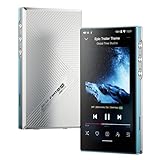
- The world's first Snapdragon 680 portable HiFi player JM21: The Qualcomm...
- Custom Android 13 open-source system: The deeply customized Android...
- Dual flagship DACs, CS43198, with a powerful 700mW output drive: The JM...
The FiiO JM21 is aimed at buyers who specifically want Android flexibility and a dedicated 4.4 mm balanced headphone connection. It is a more relevant candidate for someone with an existing balanced cable or power-hungry headphones than for someone simply seeking a basic MP3 player.
Configuration is particularly important. The original JM21 has 3 GB of RAM and 32 GB of storage; newer or higher-capacity versions should not automatically be treated as equivalent budget purchases. Confirm the exact version and its new-unit checkout total before including it in this price category.
The original model combines Android 13 with a Snapdragon 680 processor. Its 3.5 mm single-ended and 4.4 mm balanced outputs provide connection flexibility without requiring the special balanced adapter used by some miniature players.
FiiO specifies up to 700 mW per channel into 32 ohms from the balanced output under its stated measurement conditions. That figure is relevant when you need additional headroom, but it does not mean every headphone requires—or benefits from—that much power.
Two advantages stand out:
- A dedicated balanced socket is convenient for listeners whose headphone cables already terminate in 4.4 mm.
- Android supports a broader range of playback workflows than a closed local-file operating system.
The meaningful drawback: using the balanced output at higher levels increases battery demands, and additional power offers little benefit for many sensitive in-ear monitors. FiiO’s claimed maximum playback time of approximately 12.5 hours is not a guarantee for every output, gain setting, or streaming application.
For IEMs, low-gain behavior, background noise, and comfortable volume adjustment deserve more attention than the maximum power specification.
Verdict: Shortlist the JM21 if balanced connectivity solves a real requirement. If the available configuration exceeds your ceiling, skip it rather than stretching the budget for a socket you may rarely use.
HiBy Digital M300

- HIFI Music Player - Equipped with the CS43131 independent DAC chip, it...
- Android Music Player - Powered by the Qualcomm Snapdragon 665 chip and...
- MP3 Player with Bluetooth and WiFi - Stay seamlessly connected with...
The HiBy Digital M300 is the logical option for listeners who want a separate music device but still need familiar Android applications. Unlike a closed-system player, it provides an app-based approach to streaming, downloads, podcasts, and local playback.
The original configuration combines Android 13, a Snapdragon 665 processor, 3 GB of RAM, and 32 GB of internal storage. Other configurations may appear under the same product name, so check the actual RAM and storage rather than assuming every listing describes identical hardware.
Its practical advantage is flexibility. You can select a music application that handles your library the way you prefer instead of accepting the manufacturer’s player software as your only option. Expandable storage is useful for both owned files and downloaded content where an application permits microSD storage.
Spotify, Tidal, and Qobuz are relevant reasons to consider an Android DAP, but Android alone is not a guarantee of perpetual compatibility. Confirm that each current app installs on the exact unit and supports your account region. Offline listening requires an eligible subscription, downloads made inside the application, and periodic license checks.
Two advantages stand out:
- Native Android applications offer a more familiar streaming workflow than limited built-in service integrations.
- A larger screen makes searching, signing in, and managing downloads easier than on miniature players.
The meaningful drawback: entry-level memory and an older mobile processor should not be mistaken for modern smartphone performance. Large downloads, app updates, and multitasking can make modest hardware feel constrained.
The 3.5 mm headphone output suits straightforward wired listening, while the manufacturer’s claimed playback time of up to 29 hours should be understood as a controlled-condition figure—not a promise for continuous Wi-Fi streaming.
Verdict: Consider the M300 when separating music from your phone matters, but retaining app choice matters just as much.
HiBy R1

- 【Hi-Fi Sound Quality with Dual Hi-Res Certification】Entry-level Hi-Fi...
- 【MP3 Player with Bluetooth】Supports AAC, SBC, aptX, and LDAC for...
- 【Built-in Tidal & Qobuz Streaming (Offline Download Not...
The HiBy R1 is the most natural starting point here for someone who owns music files and wants a dedicated device without the distractions of a full Android interface. Its appeal is straightforward: expandable storage, touchscreen browsing, and physical playback controls in a relatively compact package.
For a portable FLAC player, those everyday features matter more than an impressive list of supported sample rates. Organizing music by artist, album, or folder gives you different ways into a collection, while hardware buttons reduce the need to wake the screen whenever you want to skip a track.
The R1 uses HiByOS rather than Android. That distinction is important: it does not offer unrestricted installation of Spotify, Tidal, Qobuz, or other Android applications. Any built-in streaming integration must be treated as a separate feature, with its own account requirements and firmware-dependent limitations. Do not purchase it expecting subscription downloads to behave like they do on a phone.
Its conventional 3.5 mm single-ended headphone connection also keeps the setup simple. Most everyday wired earphones connect directly, without the expense of changing cables to chase balanced output.
Two advantages stand out:
- A local-library-focused interface avoids much of the maintenance associated with Android apps.
- Expandable storage and physical controls suit regular album listening away from a phone.
The meaningful drawback: a small touchscreen is less convenient for searching extensive collections, editing playlists, or correcting poorly tagged files. Prepare your library on a computer first, and confirm gapless playback and playlist behavior on the installed firmware if either is essential.
Verdict: Choose the R1 for an affordable, dedicated local-music workflow. Its strongest argument is simplicity—not universal streaming access or an automatic sound-quality improvement over your existing equipment.
Shanling M0 Pro

- 【SHANLING M0 Pura Portable Body】--With 1.54-inch LCD HD touch screen...
- 【Two-Way Bluetooth 5.0 and Support 2TB memory card】--Support Transmit...
- 【High-Performance Dual CS43131 Chip】--Support 384 kHz/32 bit,DSD...
The Shanling M0 Pro is for listeners who want their player to disappear into a pocket. Its miniature design is the main attraction: it takes up substantially less space than phone-shaped Android players and makes sense for short walks, commuting, or carrying a small dedicated music setup.
That portability changes how you interact with music. The tiny touchscreen works best when you choose an album or playlist and let it play. It is less suitable for frequent searches, long queues, or browsing thousands of artists while moving.
A multifunction volume wheel provides tactile adjustment, although this is not the same as having a full set of separate playback buttons. Consider how often you need to operate a player without looking at it.
The M0 Pro uses Shanling’s MTouch operating system rather than Android. Its core purpose is local playback from microSD storage, not installing streaming applications or downloading subscription libraries.
Two advantages stand out:
- Exceptional pocketability makes it easier to carry a dedicated player when a larger device would stay home.
- A physical volume wheel provides a useful alternative to screen-only adjustment.
The meaningful drawback: balanced listening requires Shanling’s compatible adapter for the player’s specialized headphone socket. A standard adapter should not be assumed to unlock balanced operation. Include the correct accessory—and any replacement headphone cable—in your total ownership cost.
Shanling claims up to 14.5 hours of single-ended playback and approximately 10 hours in balanced operation under its test conditions. Actual runtime depends on volume, file type, screen use, and connected equipment.
A microSD card is another necessary consideration if you do not already own one.
Verdict: Choose the M0 Pro because compactness is your priority. If easy on-device library management matters more than minimum size, a larger screen is the more practical compromise.
SnowSky Echo Mini
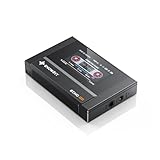
- Boasting an IPS full-view color screen, retro-inspired dynamic UI, and...
- Featuring Bluetooth 5.3 and SBC codec support, the ECHO MINI effortlessly...
- Supports a wide range of audio formats, including DSD, WAV, FLAC, APE, MP...
The SnowSky Echo Mini takes a different approach from touchscreen-first players. Its cassette-inspired appearance is distinctive, but the more useful feature is its button-operated interface. It suits listeners who want an inexpensive device for choosing music and pressing play without installing apps or navigating a phone-like environment.
Physical controls can be particularly helpful when the player is tucked into a bag or pocket. They also provide a clear reason to buy a separate music device even when your phone already delivers satisfactory audio.
The Echo Mini offers both 3.5 mm single-ended and 4.4 mm balanced headphone connections. Those sockets are convenient, but their presence should not overshadow the more important question: does the player handle your collection comfortably?
Two advantages stand out:
- Button-based operation suits listeners who prefer tactile controls to miniature touchscreens.
- Direct headphone connections support conventional and balanced cables without an external output adapter.
The meaningful drawback: basic library management can become restrictive as a collection grows. Do not assume desktop-style playlist editing, reliable imported M3U support, or uninterrupted album transitions. Confirm those functions for the installed firmware before buying, particularly if you listen to live recordings, classical works, or continuously mixed albums.
Bluetooth also needs careful interpretation. Wireless headphone transmission is not internet streaming, and you should not assume Bluetooth receiver mode or advanced codec support without explicit documentation.
The manufacturer advertises up to 15 hours of playback, but wireless use, volume, and screen activity can change that result. Included storage may be enough to begin, while a larger collection will benefit from a compatible microSD card.
Verdict: Consider the Echo Mini for affordable, button-led listening with a manageable library. It is less convincing for buyers whose essential requirements include sophisticated playlists, confirmed gapless playback, or flexible wireless functionality.
How to Choose a DAP Under $200
Streaming Apps Versus Local Music
Choose the operating system before comparing DAC chips. There are three distinct playback approaches:
1. Android applications: Install compatible streaming apps and use their supported features, potentially including subscription downloads.
2. Selected built-in services: Access only the integrations supplied by the player’s firmware, often with fewer features than the complete Android app.
3. Local-file playback: Copy owned music onto internal storage or microSD and listen without a streaming account.
Bluetooth belongs to a different category: it carries audio between devices. Bluetooth alone does not provide internet access, install applications, or authorize offline subscription downloads.
For the best Android DAP under $200, app longevity is a major purchasing concern. Check operating-system requirements, available storage, and the manufacturer’s update history. A streaming-focused player is only useful while your preferred applications continue to work.
Output Power and IEM Compatibility
Headphone sensitivity and impedance determine how much amplification you need. Impedance alone cannot tell you whether a headphone is difficult to drive; a low-sensitivity model may require substantial power even with a modest impedance rating.
For a budget DAP for IEMs, prioritize these qualities:
- Low background hiss during quiet passages.
- Fine volume adjustment at comfortable listening levels.
- A suitable low-gain setting.
- Enough headroom for EQ without audible distortion.
Compare power figures only when the load, output type, distortion limit, and measurement conditions match. A balanced specification into 32 ohms is not directly comparable with a single-ended specification into a different load.
Balanced output is not inherently better sounding. Its practical advantage is often additional available power. Many sensitive IEMs need little power and work perfectly well from a competent 3.5 mm output.
Never use an adapter that connects a balanced amplifier’s negative output terminals together.
Library Handling and Everyday Usability
A good portable FLAC player should make a collection accessible, not merely recognize its file format. Use this pre-purchase checklist:
- microSD support: Confirm capacity limits, formatting requirements, and whether a card is included.
- Library scanning: Check track-count limits and how long a large collection takes to index.
- Gapless playback: Verify support for your file types and current firmware.
- Playlists: Distinguish on-device favorites from imported M3U playlists and editable queues.
- Controls: Check which actions work with the screen locked.
- USB-C: Confirm file-transfer behavior; the connector alone does not guarantee USB DAC functionality.
- Battery conditions: Look for the output, volume, file format, and wireless settings used for the advertised runtime.
Consistent tags, sensible folder names, and correctly sized artwork can improve browsing considerably. A small test library containing your usual formats and album types is useful during the return period.
DAP Versus Phone With a DAC Dongle
Choose a DAP when independent playback is the point. A separate device preserves your phone’s battery, keeps calls and notifications away from listening, and can provide convenient physical controls.
Choose a phone with a USB DAC/amp dongle when app support and lower total cost matter more. If you already own a capable phone, adding a suitable dongle may be cheaper and easier than maintaining another operating system.
Neither approach guarantees better sound. A competent phone-and-DAC setup can match a dedicated player for clean playback, provided it offers enough power and works well with your headphones.
The deciding question is whether a second device improves your listening routine enough to justify its charging, storage, and maintenance requirements.
FAQ
Which audio player has the best sound quality?
There is no universal sound-quality winner. Look for clean output, adequate power, low noise, and suitable volume control for your headphones. Headphone tuning, recording quality, and EQ usually make more meaningful differences than DAC-chip branding. Comparisons are most useful when listening levels are carefully matched.
Can a budget DAP run Spotify and Tidal offline?
A compatible Android DAP can support offline listening through the official applications when your subscription includes downloads. Confirm current app requirements, account-region support, and available storage before purchasing. Built-in streaming integrations on non-Android players should not be assumed to offer downloads, and offline licenses generally require periodic internet checks.
Do I need balanced output for IEMs?
Most IEMs do not require balanced output. A quiet 3.5 mm connection with fine volume adjustment is often sufficient. Balanced operation may provide extra power, but that is not automatically useful for sensitive earphones. Check noise performance and cable compatibility before spending more on a different connection.
Is a dedicated music player worth buying?
A dedicated player is worthwhile when independent playback, physical controls, and separation from phone use improve your routine. It is less compelling if you mainly want familiar streaming apps at minimum cost. A phone with a suitable DAC dongle can provide excellent audio without another device to manage.
How much storage does a portable FLAC player need?
Storage needs depend on library size and recording resolution. CD-quality FLAC albums commonly occupy a few hundred megabytes, while high-resolution albums can be substantially larger. Estimate space using your existing collection, then allow room for growth. Check both microSD capacity support and any separate library track-count limit.
Conclusion
A satisfying budget DAP purchase starts with a clear listening routine. Decide whether you need streaming applications, a well-organized local library, or the smallest possible device, then check controls, headphone compatibility, storage, and software limitations. The right player makes music more convenient and less distracting; it does not need the longest specification sheet to earn its place in your pocket.