What is a Circuit Tester?
A circuit tester is a specialized electrical tester designed to check the presence and quality of electrical current in a circuit. It helps determine if a circuit is live, identify wiring issues, and verify the continuity or integrity of electrical paths. Circuit testers come in various forms, including simple devices that indicate the presence of voltage through light or sound, as well as more advanced units capable of measuring voltage levels, resistance, and polarity.
These tools are essential for both homeowners and professional electricians to safely and accurately diagnose electrical problems. By using a circuit tester, you can figure out if a wire is live, confirm proper wiring connections, and detect faults such as breaks or shorts in a circuit. Some circuit testers are designed specifically for certain applications, such as testing outlets, breakers, or switches, while others are versatile and can handle a variety of electrical testing situations.
Circuit testers often include probes or leads that you connect to different points in the circuit. These probes are designed to handle electrical current safely and provide accurate readings. The performance of a circuit tester depends on its design and features, such as whether it is analog or digital, the types of measurements it can perform, and its sensitivity.
Types of Circuit Testers
Circuit testers come in a variety of types, each designed to fulfill specific roles in electrical diagnostics and safety verification. Understanding the different types helps you choose the best circuit tester for your needs, whether you’re a homeowner tackling DIY projects or a professional electrician performing detailed inspections.
Non-Contact Voltage Testers
Non-contact voltage testers are popular tools that detect the presence of electrical current without requiring direct contact with wires or components. They work by sensing the electric field generated by live wires and alert the user through lights, sounds, or vibrations. These testers are especially useful for quick safety checks to determine if a wire or outlet is live, minimizing the risk of electrical shock. Many models are compact, battery-powered, and easy to use, making them ideal for both professionals and homeowners.
Plug-In Circuit Analyzers
Plug-in circuit analyzers are designed to test standard electrical outlets, particularly grounded three-prong outlets. By plugging the device directly into an outlet, it can identify wiring problems such as reversed polarity, open ground, or open neutral. These testers use a series of light patterns to indicate the status of the outlet, providing an intuitive way to diagnose common wiring issues. Some advanced models also test GFCI functionality and display voltage readings.
Continuity Testers
Continuity testers are specialized devices used to check if an electrical circuit is complete—that is, if there is an unbroken path for current to flow. They are invaluable when troubleshooting switches, fuses, or wiring connections. When the circuit is complete, the tester signals with a light or audible beep. Continuity testers usually require the circuit to be de-energized before testing to avoid damage or inaccurate readings.
Multimeters
Multimeters are versatile electrical testers capable of measuring multiple parameters, including AC and DC voltage, current, resistance, and continuity. They come in analog and digital models, with digital multimeters (DMMs) being the most commonly used today due to their precision and additional features like auto-ranging and data hold. Multimeters are essential tools for advanced diagnostics, allowing users to pinpoint electrical faults, verify component functionality, and perform detailed measurements across a wide range of applications.
Circuit Breaker Finders
Circuit breaker finders help identify which breaker controls a specific outlet, fixture, or circuit in an electrical panel. These tools typically include a transmitter that plugs into the outlet and a receiver that scans the panel to detect the corresponding breaker. This eliminates guesswork and enhances safety by ensuring the correct breaker is turned off before work begins. Some models also include features like flashlights and GFCI testing.
Neon Voltage Testers
Neon voltage testers are simple devices that indicate the presence of voltage using a neon bulb. They require direct contact with the circuit and do not provide quantitative voltage readings, but they are reliable and battery-free. These testers are commonly used for basic voltage detection and outlet wiring verification.
Clamp Meters
Clamp meters combine the functions of a multimeter with a current sensor that can measure AC current by clamping around a conductor without breaking the circuit. This non-intrusive method is safer and more convenient for measuring current flow, especially in live circuits. Clamp meters are widely used by professional electricians for troubleshooting and maintenance.
Top Circuit Testers
Klein Tools RT390 Circuit Analyzer

- CLEAR COLOR LCD DISPLAY: Circuit Analyzer with large color LCD provides...
- COMPREHENSIVE WIRING FAULT DETECTION: Detect and identify common wiring...
- DUAL WIRING FAULT DETECTION: Capable of detecting dual wiring faults...

The Klein Tools RT390 Circuit Analyzer is a versatile and user-friendly device designed to help homeowners and professional electricians quickly assess the condition of electrical outlets and circuits. This plug-in tester provides comprehensive information about the wiring and functionality of standard 120-volt outlets, making it an essential tool for troubleshooting and ensuring electrical safety.
One of the key features of the RT390 is its ability to detect a wide range of wiring issues, including open ground, open neutral, open hot, hot/ground reversed, hot/neutral reversed, and correct wiring. It does this through a series of easy-to-read light patterns that correspond to specific wiring conditions. This visual feedback allows users to quickly identify problems without needing advanced electrical knowledge.
The RT390 also tests for the presence of GFCI (Ground Fault Circuit Interrupter) protection and can verify if the outlet is properly grounded. This is particularly important in areas where moisture is present, such as kitchens and bathrooms, where GFCI protection is required by electrical codes to prevent electric shock.
Designed with safety and convenience in mind, the Klein RT390 features a compact form factor and simple plug-in operation. It requires no batteries, drawing power directly from the outlet it tests. Its durable construction ensures reliable performance over time, even with frequent use.
This circuit analyzer is an excellent choice for homeowners looking to perform basic electrical diagnostics and for professionals needing a quick, reliable way to verify outlet wiring. By using the RT390, users can confidently address wiring issues, ensure compliance with safety standards, and maintain the proper functioning of their electrical systems.
Kaiweets Circuit Breaker Finder

- All-in-One Circuit Diagnosis: KT301P circuit breaker finder Easily locate...
- Large LCD Screen with Backlight: Displays real-time voltage (30–150V...
- GFCI Outlet Tester: The transmitter doubles as a GFCI outlet tester...
The Kaiweets Circuit Breaker Finder is a practical and efficient tool designed to help both homeowners and professional electricians quickly locate the correct circuit breaker controlling a specific outlet or fixture. This device consists of two main components: a transmitter that plugs into the outlet and emits a signal, and a handheld receiver that scans the electrical panel to detect this signal. When the receiver identifies the corresponding breaker, it alerts the user with an audible beep and a visual light pattern, making it easy to pinpoint the right breaker without guesswork.
One of the standout features of the Kaiweets Circuit Breaker Finder is its user-friendly design, which requires minimal setup and no specialized knowledge to operate. It is compatible with most standard residential electrical systems and can be used on outlets, switches, and light fixtures. The transmitter is battery-powered, while the receiver typically uses standard batteries, ensuring portability and convenience during use.
This circuit breaker finder is especially useful in older homes or buildings where electrical panels may not be clearly labeled, reducing the risk of accidentally turning off the wrong breaker during electrical work. By accurately identifying the correct circuit breaker, the Kaiweets tool enhances safety, prevents unnecessary power outages, and speeds up troubleshooting and maintenance tasks.
In addition to its core functionality, the Kaiweets Circuit Breaker Finder often includes extra features such as a flashlight on the receiver for working in dimly lit areas, and an easy-to-read LED display that provides clear feedback. These added conveniences make it a versatile and reliable choice for a wide range of electrical projects.
Klein Tools ET310 AC Circuit Breaker Finder
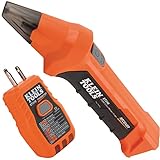
- ACCURATE CIRCUIT BREAKER IDENTIFICATION: Quickly locate the correct breaker...
- TWO-PART SYSTEM: Consists of a Transmitter connected to the outlet/fixture...
- CLEAR INDICATIONS: The Receiver provides visual and audible cues when the...
The Klein Tools ET310 is a reliable and easy-to-use AC circuit breaker finder designed to help homeowners and professionals quickly identify the correct breaker controlling a specific outlet or fixture. This tool consists of two parts: a transmitter that plugs into the outlet and a receiver that you use to scan the electrical panel. When the receiver detects the signal from the transmitter, it indicates the corresponding breaker with an audible tone and a visual light pattern.
One of the key advantages of the Klein ET310 is its simplicity and accuracy, making it an excellent choice for those who want to label their electrical panel properly, especially in older homes where breakers may not be clearly marked. This device helps prevent the dangerous guesswork often involved in turning off breakers, ensuring safer electrical work.
The ET310 features a compact design and straightforward operation, requiring no batteries for the transmitter and only a single 9-volt battery for the receiver. Its compatibility with standard outlets and circuit breakers makes it a versatile tool suitable for a wide range of residential electrical projects.
Using the Klein ET310 can save time and reduce frustration when troubleshooting electrical issues or planning upgrades. By accurately identifying the right breaker, you can work confidently knowing the power is off to the area you’re servicing, enhancing both safety and efficiency in your electrical work.
AstroAI Circuit Breaker Finder with GFCI Outlet Tester

- Quick & Accurate Circuit Targeting: This digital receiver offers precise...
- Two-Part Circuit Tester: Simply plug the Transmitter into an outlet or...
- Clear Audio-Visual Alerts: The receiver beeps and flashes red to indicate...
The AstroAI Circuit Breaker Finder with GFCI Outlet Tester is a multifunctional tool designed to simplify electrical troubleshooting and enhance safety. This device combines the capabilities of a circuit breaker finder and a GFCI outlet tester, making it a valuable addition to both homeowners’ and professional electricians’ toolkits.
As a circuit breaker finder, the AstroAI model helps you quickly and accurately identify the breaker controlling a specific outlet or fixture. It includes a transmitter that plugs into the outlet and a handheld receiver that scans the electrical panel. When the receiver detects the signal from the transmitter, it alerts you with both an audible beep and a visual indicator, allowing you to pinpoint the correct breaker without guesswork or trial and error.
In addition to breaker identification, this tool features a built-in GFCI outlet tester that verifies the proper wiring and functionality of GFCI outlets. It can detect common wiring issues such as open ground, open neutral, open hot, reversed hot/ground, and reversed hot/neutral, as well as confirm if the GFCI protection is working correctly. This is especially important in areas prone to moisture, where GFCI outlets are required by electrical codes to prevent electric shock.
The AstroAI Circuit Breaker Finder is designed for ease of use, with a straightforward interface and clear light patterns that indicate wiring status and breaker detection. Its compact and durable construction ensures reliable performance in various environments, from residential homes to job sites.
By using this combined tool, users can save time and reduce the risk of errors during electrical maintenance and repairs. Whether you are labeling your electrical panel, troubleshooting outlet issues, or verifying GFCI safety, the AstroAI Circuit Breaker Finder with GFCI Outlet Tester offers a practical, efficient, and safe solution for your electrical testing needs.
Conclusion
Electrical testers are indispensable tools that bring confidence and safety to any electrical project, whether you’re a seasoned professional or a DIY enthusiast. By understanding their functions and proper use, you can quickly identify issues, ensure accurate readings, and protect yourself from potential hazards. Empower your electrical work with the right tester to make every task smoother, safer, and more efficient.
FAQ
How do non-contact voltage testers work?
Non-contact voltage testers detect the presence of electrical current by sensing the electrical field around live wires or outlets. They allow you to determine if a wire is live without physically touching it, which enhances safety during electrical work.
What is the difference between analog and digital models of testers?
Analog testers use a needle and dial to display readings, offering a continuous scale that some users prefer for observing changing values. Digital models provide numerical readings on a display, often with higher accuracy and additional features like auto-ranging and data hold.
How can I ensure safety when using an electrical tester?
Always turn off the power source before starting any electrical work and use insulated gloves and safety glasses. Verify that your electrical tester is working properly by testing it on a known live circuit before use. Follow the manufacturer’s instructions carefully and regularly maintain and calibrate your tester to ensure accurate and safe operation.
When should I use a continuity tester?
Continuity testers are used to determine if an electrical circuit is complete. They are particularly useful when checking switches, fuses, or wiring to confirm there are no breaks in the circuit. Always ensure the power is off before using a continuity tester to avoid damage or injury.
How do I choose the right electrical tester for my project?
Consider the complexity of your electrical work, the types of measurements you need, and your level of experience. For simple voltage detection, a non-contact voltage tester may suffice. For more detailed diagnostics, a multimeter with functions to measure voltage, current, resistance, and continuity is preferable. Always prioritize safety and ease of use when selecting your tool.