Which amplifier features bring out your best blues playing: responsive cleans, gritty breakup, or enough headroom to let an overdrive pedal sing? The useful answer depends on where you play. Touch response, controllable volume, and a speaker that suits your guitar matter more than a “blues” label. These recommendations cover compact tube combos and a budget-friendly hybrid head, with practical guidance for home practice, recording, rehearsals, and smaller gigs.
Best Guitar Amps for Blues
Fender Blues Junior Lacquered Tweed

- Classic warm tube tone provided by the EL84 power tubes and 12ax7 pre-amp...
- Foot switchable "FAT" option adds thicker tones and subtle overdrive
- On board spring reverb for large echo effect

The Fender Blues Junior Lacquered Tweed suits guitarists who want a compact, straightforward tube combo with vintage styling and enough output for rehearsals or smaller performances. Within this shortlist, it occupies the premium position: a complete amplifier-and-speaker package rather than a head requiring a separate cabinet.
Its core specification is familiar: 15 watts, EL84 output tubes, 12AX7 preamp tubes, and a single 12-inch speaker. The standard lacquered-tweed version features a Jensen speaker, an important distinction from the Celestion-equipped black Blues Junior IV. Check the exact listing’s speaker specification, especially when considering special editions or used examples.
Separate volume and master controls let you balance preamp drive against overall output. Three-band EQ provides useful adjustment for bright single-coils or thicker humbuckers, while the FAT function adds body and gain. Spring reverb supplies ambience without requiring another pedal.
The reason to choose this version is its particular combination of speaker voicing, compact format, and simple controls—not an assumption that tweed covering makes it a vintage tweed circuit. Its cosmetics do not turn it into a different historical amplifier design.
For clean blues rhythm, keep the preamp volume moderate and increase the master as the room permits. For dirtier leads, raise the preamp volume and reduce the master. An overdrive pedal offers another route when you want a consistent lead sound without changing the amp’s settings.
Volume suitability: At home, the master volume makes clean playing and preamp-driven crunch manageable. However, opening up the output stage is a different proposition: 15 tube watts through a 12-inch speaker can be very loud. With a restrained drummer, its output may be sufficient; louder bands or cleaner arrangements can require microphone support.
Its main drawback is value relative to the black version. The finish and speaker need to matter to you, because the premium does not automatically buy more clean headroom.
Verdict: Choose the lacquered-tweed Blues Junior for its speaker character and vintage presentation, provided you also need the practical rehearsal capability of a compact tube combo.
Fender Blues Junior IV 15 Watt Electric Guitar Amplifier

- 15 Watts
- Celestion 12" A-Type speaker
- Preamp circuit modified for increased fullness
The Fender Blues Junior IV is the most straightforward all-round tube choice here for players moving between practice, recording, rehearsal, and smaller gigs. Its appeal is concentration rather than versatility: one channel, useful EQ, spring reverb, and enough adjustment to cover clean rhythm through blues-rock crunch.
This black combo delivers 15 watts through a 12-inch Celestion A-Type speaker. Its tube complement comprises three 12AX7 preamp tubes and two EL84 output tubes. Fender’s IV revision includes changes to the preamp and reverb circuitry, aimed at fuller sound and smoother ambience.
The controls are easy to understand. Volume sets the signal level feeding the preamp’s gain structure, while master controls the final playing level. Bass, middle, and treble help accommodate different guitars, and the FAT switch supplies additional thickness. That makes it approachable for guitarists who would rather adjust a few knobs than manage presets.
For buyers comparing the best tube amps for blues, its strongest argument is the complete package. You get a substantial speaker, portable combo format, and genuine tube amplification without needing a separate cabinet or an elaborate pedalboard.
Its limitations are equally important. There is no built-in power reduction, headphone output, or effects loop. The master volume can reduce loudness, but it does not reproduce every aspect of a loudly driven output stage and speaker at conversation level.
Volume suitability: At home, use the master conservatively and obtain extra drive from the preamp or a pedal. At rehearsal, the amp can produce useful edge-of-breakup tones, although its ability to remain clean depends on your pickups, EQ, and drummer. For gigs, a microphone can extend coverage without forcing excessive stage volume.
The Celestion speaker and updated circuitry also make this a separate buying decision from the lacquered-tweed version. Compare the actual sound rather than assuming either finish represents a universal upgrade.
Verdict: Choose the Blues Junior IV when you want a midrange-priced tube combo for several playing environments and can accept limited silent-practice features and finite clean headroom.
Fender ’65 Princeton Reverb 15-Watt 1×10-Inch Guitar Combo Amp

- 15-watt all tube amp (including tube rectification) offers stellar tone for...
- 1-10" Jensen C-10R, 8 Ohm, 40 Watt Speaker with Ceramic Magnet
- Legendary long-spring Fender reverb and tube vibrato.
This list starts with a Fender – a 1965 Princeton Reverb, no less – which proves to be one of the best blues amp on the market. This high-end all-tube combo amp is a tonal masterpiece, delivering the distinctive sound that the original was famous for. This reissue has everything from sparkling cleans to a creamy, natural breakup that blues guitarists will love, as we demonstrate in the full ’65 Princeton Reverb breakdown. It has a single 10″ Jensen C-10R speaker, as well as high-quality tubes and circuitry. With only 12 watts of power, it’s a little and simple amp that packs a lot of punch for its size!
The first thing to know about the Fender ’65 Princeton Reverb is that it’s a reimagining of a classic. Fender’s decision has proven to be one of the best things that has ever happened in the guitar amp industry. You’re looking at a rather straightforward configuration in terms of controls. Two instrument inputs, a volume knob, a two-band EQ, and reverb controls are all included. There’s a reverb knob, a speed knob, and an intensity knob among them. There’s nothing complicated about it. In reality, getting acclimated to this amplifier is really simple. It takes about a half-hour to figure out what’s going on. Fender could have crammed this amp with all of the contemporary tube amp bells and whistles, but they didn’t. That is something we are extremely grateful for.
The vacuum tubes are the heart of the Fender ’65 Princeton Reverb. Three 12AX7s, one 12AT7, two 6V6 tubes, and one 5AR4 rectifier tube are included. That’s essentially the same arrangement as the original amp had back in the day. At 8 Ohms, the overall power output is rated at 15 Watts. All of the power is channeled via a single Jensen Special Design C-10R 10′′ speaker, which accomplishes the job admirably. In general, it doesn’t get much better than this if you’re searching for authentic vintage sound. Swapping out the 6V6s for a better pair is one of the most common methods to improve the flavor of a Fender ’65 Princeton Reverb. On the other hand, the ones that come with the amp are made by Groove Tubes, and they’re far from mediocre or awful.
VOX AC30C2

- 30-watt tube amplifier with classic VOX Top Boost tone circuit for rich...
- Equipped with EL84 power tubes and 12AX7 preamp tubes for authentic tube...
- Features two 12" Celestion Greenback speakers for powerful, clear sound...
Although the VOX AC30C2 isn’t a dedicated – or even obvious – blues guitar amps, the original AC30 has proven its merits in the genre time and time again (just ask Rory Gallagher), and this latest incarnation does the same! This all-tube 30-watt combo has three 12AX7 preamp tubes, four EL84 power tubes, and two 12″ Celestion G12M Greenback Speakers, all working together to provide a strong, soulful, and responsive sound.
You don’t have to be an expert in blues amplifiers, or even amplifiers in general, to recognize the AC30’s status. Every celebrity from The Beatles and The Rolling Stones to Queen, Radiohead, and Rory Gallagher has utilized this classic amp on the world’s most recognized stages. The AC30C2 is one of the most recent variants of this all-tube VOX legend, and it’s been dubbed “the most adaptable AC30 design in VOX history” by the British company. Let’s see how it compares!
The settings on the AC30C2 aren’t as extensive as those on some other amps in the sub-$1,000 price range, but they’re adequate. From left to right, the ‘regular’ channel has a simple volume control, followed by the ‘top boost’ channel’s volume, treble, and bass settings. Individual controls for reverb and tremolo, as well as the ultimate master volume and tone cut knobs, are located alongside these. It’s a pretty basic approach, but one that’s straightforward to grasp.
While the design is quite similar to the original, the AC30C2 has a number of current enhancements that make it a very appealing possibility. The circuitry, in particular, is impressive: three 12AX7 preamp tubes and four EL84 power tubes are housed inside this combo amp, providing a healthy 30 watts of power to the two Celestion G12M Greenback Speakers. The AC30C2 is a two-channel amp with two input jacks each for regular and top boost channels, as well as excellent reverb and tremolo built in.
The AC30C2 will very certainly be replaced by another AC30 variant in the future – VOX continues coming up with innovative ways to pay homage to the original legend. For the time being, the AC30C2 is the closest you’ll get to owning that classic British invasion sound, but it’s also a rock-solid blues amp with plenty of bite and soul. The AC30C2 is an excellent buy at a medium price.
Marshall Amps Guitar Combo Amplifier
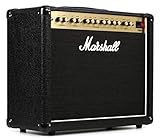
- Gain and volume per channel. Dedicated resonance control. 2 separate master...
- Reverb. High and low power settings
- Now with Celestion V type speaker
This Marshall DSL20C Guitar Combo Amplifier is a flexible piece of gear that’s ideal for a beginner looking for a long-term investment. Experienced musicians, on the other hand, will enjoy it as well. The all-tube circuit contributes to Marshall’s signature rich tone. To boost the concentration and clarity of bass notes, it features a single 12-inch speaker with a semi-open back setup.
Classic and Ultra are the two channels available. You can alter highs, mids, lows, resonance, and presence using the equalization that they share. Volume and gain controls are separate for each channel. You may also fine-tune your sound by adjusting reverb and using the Tone Shift button. As you can see, you have a lot of control over the music you’re making with this amp.
Another great feature of this amp is that you can operate it at full or half power, with the amp running at 10 or 20 watts to compensate for different playing environments. It has several inputs and outputs, as well as a footswitch for switching channels and controlling the FX loop. The design is attractive and long-lasting, making it ideal for travel. Despite rare claims of interference or white noise, buyers were generally pleased with this amplifier.
Fender Blues Deluxe Reissue 40-Watt 1×12-Inch Guitar Combo Amp

- 40 watts of legendary Fender tone.
- Fantastic clean and overdriven tones plus lusciously Fender spring reverb.
- 1X 12" Eminence special-design speaker offers enhanced midrange that fills...
Blues artists, as well as rock and country musicians, love the Fender Blues Deluxe Reissue Guitar Combo Amp. Many musicians prefer this vintage-style tube amp to more modern designs because it has classic qualities. Real tubes offer an unmistakable rich tone, which is something Fender is recognized for.
The control panel is not only packed with features, but it also has a stylish chrome finish. With the adjustable spring reverb, effects loop, and three-band equalizer that adjusts highs, mids, and lows, you can create a distinctive sound. This combination amp features an Eminence speaker that can sustain a wide range of tones, from squeaky clean to filthy. The sound is intense.
Powered by two power tubes backed by 40 watts of power, a fantastic blues combo. This version differs from the original in that it has improved circuitry, which means you get the same sound quality without the obtrusive, unpleasant hum. The classic tweed covering must be mentioned, even though it has little effect on the sound quality. This vintage look is reminiscent of the original Fender designs from the 1950s and adds a special touch to the overall experience.
Users liked the sound in general, but some of the settings were too sensitive for them like tube amplifiers. Despite the fact that it is an improvement over the original, several users found the hum to be annoying in the best amps for blues.
VOX AC15C1X Guitar Combo Amplifier
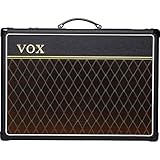
- 15-watt tube amplifier with classic VOX Top Boost tone circuit for rich...
- Equipped with EL84 power tubes and 12AX7 preamp tubes for authentic tube...
- Custom 12" Alnico Blue speaker for powerful, clear sound projection
The VOX AC15 was first made available by Vox in the late 1950s, and it quickly gained notoriety. Up until the 1960s, when stacks became popular, it was widely utilized, but then interest began to wane. Vox brought it back in 2013.
What makes this amplifier so unique? One channel is for regular play, and the other is for a power boost. They both have a master volume control and a feature called Tone Cut that alters the sound of the amp before it reaches the speaker rather than during the preamp. In addition to the master volume, each channel has its own independent volume control for blues rock tones. Additionally, Boost mode offers separate bass and treble controls. You have a lot of control over tone thanks to all of this. A built-in tremolo effect with adjustable rate and depth and spring reverb to produce more conventional-sounding notes are among the other features.
Although this amp weighs just under 50 pounds, it’s a little heavy to carry around. It may be utilized to play in smaller clubs or bars because it has an output jack for an external speaker. The majority of folks love this greatest tube amp for blues. Users are usually very delighted with the sound, while some were upset that the case was constructed of particleboard and yearned for an effects loop.
JOYO Bluejay BanTamp
The JOYO Bluejay BanTamp is a compact hybrid amplifier head for players who want clean blues tones, pedal-friendly operation, and a small physical footprint. It is the budget-friendly option here, especially if you already own a suitable speaker cabinet.
Unlike an all-tube combo, the Bluejay combines a 12AX7 preamp tube with a solid-state power section. Its rated output is 20 watts, and it requires an appropriate external cabinet for speaker-based playing. That distinction matters: the low purchase cost of the head is not the total cost of a complete rig.
The controls are deliberately minimal, with gain, tone, and volume adjustment. Rather than a comprehensive three-band EQ, the single tone control offers broad shaping. Its clean-oriented design makes it particularly relevant to players who prefer an overdrive pedal to supply most of their dirt.
An effects loop adds flexibility for delay and reverb, while Bluetooth audio input allows playback from a compatible device. Bluetooth is for accompanying audio, not a wireless connection for your guitar. The headphone connection provides another practice option, but it should not be mistaken for a USB recording interface.
The strongest reason to buy is flexibility per unit of space. You can pair this small head with a cabinet that suits your room, then use your existing pedals to move from clean rhythm to more sustained leads. The cabinet and speaker will have a substantial influence on the result.
Volume suitability: For home use, the volume control and headphone option are more immediately useful than the headline wattage. For recording, you can microphone the cabinet or use a suitable external recording arrangement. For rehearsals and gigs, judge the complete head-and-cabinet combination against the drummer; 20 watts does not guarantee abundant clean stage volume.
Its main drawbacks are limited onboard tone shaping, no built-in reverb, and the need to budget for a cabinet and proper speaker cable.
Verdict: Choose the Bluejay if you want an affordable, compact blues head, already use pedals, and understand that cabinet choice is part of the purchase.
How to Choose a Blues Amp
Clean Headroom Versus Early Breakup
Clean headroom is the available clean output before noticeable distortion. More headroom lets you play louder while retaining clear chords and firm note attacks. Less headroom brings compression and overdrive sooner, which can suit expressive leads but restrict clean rhythm volume.
Start with the sound you need most often. If your arrangements depend on clean chords beneath vocals, prioritize enough clean output for the band. If you want sustained notes and gritty double-stops directly from the amp, earlier breakup may be desirable.
Pedal-driven leads introduce another consideration: a clean amp gives the pedal a relatively stable foundation. An already overdriven amp will add its own compression and distortion, potentially making the result thicker but less distinct.
Neither approach is inherently more authentic. The useful choice is whether you want your picking dynamics to move between clean and dirty sounds, or whether you prefer switching gain with a pedal. Also remember that hotter pickups can push an amp into distortion sooner than lower-output pickups at the same settings.
Practical Volume for Home and Gigs
Wattage describes electrical output, not a guaranteed listening level. Speaker sensitivity, cabinet design, room acoustics, and the amount of distortion you accept all affect practical loudness.
Use these starting points:
1. Apartments and shared homes: Prioritize a controllable master volume, headphone operation, or a well-designed low-output mode. Even a five-watt tube amp can disturb neighbours when driven hard.
2. Recording rooms: Choose an amp whose useful sound occurs at a level your room and microphones can accommodate. A clean amp with pedals may be easier to manage than a cranked combo.
3. Band rehearsals: Match clean headroom to the drummer, not just the room size. A restrained blues trio and a loud blues-rock band place very different demands on an amplifier.
4. Gigs with PA support: A smaller amp can work well when a microphone carries it through the PA and monitoring is adequate.
For unmic’d performances, allow more clean-output margin than you think you need. Venue capacity alone is a poor guide: stage volume and the band’s arrangement matter more.
Tube, Solid-State and Modeling Options
Tube amps appeal to many blues players because of their gain behaviour and compression, but tube construction is not a prerequisite for expressive playing. A responsive solid-state or modeling amplifier can preserve picking detail and guitar-volume changes while offering easier low-volume control.
The ownership differences are more concrete. Tube amps require eventual tube replacement and can be heavier than similarly practical digital alternatives. They also need appropriate handling and ventilation.
Solid-state designs generally avoid routine tube maintenance. Hybrid amps combine technologies, although a tube in the preamp does not make the entire amplifier behave like an all-tube design.
Modeling amps can add headphone listening, built-in effects, stored sounds, and direct recording. Those features vary by model, so check exact connections rather than assuming every digital amp has them.
When comparing the best solid-state amps for blues with tube alternatives, focus on the sound at your intended volume. A technology label cannot tell you whether an amp will respond naturally to your guitar or fit your daily routine.
Low-Volume Breakup Controls
Several features can help produce drive without excessive volume, but they work differently:
- Master volume: Reduces overall level while allowing more gain earlier in the circuit. It is especially useful for preamp distortion.
- Power scaling: Changes operating conditions in the power section to reduce available output. Results depend on the design.
- Attenuation: Reduces the power reaching the speaker after amplification, allowing the amp to work harder while lowering speaker volume.
- Headphone operation: Replaces room-filling speaker playback with a private listening path, often using speaker simulation.
None guarantees the identical experience of a loud speaker moving air. At lower levels, the speaker behaves differently, and your hearing perceives bass and treble differently.
An external attenuator also needs the correct impedance and sufficient power handling. Use only equipment appropriate for the amplifier, and follow its connection instructions. Never assume a tube amp can operate safely without its required speaker load.
For many home players, a modest amount of pedal or preamp drive is simpler than trying to reproduce maximum-output tube saturation.
Pedal-Platform Compatibility
A useful blues pedal platform combines suitable clean headroom with a voicing that complements your pedals. It does not necessarily need a perfectly neutral sound.
An Ibanez Tube Screamer, for example, emphasizes the midrange and reduces some bass before clipping. That can tighten a fuller amp, but may sound overly nasal through an already mid-forward setup. Test the combination rather than choosing either component in isolation.
Headroom also determines whether a boost produces more volume or simply more distortion. Once the amp is heavily compressed, increasing the pedal’s output may add sustain without making a solo much louder.
An effects loop is useful for placing delay or reverb after preamp distortion. It is less important when the amp stays clean and your overdrive comes from pedals placed before those effects.
Listen for noise, chord definition, and usable EQ range. A good pedal platform should support your main sounds without requiring extreme settings to correct an awkward pairing.
A Practical Blues Amp Audition
A fair comparison starts with the guitar and volume you will actually use. Take this checklist to a shop or apply it during a return-period assessment:
1. Use your own guitar and pickup settings. Include your normal cable and avoid changing several variables at once.
2. Compare at similar perceived volume. A louder amp can seem fuller even when it is not the better match.
3. Play clean chords, quiet phrases, and hard-picked leads. Listen for definition, response, and unwanted harshness.
4. Check guitar-volume cleanup. Reduce the guitar’s volume without touching the amplifier.
5. Test your main overdrive pedal. Check both rhythm clarity and whether the lead setting provides enough lift.
6. Evaluate at your real playing level. Test home volume and band volume separately where possible.
Finish by checking practical details: background noise, control accessibility, carrying weight, and whether your recording or practice connections are genuinely supported.
Conclusion
Choose a blues amp around your playing environment and the amount of clean headroom your music needs. Home practice rewards precise volume control; recording rewards manageable sound levels and useful connections; gigs demand sufficient output or dependable PA support. The right amplifier lets your phrasing, picking dynamics, and guitar controls shape the sound without making volume a constant compromise.
FAQ
How many watts does a blues guitar amp need?
There is no universal requirement. Home players usually benefit more from controllable volume than high output. A modest tube amp may handle restrained rehearsals or mic’d gigs, while loud, clean playing requires more headroom. Speaker sensitivity, drummer volume, and PA support matter as much as the wattage printed on the amplifier.
Are tube amps better than modeling amps for blues?
Not automatically. Tube amps offer particular compression and overdrive characteristics, while modeling amps can deliver responsive blues sounds with easier volume control, headphones, and recording connections. The better choice is the one that responds well to your guitar at your normal playing level and fits your maintenance and portability needs.
How can I get blues amp breakup at low volume?
Use preamp gain with a master volume, an overdrive pedal, a suitable reduced-power setting, or correctly matched attenuation. Modeling provides another route to driven sounds at quiet levels. These methods do not produce identical results, so choose according to whether you want mild grit, sustained distortion, or silent practice.
Can a small blues amp handle gigs?
Yes, particularly with a restrained band or a microphone feeding the PA. The main limitation is often clean headroom rather than outright audibility. An amp that sounds loud enough alone may become too distorted when competing with drums. Confirm monitoring and sound reinforcement before relying on a small amplifier.
What is the difference between a clean pedal platform and an early-breakup amp?
A clean pedal platform retains relatively undistorted output at the required playing volume, leaving pedals to create most of the drive. An early-breakup amp adds distortion and compression sooner. The first approach favours separation and consistency; the second makes amplifier response a larger part of your gain sound.