Why do you need a Audio Interface for Reaper?
When working with Reaper, an audio interface serves as the essential hardware that enables you to connect your instruments, microphones, and other audio gear to your computer. Whether you’re recording vocals, guitars, bass, or virtual instruments, the audio interface is responsible for converting analog signals into digital audio that Reaper can process and manipulate. This conversion is crucial for achieving high-quality recordings and smooth playback.
Beyond basic recording, an audio interface also provides outputs for monitors and headphones, allowing you to hear your tracks clearly during the mixing and editing stages. It often includes features like direct monitoring, which lets you listen to your input signals in real-time without latency, a critical factor for musicians who need to stay in sync while recording.
Key Features to Look for in an Audio Interface for Reaper
When selecting an audio interface for Reaper, several features make a significant difference:
Sound Quality and Sample Rate: High-quality amp and preamp sections, along with excellent converters, ensure clear sound and accurate reproduction of your instruments and vocals. Look for interfaces supporting high sample rates, such as 24-bit/96kHz or higher, to capture detailed audio. Many audio interfaces often support 24-bit/192kHz resolution for high audio quality.
Number of Inputs and Outputs: Depending on your recording needs, you might require more channels. For example, recording guitar and bass simultaneously or multiple mics for vocals and instruments demands an interface with multiple inputs. It makes sense to choose an interface with more channels than you currently need to avoid limitations later. Plan your setup over the course of your recording journey to ensure you have enough channels for future needs and to allow for expansion as your requirements grow.
MIDI Support: If you use virtual instruments or MIDI controllers within Reaper, having MIDI inputs and outputs on your interface is essential. Many audio interfaces include MIDI I/O connectivity, which allows seamless integration with MIDI keyboards and controllers.
Compatibility and Drivers: The interface should have reliable drivers that support your operating system, whether it’s Windows or Mac. Good driver support prevents latency and dropouts during recording and playback.
Monitoring and Headphone Outputs: Being able to monitor your recordings in real-time with low latency is vital. Look for interfaces with dedicated headphone outputs and direct monitoring features.
Portability and Build Quality: For those who prefer location recording or frequently move their setup, a compact and sturdy usb audio interface is ideal.
Additional Nice Features: Some interfaces include software bundles, onboard DSP for plugins, or multiple headphone outputs, which can enhance your workflow.
Best Audio Interfaces for Reaper
Focusrite Scarlett 4i4 4th Gen USB Audio Interface

- The new generation of the music maker's studio hub: Connect your mics...
- A new generation - ready for all your gear: Two Scarlett 4th Gen mic...
- Studio-quality sound: With a huge 120dB dynamic range, Scarlett 4th Gen...
The Focusrite Scarlett 4i4 4th Gen is a versatile USB audio interface that offers four inputs and four outputs, making it an excellent choice for musicians and producers who need more flexibility than the popular 2i2 model. It supports 24-bit/192kHz resolution, ensuring crystal-clear sound quality suitable for professional recording and mixing sessions. The 4i4’s high-performance preamps deliver clean and transparent audio, ideal for capturing vocals, guitars, bass, and other instruments with great detail.
One of the standout features of the Scarlett 4i4 is its enhanced connectivity options. It includes MIDI I/O, allowing seamless integration with keyboards and controllers, which is perfect for users working extensively with virtual instruments in Reaper. The interface also features two balanced line outputs for connecting studio monitors, plus two additional outputs for routing audio to external gear or headphone mixes.
The 4th generation Scarlett interfaces come with improved USB-C connectivity, providing stable and low-latency performance when paired with both Windows PCs and Mac computers. This makes it a reliable choice for laptop users who require portability without sacrificing sound quality. Additionally, the Focusrite Control software offers flexible routing and monitoring options, enabling users to customize their workflow and monitor multiple mixes simultaneously.
Focusrite’s reputation for top-notch driver support and regular firmware updates ensures that the Scarlett 4i4 maintains high compatibility and stability with Reaper and other DAWs. The interface also comes bundled with a suite of software, including Ableton Live Lite, Pro Tools First, and a collection of plugins, giving users a comprehensive toolkit to start creating right away.
MOTU M4 4×4 USB-C Audio Interface
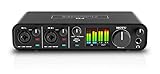
- 4-in/4-out USB-C Audio Interface with 2 Microphone Preamps
- 6+GB of Free Content - Mac/PC/iOS
- Hardware Moniting
The MOTU M4 is a compact yet powerful USB-C audio interface that offers four inputs and four outputs, making it a great choice for musicians and producers who need a balance between portability and functionality. It supports 24-bit/192kHz audio resolution, ensuring high-quality sound capture and playback suitable for professional recording and mixing tasks.
One of the standout features of the MOTU M4 is its ultra-low latency performance, which is essential for real-time monitoring and recording in Reaper. This low latency allows musicians to play and record without noticeable delay, maintaining tight timing and a natural feel during sessions. The interface includes two high-quality mic preamps with phantom power for condenser microphones, as well as two line inputs that can be used for instruments or external gear.
The MOTU M4 also features a bright color LCD that displays input levels, output levels, and other useful information, making it easy to monitor your signals at a glance. Its robust metal chassis ensures durability for both studio and location recording.
Compatibility-wise, the MOTU M4 works seamlessly with both Windows and Mac operating systems, with solid driver support that ensures stable operation with Reaper and other DAWs. The USB-C connection provides fast and reliable data transfer, and the interface is bus-powered, making it highly portable and convenient for mobile setups.
Universal Audio Volt 4 USB Recording Studio Audio Interface

- Get the sound of UA’s classic 610 preamps and professional-grade...
- Record and mix with the award-winning LUNA Digital Audio Workstation...
- Create using the same UAD plug-ins and instruments trusted by top industry...
The Universal Audio Volt 4 is a high-quality USB audio interface designed for musicians and producers who demand professional sound quality and versatile features. It offers four inputs and four outputs, making it suitable for recording multiple instruments or vocals simultaneously. The Volt 4 supports up to 24-bit/192kHz resolution, ensuring detailed and clear audio capture that meets professional standards.
One of the standout features of the Volt 4 is its classic analog preamps inspired by vintage Universal Audio hardware, which provide warm and rich tones that enhance the character of your recordings. This makes it an excellent choice for recording guitar, bass, vocals, and other instruments where tonal quality is paramount. Additionally, the interface includes MIDI I/O, enabling seamless integration with MIDI keyboards and controllers, which is particularly useful for users working with virtual instruments in Reaper.
The Volt 4 also offers direct monitoring with zero-latency, allowing musicians to hear themselves in real-time without any distracting delay during recording sessions. Its sturdy build and compact design make it a great option for both studio and location recording, providing portability without compromising durability.
Compatibility is another strong point of the Universal Audio Volt 4. It works smoothly with both Windows and Mac operating systems, and its drivers are optimized for low-latency performance with Reaper and other popular DAWs. The interface also comes bundled with a selection of Universal Audio’s renowned plugins, giving users access to high-quality effects and processing tools that can enhance their productions right out of the box.
Solid State Logic SSL 2 Plus MKII USB Audio Interface
No products found.
The Solid State Logic SSL 2 Plus MKII is a professional-grade USB audio interface that brings the renowned SSL sound and build quality to your Reaper setup. Featuring two high-quality mic preamps with the legendary SSL design, this interface delivers pristine, clear sound with a touch of analog warmth that many musicians and producers appreciate. It supports 24-bit/192kHz resolution, ensuring detailed and accurate recordings for vocals, guitars, bass, and other instruments.
One of the key advantages of the SSL 2 Plus MKII is its ease of use and robust driver support, providing seamless compatibility with both Windows and Mac operating systems. The interface includes two combo inputs (XLR and TRS), allowing you to connect microphones, instruments, or line-level devices effortlessly. Additionally, it offers MIDI I/O connectivity, perfect for integrating keyboards and controllers into your Reaper workflow.
The SSL 2 Plus MKII also features a unique “Legacy 4K” analog enhancement mode, which adds subtle harmonic distortion and character reminiscent of classic SSL consoles, giving your recordings a professional edge. Direct monitoring with zero latency is supported, allowing you to hear your performance in real-time without any distracting delay.
This interface is built with a sturdy metal chassis, making it durable for both studio and location recording. Its USB bus-powered design means you can easily connect it to your laptop with a USB cable without needing an external power supply, enhancing portability for mobile setups.
Overall, the Solid State Logic SSL 2 Plus MKII is a top-notch device that combines excellent sound quality, professional features, and user-friendly operation, making it an excellent choice for Reaper users who expect superior audio performance and reliability.
Conclusion
With the right audio interface seamlessly integrated into your Reaper setup, your creative potential can truly flourish. Clear sound, low latency, and reliable performance come together to transform your recording and mixing sessions into smooth, inspiring experiences. Whether you’re tracking vocals, laying down guitar riffs, or crafting intricate virtual instrument arrangements, a quality interface empowers you to capture every nuance with precision and confidence, making every project sound professional and polished.
FAQ
Can I use any audio interface with Reaper?
While Reaper supports a wide range of audio interfaces, choosing one with good driver support and compatibility ensures optimal performance. Interfaces with reliable ASIO drivers on Windows and CoreAudio support on Mac provide low latency and stable operation. It’s best to select an interface known to work well with Reaper to avoid issues during recording and mixing.
How many inputs do I need on my audio interface?
The number of inputs depends on your recording needs. For solo projects or simple setups, 2 to 4 inputs might suffice. If you plan to record full bands, multiple microphones, or simultaneous instruments, consider interfaces with 8 or more inputs. It’s often wise to choose an interface with more channels than you currently need to accommodate future expansion.
What is the importance of sample rate and bit depth?
Sample rate and bit depth determine the audio resolution captured by your interface. Higher sample rates (such as 96kHz or 192kHz) and bit depths (24-bit) provide better sound quality and detail. For most music production, 24-bit/96kHz is a good standard, offering professional-quality audio while balancing file size and processing power.
Do I need MIDI support on my audio interface?
If you use MIDI controllers, keyboards, or virtual instruments within Reaper, having MIDI inputs and outputs on your audio interface is beneficial. It allows seamless integration and synchronization of your MIDI gear with your recording setup.
What should I consider for location recording?
For location recording, portability, durability, and reliable battery or bus power are key. USB audio interfaces that are compact and sturdy, with straightforward USB connectivity, are ideal. Ensure your interface has low noise preamps and good driver support for stable performance outside the studio.