What are Sound Level Meters?
Sound level meters are specialized electronic devices designed to measure the intensity of sound in an environment, expressed in decibels (dB). These instruments are essential tools for professionals and hobbyists alike who need to assess noise levels accurately for purposes such as noise control, environmental noise monitoring, occupational safety, and building acoustics.
At their core, sound level meters function by capturing sound waves through a microphone, which converts the acoustic vibrations into electrical signals. These signals are then processed and displayed as a decibel level on the device’s screen, providing a quantitative measure of the sound’s volume. The measurement process accounts for various factors, including frequency weighting—such as A-weighting, which adjusts readings to reflect the sensitivity of the human ear—and time weighting, which affects how quickly the meter responds to changes in sound level.
Sound level meters come in different classes, primarily Class 1 and Class 2, which denote their accuracy and intended applications. Class 1 meters offer higher accuracy and are suitable for laboratory research, environmental impact assessments, and legal compliance, while Class 2 meters are generally used for routine workplace monitoring and less critical measurements.
Many modern sound level meters include advanced features such as integrating sound level measurement, which calculates the average sound energy over time (Leq), octave band analysis for frequency-specific measurements, and data logging capabilities to store readings with timestamps for detailed analysis. These features enable users to gain comprehensive insights into noise environments, aiding in effective noise control strategies and hearing protection assessments.
Key Features of Sound Level Meters
Integrating Sound Level Measurement
Sound level meters come equipped with a variety of key features that enhance their functionality and accuracy in measuring sound. One of the most important features is the ability to perform integrating sound level measurement, which calculates the average sound energy over a period of time, often represented as Leq (equivalent continuous sound level). This feature is crucial for understanding the average sound level in fluctuating noise environments.
Frequency Weighting Options
Another essential feature is frequency weighting, typically including A-weighting, which adjusts measurements to reflect the sensitivity of the human ear, and C-weighting, used for peak measurements. Some advanced meters also offer Z-weighting, which provides flat or unweighted measurements across the frequency range.
Time Weighting Settings
Time weighting options such as Fast, Slow, and Impulse allow the meter to respond differently to changes in sound levels, making it possible to capture transient noises or steady-state sounds accurately. For example, Fast time weighting responds quickly to changes in noise levels, while Slow weighting averages the noise over a longer period for a steadier reading.
Octave Band Analysis
Octave band analysis is an advanced feature found in professional sound level meters, allowing users to analyze sound energy within specific frequency bands. This is particularly useful in industrial applications and building acoustics where identifying problematic frequency ranges is necessary for effective noise control and hearing protection.
Data Logging and Connectivity
Data logging capabilities enable the storage of sound level measurements with timestamps, facilitating long-term monitoring and detailed analysis. This is especially beneficial in environmental noise monitoring and occupational safety assessments.
Additional features may include connectivity options such as Bluetooth or USB for data transfer, compatibility with smartphone apps for remote monitoring, and built-in calibrators or support for external calibration devices to ensure accurate and reliable measurements.
Types of Sound Level Meters
Sound level meters come in various types, each designed to meet specific measurement needs and accuracy requirements. Understanding these types helps users select the best sound level meters for their particular applications.
Class 1 and Class 2 Sound Level Meters
Class 1 sound level meters are precision instruments that comply with the highest international standards, such as IEC 61672-1. They offer superior accuracy, typically within ±1 dB, and cover a wider frequency range and dynamic range. These meters are ideal for critical applications including laboratory research, environmental noise impact assessments, and legal compliance where precise and reliable measurements are mandatory.
On the other hand, Class 2 sound level meters provide a slightly lower accuracy, generally within ±2 dB, and are suitable for general-purpose noise monitoring, workplace safety assessments, and community noise surveys. While less expensive than Class 1 meters, Class 2 devices still deliver reliable measurements sufficient for many industrial and occupational settings.
Integrating Sound Level Meters
Integrating sound level meters are specialized devices that not only measure instantaneous sound levels but also calculate the equivalent continuous sound level (Leq) over a specified time period. This integration of sound energy is crucial in environments where noise fluctuates, allowing users to obtain an average sound level that better represents overall exposure. Integrating meters often include features such as time-weighting options (Fast, Slow, Impulse) and frequency weighting (A, C, Z) to tailor measurements according to specific standards and applications.
Noise Dosimeters
Noise dosimeters are compact, wearable sound level meters designed to monitor an individual’s noise exposure over a work shift or other extended periods. These devices integrate sound levels continuously and provide detailed exposure data, helping employers assess compliance with occupational safety regulations and implement appropriate hearing protection measures.
Handheld vs. Fixed Sound Level Meters
Handheld sound level meters offer portability and ease of use, making them suitable for spot measurements, noise surveys, and quick assessments in various environments. Fixed sound level meters, often installed permanently in a location, provide continuous monitoring and data logging, which is beneficial for long-term environmental noise monitoring or industrial noise control.
Smartphone Sound Meter Apps
While not as accurate as dedicated sound level meters, smartphone apps offer convenient, on-the-go noise level measurements. These apps use the phone’s built-in microphone and can provide rough estimates of sound levels, useful for casual or preliminary assessments. However, they lack the precision, calibration, and features necessary for professional or regulatory use.
By understanding the different types of sound level meters, users can select the most appropriate device to measure noise levels accurately and effectively in their specific context.
Best Sound Level Meters
Extech 407732-KIT Low/High Range Sound Level Meter Kit
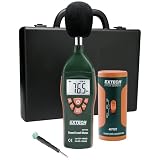
- Datalogs up to 16,000 readings with USB interface for downloading to a PC
- Triple LCD displays humidity, temperature, and date (year, month, and day)
- Programmable from keypad or PC

The Extech 407732-KIT is a versatile sound level meter kit designed for accurate readings across a wide range of sound levels, suitable for professional and industrial use. The kit includes the meter, a calibrator, carrying case, and windscreen, providing all essentials for reliable noise measurement.
It features dual measurement ranges for low and high sound levels, supporting A and C frequency weighting to match human hearing sensitivity and peak sound detection. The integrating function calculates the equivalent continuous sound level (Leq), with Fast and Slow time weighting for capturing transient or steady noise.
Data logging stores measurements with timestamps, aiding environmental monitoring and safety compliance. The included calibrator ensures ongoing accuracy, meeting Class 2 standards for a balance of precision and affordability. The device offers a robust build, ergonomic design, and a clear LCD display for easy use in various lighting conditions. Its microphone reduces interference from wind and background noise, enhancing measurement precision. This is the best sound level meter in 2026.
Reed Instruments R8050 Sound Level Meter

- High accuracy of ±1.4 dB meets Type 2 standards
- Dual range measurement (High and Low)
- Easy-to-read backlit LCD display
The Reed Instruments R8050 is a versatile and user-friendly sound level meter designed for both professionals and enthusiasts who require accurate noise measurements. It offers a wide measurement range from 30 to 130 dB, making it suitable for various environments, from quiet offices to loud industrial settings. The device features A and C frequency weighting options, allowing users to tailor measurements according to specific needs, such as general noise monitoring or peak sound level detection.
One of the key advantages of the R8050 is its integration capability, providing Leq measurements that calculate the average sound level over time. This feature is essential for assessing fluctuating noise environments and ensuring compliance with occupational safety standards. Additionally, the meter includes Fast and Slow time weighting settings to capture transient or steady noise accurately.
The R8050 is equipped with a large, easy-to-read LCD display that shows real-time decibel levels, making it convenient for on-site assessments. Its compact and lightweight design enhances portability, allowing users to carry and operate it effortlessly in the field. The meter also supports data logging, enabling users to record measurements for later analysis, which is particularly useful in environmental noise monitoring and workplace noise assessments.
Calibration is straightforward with the R8050, as it supports external calibrators to maintain measurement accuracy over time. The device meets industry standards for sound level meters, ensuring reliable and precise readings.
Vlike LCD Digital Audio Decibel Meter
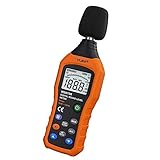
- The sound level meter is an instrument used to real-time measure the sound...
- It also can be appropriate for noise engineering,product quality...
- With the measuring scope from 30 to 130dB and shifting function. Digital...
The Vlike LCD Digital Audio Decibel Meter is a practical and affordable option for those seeking a straightforward device to measure sound levels. It features a clear LCD screen that displays real-time decibel readings, making it easy for users to monitor noise levels at a glance. The meter covers a measurement range typically from 30 to 130 dB, suitable for a variety of environments including offices, factories, and outdoor settings.
This device supports A-weighting frequency response, which aligns measurements with human hearing sensitivity, ensuring that the readings are relevant for assessing potential hearing damage or noise disturbance. The Vlike meter also offers Fast and Slow time weighting settings, allowing users to capture both transient and steady noise levels accurately.
Portability is a key advantage of the Vlike decibel meter. Its compact design and lightweight build make it convenient for field measurements and quick noise assessments. The meter operates on standard batteries, providing flexibility for use in locations without direct power sources.
While the Vlike meter does not include advanced features such as data logging or octave band analysis, it remains a reliable tool for basic noise level measurement needs. It is particularly well-suited for hobbyists, educators, or professionals requiring a simple and effective sound meter for routine checks and noise control.
Conclusion
Accurate sound measurement plays a vital role in maintaining safe and comfortable environments, whether for workplace safety, environmental monitoring, or noise control. With a variety of features like integrating measurement, frequency weighting, and data logging, modern sound level meters empower users to capture precise and reliable noise data. Understanding these tools and their capabilities ensures effective noise management and protection for hearing health across diverse settings.
FAQ
What is a sound level meter used for?
A sound level meter is used to measure the intensity of sound in an environment, expressed in decibels (dB). It helps assess noise levels for purposes such as noise control, environmental noise monitoring, occupational safety, and building acoustics.
What is the difference between Class 1 and Class 2 sound level meters?
Class 1 sound level meters provide higher accuracy and are suitable for laboratory research, legal compliance, and environmental impact assessments. Class 2 meters are generally used for routine workplace monitoring and non-critical measurements. Class 1 meters have a tolerance of ±1 dB, while Class 2 meters have ±2 dB.
How often should a sound level meter be calibrated?
Regular calibration is essential to ensure accurate and reliable measurements. Typically, sound level meters should be calibrated at least once every two years, but more frequent calibration may be necessary depending on usage and environmental conditions.
What is integrating sound level measurement?
Integrating sound level measurement calculates the average sound energy over a period of time, often represented as Leq (equivalent continuous sound level). This feature is important for understanding average sound levels in fluctuating noise environments.
Can smartphone apps replace professional sound level meters?
While smartphone decibel meter apps can provide quick and rough estimates of sound levels, they are generally less accurate and reliable than dedicated professional sound level meters, especially for regulatory compliance and detailed noise assessments.
What is octave band analysis and why is it important?
Octave band analysis divides sound into frequency bands, allowing users to identify specific frequency ranges contributing to noise. This is useful for industrial applications and hearing protection, as it helps target noise control measures effectively.
What factors affect the accuracy of sound level meters?
Several factors can affect accuracy, including calibration status, quality of the device, environmental conditions such as temperature and background noise, and proper use of frequency and time weighting settings.
What is the typical measurement range of sound level meters?
Most sound level meters measure sound levels within a range of approximately 30 to 130 decibels, covering from quiet environments to very loud industrial settings.
Why is data logging important in sound level meters?
Data logging allows the storage of sound level measurements with timestamps, enabling long-term monitoring, trend analysis, and detailed reporting for environmental noise monitoring and occupational safety.
What accessories are commonly used with sound level meters?
Common accessories include external microphones, calibrators for accuracy verification, noise dosimeters for personal exposure monitoring, and software or apps for data analysis and reporting.