What are Small Studio Monitors?
Small studio monitors are compact, nearfield speakers designed for use in limited spaces like home studios or bedrooms. They typically feature smaller woofers (3 to 5 inches), which limits bass extension but delivers clear midrange and high frequencies, making them ideal for close listening and minimizing room reflections. Most are powered monitors with built-in amplifiers for easy setup and often include features like EQ controls and room correction to adapt to small room acoustics. Their portability and accurate sound reproduction make them essential tools for producers and engineers working in confined spaces, providing reliable monitoring without the complexity of larger systems.
Powered vs. Passive Studio Monitors
Studio monitors come in two main types: powered (active) studio monitors and passive studio monitors. Understanding the differences between these will help you decide which setup suits your needs best. Features such as flat frequency response and wide frequency range are important factors that can help you choose better studio monitors for accurate sound reproduction and professional audio production.
Powered Studio Monitors
Powered monitors have built-in amplifiers, eliminating the need for an external amplifier or audio interface with amplification capabilities. This makes powered monitors convenient and easy to set up, especially in smaller studios or home environments. Many powered monitors also feature eq controls and automatic room correction technology to optimize sound for the specific listening environment, reducing the impact of room reflections. Some powered monitors include dip switches, allowing for easy hardware-based customization of frequency response and placement flexibility.
Passive Studio Monitors
Passive monitors require an external amplifier to power them, giving audio engineers more flexibility in choosing amplification and potentially achieving higher sound quality with better studio speakers. However, passive speakers add complexity to the setup and may not be the best choice for beginners or those with limited space. In some cases, a single monitor might be used for specific monitoring tasks, such as checking amp modellers, but for stereo mixing and comprehensive audio work, two monitors are generally preferred.
Key Features of Small Studio Monitors
Flat Frequency Response and Accurate Sound
One of the primary characteristics of the best small studio monitors is a flat frequency response. This means the speakers reproduce sound without artificially boosting or cutting any part of the frequency range, allowing audio engineers to hear the mix as it truly is. Accurate sound reproduction is essential for identifying issues in the mix, such as muddiness in the bass frequencies or harshness in the high frequencies. Reference studio monitors are specifically designed to provide this level of accuracy, offering a stable, flat response that is crucial for critical listening and precise mixing.
Frequency Range and Bass Response
Though small studio monitors are compact, they should still cover a broad frequency range to capture the full spectrum of audio, from low bass to high treble. Accurate low frequency reproduction is essential, and some monitors include controls that allow you to tailor the low frequency response to your room or setup.
However, due to their size, smaller monitors often have limited bass extension compared to larger speakers. Many models incorporate bass reflex ports or bass tilt controls to enhance bass reproduction and provide better bass response, which is important for accurately mixing kick drums and low frequencies. Larger woofers are generally better at reproducing lower frequencies, while maintaining clarity in the mid range is also crucial for achieving accurate mixes.
Stereo Imaging and Detailed Sound
Accurate stereo imaging is another vital feature of quality studio monitor speakers. The best small studio monitors deliver precise placement of instruments and sounds within the stereo field, helping producers make informed decisions about panning and spatial effects. Detailed sound reproduction ensures that subtle elements in the mix are audible, contributing to a well-balanced and professional-sounding final product. Many studio monitors achieve this clarity in the high frequencies by using a dome tweeter, such as a silk dome tweeter, which delivers smooth, accurate, and detailed high-end sound.
EQ Controls and Room Correction
Most studio monitors, especially powered studio monitors, come equipped with EQ controls that allow users to adjust bass, midrange, and treble frequencies to better suit their specific listening environment. Some of the most advanced models include automatic room correction technology, which uses measurement microphones to analyze room acoustics and adjust the monitor’s output accordingly. This feature is particularly valuable in small rooms where room reflections and bass buildup can distort the sound.
Connectivity Options
Modern small studio monitors often offer a variety of connectivity options to accommodate different setups. Balanced XLR and TRS inputs are common for professional audio interfaces, while some models also include RCA, USB, or even Bluetooth connections for greater versatility. This makes it easier to integrate monitors into both professional studios and home setups.
Top Small Studio Monitors
IK Multimedia iLoud Micro Monitor Pro

- Ultra-accurate, flat and detailed sound for mixes that translate perfectly...
- Legendary iLoud "physics-defying" sound: bass extension to 42 Hz and...
- Built-in ARC calibration instantly tunes to any room (mic included)

The IK Multimedia iLoud Micro Monitor Pro is an advanced version of the popular iLoud Micro Monitors, designed to deliver exceptional sound quality in a compact form factor. These powered studio monitors feature a 3-inch woofer and a 1-inch silk dome tweeter, providing a wide frequency range and detailed sound reproduction that belies their small size. What sets the Micro Monitor Pro apart is its built-in automatic room correction system, which uses a MEMS measurement microphone included in the package. This system analyzes the acoustic characteristics of your room and adapts the monitor’s output to compensate for any anomalies, ensuring optimal sound accuracy in various listening environments.
Designed for portability and ease of use, the iLoud Micro Monitor Pro is ideal for producers and engineers who need reliable, high-quality monitoring on the go or in small studio spaces. Despite their compact dimensions, these monitors deliver a surprisingly rich bass response and clear midrange, making them suitable for critical mixing and music production tasks. The monitors also include EQ controls that allow further customization of the bass and treble frequencies to suit personal preferences or specific room conditions.
With their rugged build quality, sleek design, and versatile connectivity options—including balanced XLR and TRS inputs—the iLoud Micro Monitor Pro stands out as one of the best small studio monitors available today. They are perfect for anyone seeking a combination of portability, modern monitors technology, and professional-grade sound in a compact package.
Adam Audio D3V Active Desktop Monitoring System

- Bring ADAM Audio sound quality to your desk with the fully active D3V...
- Each pair features 3.5” aluminum woofers and ferrite magnet systems...
- The D3V features a 1.5” D-ART (Desktop Accelerated Ribbon Tweeter) for...
Adam Audio is well-known for its high-quality active studio monitors that combine compact design with professional-grade sound. The D3V Active Desktop Monitoring System features a 3-inch woofer paired with the brand’s signature U-ART ribbon tweeter, delivering a wide frequency range and detailed high-frequency response. These monitors are designed to provide accurate sound reproduction with minimal distortion, making them ideal for critical listening in small spaces such as home studios or desktop setups.
The D3V monitors include built-in amplification, eliminating the need for external amplifiers and simplifying the setup process. They also offer EQ controls that allow users to tailor the sound to their specific room acoustics, ensuring optimal sound quality even in less-than-ideal environments. With their compact size and precise stereo imaging, the Adam Audio D3V monitors are an excellent choice for producers and audio engineers seeking reliable nearfield monitors that excel in delivering clear, balanced mixes within a small space.
In addition to their performance, Adam Audio monitors are praised for their robust build quality and sleek design, featuring metal driver grilles that protect the drivers while adding a professional aesthetic. These monitors are part of a broader lineup that caters to various studio sizes and needs, making Adam Audio a trusted name among both beginners and seasoned professionals looking for the best speakers to enhance their recording studio experience.
Edifier MR5 2.0 Studio Monitor Bookshelf Speakers
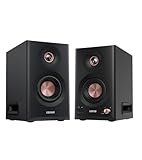
- Studio-Grade Sound: 3-way active crossover system with 5" long-throw...
- Hi-Res Audio: Supports 24-bit/96kHz wired and wireless (LDAC) audio for...
- Room Acoustic Tuning: Tailor the sound to your space using physical rear...
The Edifier MR5 2.0 Studio Monitor Bookshelf Speakers are an excellent choice for those seeking budget studio monitors that deliver quality sound without breaking the bank. These powered monitors feature a 4-inch woofer and a 19mm silk dome tweeter, providing a balanced frequency response suitable for small rooms and desktop setups. Their compact monitors design makes them ideal for home studios or multimedia use where space is limited.
Despite their affordable price point, the MR5 monitors offer clear midrange and detailed highs, making them suitable for mixing music and general audio production tasks. They come equipped with multiple input options, including RCA and 3.5mm aux, allowing easy connection to a variety of audio interfaces and devices. The monitors also include volume and bass controls, enabling users to tailor the sound to their listening environment.
While the bass response on the Edifier MR5 2.0 is not as extended as larger monitors, their active monitors design ensures a flat sound that helps maintain accuracy in the frequency spectrum. This makes them a popular choice among beginners and hobbyists looking for their first pair of studio monitors or a compact monitor solution for smaller spaces.
Edifier MR5 2.0 provide a solid combination of quality sound, affordability, and compact monitors convenience, making them one of the most popular studio monitors in the budget category. They offer a reliable stereo pair for those starting out in audio production or for anyone needing a straightforward, space-saving monitoring setup.
KRK GoAux 4 Portable Monitors

- Perfect for traveling musicians and engineers, they deliver renowned KRK...
- Travel-ready soft case for on-the-go recording sessions
- Packed with everything you need for professional quality setup
The KRK GoAux 4 Portable Monitors are designed for producers and musicians who need high-quality monitoring on the go. These compact, powered studio monitors feature a 4-inch woofer and a 1-inch silk dome tweeter, delivering clear and balanced sound in a small form factor. Their portability makes them ideal for mobile studios, location recording, or any situation where space and convenience are priorities.
Despite their size, the GoAux 4 monitors provide impressive stereo imaging and detailed sound reproduction, allowing users to make informed mixing decisions even outside a traditional studio environment. They include simple bass and treble controls for quick tonal adjustments, helping to tailor the sound to different listening spaces.
Connectivity options are versatile, with inputs including USB, Bluetooth, RCA, and 3.5mm aux, making it easy to connect to a wide range of devices such as laptops, smartphones, and audio interfaces. This flexibility makes the KRK GoAux 4 a popular choice for producers who require reliable, quality sound without the bulk of larger monitors.
The monitors come with desktop stands and a carrying case, further enhancing their portability and ease of setup. While they may not match the bass extension or power of larger studio monitors, their accuracy in the midrange and treble frequencies ensures that critical elements like vocals and instruments are clearly audible.
Conclusion
Small studio monitors offer the perfect balance of clarity, precision, and space-saving design, making them indispensable for delivering accurate sound in compact environments. Their ability to reveal intricate details and provide precise stereo imaging ensures that every mix translates well across all playback systems, empowering producers and engineers to create with confidence and finesse.
FAQ
How do I place small studio monitors for optimal sound?
For the best sound, position your two studio monitors to form an equilateral triangle with your listening position. The tweeters should be at ear level, and monitors should be placed away from walls to minimize room reflections. Using isolation pads or stands can help reduce vibrations and improve bass accuracy. Proper placement enhances accurate stereo imaging and a clear sweet spot.
Can small studio monitors deliver good bass response?
While smaller monitors have limited bass extension due to their compact woofers, many include bass reflex ports or bass tilt controls to enhance low-frequency reproduction. For deeper bass, especially in larger rooms, adding a subwoofer can complement small studio monitors and provide a fuller low-end response.
How important is room treatment for small studio monitors?
Room treatment is crucial for achieving accurate sound from small studio monitors. Acoustic treatment helps control room reflections and bass buildup, which can distort the sound. Using soft furnishings like rugs and curtains, along with acoustic panels and bass traps, improves the listening environment and allows your monitors to perform optimally.
How do I connect studio monitors to my audio interface?
Most small studio monitors connect to an audio interface using balanced XLR or 1/4-inch TRS cables for the best sound quality. Ensure your audio interface has compatible outputs, and use quality cables to minimize noise. Powered monitors plug directly into power, while passive monitors require connection to an external amplifier.
Are small studio monitors suitable for professional use?
Small studio monitors are ideal for home studios, project studios, and situations with limited space. While they may not replace larger monitors in professional studios, they offer accurate sound and detailed imaging suitable for many production tasks. Many professionals use small monitors as secondary reference monitors alongside larger systems.
How do I maintain my studio monitors?
Keep your studio monitors clean and dust-free, avoid exposing them to extreme temperatures or moisture, and handle them carefully when moving. Regularly check cables and connections, and follow manufacturer guidelines for optimal use and care to ensure longevity and consistent performance.