Table of Contents
What is PA Crossover?
A PA crossover is a crucial element in professional audio systems designed to improve sound quality by directing specific frequency ranges to the appropriate speakers. It acts as an audio signal processor that splits the full-range signal into multiple frequency bands, ensuring that each speaker driver—whether a woofer, mid-range, or tweeter—receives only the frequencies it is optimized to reproduce. This division prevents distortion and damage that can occur when speakers attempt to handle frequencies outside their designed range. Sending a full-range signal to all speakers can yield inaccurate results due to each speaker’s limited frequency range.
Crossovers can be either passive or active. Passive crossovers are typically built into speaker cabinets and use components like capacitors and inductors to filter frequencies after amplification. They are placed between the output of the power amplifier and the input of the loudspeaker drivers. Active crossovers, conversely, operate at line level before amplification, allowing for more precise control over crossover points, slopes, and gain. Active crossovers often require separate amplifier channels for each frequency band but provide greater flexibility and improved sound quality.
Key features of PA Crossovers
PA crossovers are essential tools in professional audio setups, designed to ensure the best possible sound quality by managing how audio signals are distributed among different speaker drivers. A multi-cabinet speaker system uses separate speaker enclosures tuned to reproduce specific frequency bands with crossovers. Here are some key features that define the effectiveness and functionality of PA crossovers:
- Frequency Division: The primary function of a PA crossover is to divide the full-range audio signal into separate frequency bands. This division allows each speaker driver—such as subwoofers, woofers, mid-range drivers, and tweeters—to receive only the frequencies they are optimized to reproduce, which enhances clarity and reduces distortion.
- Filter Types and Slopes: PA crossovers utilize filters such as low pass filters, high pass filters, and sometimes band pass filters to manage frequency ranges. The slope of these filters, measured in decibels per octave (dB/oct), determines how sharply frequencies outside the desired band are attenuated. Steeper slopes provide more precise separation, while gentler slopes allow for smoother transitions between drivers.
- Adjustable Crossover Points: Many PA crossovers offer adjustable crossover points, allowing sound engineers to select the exact frequency at which the audio signal splits between drivers. This flexibility is crucial for tailoring the system to specific speakers, venues, and musical styles.
- Gain Control: Effective PA crossovers include gain controls for each frequency band, enabling the balancing of output levels across drivers. Proper gain adjustment ensures a cohesive sound and prevents any frequency range from overpowering others.
- Active vs. Passive Designs: PA crossovers come in both active and passive designs. Active crossovers operate at line level before amplification and provide greater control and flexibility, often including features like variable crossover points and slopes. Passive crossovers operate after amplification and are typically fixed in design, integrated within speaker enclosures.
- Integration with DSP: Modern PA crossovers often incorporate digital signal processing (DSP), which allows for sophisticated control over crossover settings, including dynamic adjustments based on the acoustic environment. DSP integration can improve system tuning, phase alignment, and overall sound quality.
- Protection of Drivers: By ensuring that each speaker only receives the frequencies it can handle, PA crossovers protect drivers from damage caused by inappropriate frequency signals, particularly high frequencies reaching woofers or low frequencies reaching tweeters.
- Versatility and Scalability: PA crossovers are designed to work in various system configurations, from simple two-way systems to complex multi-way arrays, supporting scalability and adaptability to different audio production needs.
Top PA Crossovers
dbx DriveRack VENU360 Complete Loudspeaker Management System
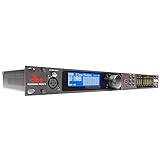
- Easy-to-read display: system setup and audio monitoring made easy, even in...
- Your favorite presets: up to 75 user configurations can be saved - no need...
- Connectivity: features balanced XLR analog or AES digital inputs,...
The dbx DriveRack VENU360 is a comprehensive loudspeaker management system renowned for its versatility and high-quality performance in professional PA setups. It integrates advanced crossover capabilities with sophisticated signal processing tools, making it an excellent choice for users seeking precise control over their sound systems.
One of the standout features of the VENU360 is its ability to handle multiple crossover points with adjustable slopes, enabling seamless integration of subwoofers, woofers, and tweeters. The system supports both analog and digital inputs, providing flexibility for various configurations. Its intuitive user interface, accessible via a touchscreen or remote control software, allows sound engineers to fine-tune crossover frequencies, EQ settings, delay, and output levels with ease.
The VENU360 also incorporates advanced DSP functions such as feedback suppression, room optimization, and dynamic EQ, which help improve sound quality in challenging acoustic environments. Its built-in measurement microphone and automated setup wizard simplify the tuning process, making it accessible even to less experienced users.
Moreover, the system supports stereo and mono operation modes, catering to different PA system designs. The ability to save and recall presets enhances workflow efficiency during live events or studio sessions. With its robust build quality and reliable performance, the dbx DriveRack VENU360 remains a top contender among the best PA crossover available on the market.
dbx 223xs Stereo 2-Way, Mono 3-Way Crossover with XLR Connectors

- XLR balanced ins and outs
- Mode switch for stereo 2-way or mono 3-way operation
- Low frequency summed (subwoofer) output

The dbx 223xs is a versatile and widely respected active crossover unit designed for professional audio applications, including PA systems, live sound, and studio monitoring. It offers stereo 2-way and mono 3-way operation modes, making it adaptable to various system configurations. The device features continuously variable crossover points, allowing precise tuning of frequency bands to match the unique characteristics of your speakers and venue acoustics. Active analog crossovers are often recommended for their continuous variable crossover point options.
One of the standout features of the dbx 223xs is its use of Linkwitz-Riley 24 dB/octave filters, which provide steep slopes for clear separation between frequency bands. This steep filtering helps minimize frequency overlap and phase issues, resulting in a cleaner, more accurate sound reproduction. The crossover points can be adjusted independently for each band, giving sound engineers the flexibility to optimize system performance.
The unit includes balanced XLR inputs and outputs for professional connectivity and low noise operation. Additionally, it provides input and output level controls, allowing fine adjustment of signal gain to ensure balanced output across all drivers. The dbx 223xs also features phase inversion switches for each output channel, which help in aligning speaker phase and improving overall system coherence.
Behringer SUPER-X PRO CX2310

- This is the product of Beranger
- This product is manufactured in China
- Individual output Mute switches for easy band adjustment
The Behringer SUPER-X PRO CX2310 is a popular and affordable active crossover widely used in both professional and semi-professional PA systems. It offers flexible crossover point adjustments with continuously variable frequency settings, allowing precise tailoring of the frequency bands to match your specific speakers and venue acoustics. The CX2310 features steep filter slopes of up to 24 dB per octave, which help to sharply separate frequency bands and minimize overlap, resulting in clearer and more defined sound reproduction.
Equipped with both low pass and high pass filters, the CX2310 supports bi-amping configurations where separate amplifiers power different frequency ranges, enhancing overall system efficiency and sound quality. Its user-friendly interface includes illuminated LED indicators for signal presence and clipping, aiding in system monitoring and preventing distortion. Additionally, the unit provides balanced XLR and 1/4-inch TRS inputs and outputs for versatile connectivity options.
Tips for Optimizing PA Crossovers
Optimizing PA crossovers involves several key techniques and considerations to ensure your sound system delivers the best possible performance. Here are some practical tips to help you get the most out of your PA crossover setup:
- Understand Your Speakers’ Frequency Ranges: Before setting crossover points, familiarize yourself with the frequency response capabilities of each speaker driver in your system. Knowing the natural limits of your subwoofers, woofers, and tweeters will guide you in selecting appropriate crossover frequencies that prevent distortion and damage.
- Set Crossover Points Thoughtfully: The crossover point should ideally be set where the frequency response curves of adjacent drivers intersect, typically around the -3dB point. This ensures a smooth transition between drivers, minimizing phase issues and frequency overlap. Experiment with different crossover points to find the sweet spot for your specific speakers and venue.
- Adjust Filter Slopes for Seamless Integration: The slope of your crossover filters affects how sharply frequencies are attenuated beyond the crossover point. Steeper slopes (e.g., 24 dB/octave) provide clearer separation but may introduce phase shifts, while gentler slopes (e.g., 12 dB/octave) offer smoother blending. Choose slopes that balance clarity and cohesion in your system.
- Balance Gain Levels Across Frequency Bands: Use gain controls to match the output levels of different drivers, ensuring no frequency band overpowers others. Proper gain balancing helps maintain a flat overall frequency response and prevents certain frequencies from dominating the mix.
- Utilize DSP for Fine-Tuning: If your crossover supports digital signal processing, take advantage of features like parametric EQ, delay, and phase adjustment. These tools allow you to compensate for room acoustics, speaker placement, and driver characteristics, resulting in a more accurate and pleasing sound.
- Measure and Analyze Your System: Use measurement microphones and audio analysis software to assess frequency response and phase alignment in your listening area. Objective measurements combined with critical listening help you make informed adjustments to crossover settings.
- Consider Room Acoustics: The acoustics of your venue can significantly impact crossover performance. Factors like room size, shape, and reflective surfaces affect how sound waves interact. Adjust crossover points and slopes accordingly to account for these variables.
- Protect Your Drivers: Always ensure that crossover settings prevent low frequencies from reaching tweeters and high frequencies from reaching woofers. This protection extends the lifespan of your speakers and maintains sound quality.
- Test in Real-World Conditions: After initial setup, test your PA system with actual music or program material at typical listening levels. This practical evaluation helps identify any issues not apparent during measurement and allows for final tweaks.
- Document Your Settings: Keep a record of your crossover configurations for different venues or setups. Having presets or notes saves time during future setups and ensures consistent sound quality.
Conclusion
Optimizing your PA crossover setup is key to unlocking the full potential of your sound system, ensuring every frequency finds its perfect home and delivers crystal-clear audio across the entire listening area. By carefully balancing crossover points, slopes, and gain, you create a seamless blend that enhances clarity, prevents distortion, and brings your music to life with vibrant, dynamic energy. Whether in a small venue or a large space, fine-tuning these elements transforms your audio experience into something truly immersive and powerful.
FAQ
What is the purpose of a PA crossover?
A PA crossover’s primary purpose is to split the full-range audio signal into separate frequency bands, ensuring that each speaker driver receives only the frequencies it is designed to reproduce. This enhances sound quality, prevents distortion, and protects speakers from damage caused by inappropriate frequency ranges. In most cases, both passive and active crossovers are used in a single system.
What is the difference between passive and active crossovers?
Passive crossovers are built into speaker cabinets and operate at speaker-level signals after amplification, using components like capacitors and inductors to filter frequencies. Active crossovers operate at line-level signals before amplification, providing more precise control over crossover points, slopes, and gain, but requiring separate amplifier channels for each frequency band.
How do I choose the best crossover point?
Choosing the best crossover point depends on the natural frequency response of your speakers and the acoustics of the listening area. It should be set where the drivers can seamlessly transition without overlapping frequencies that cause muddiness or gaps that cause loss of detail. Measurement tools and manufacturer recommendations are valuable aids in this process.
Can I use digital signal processing (DSP) for crossovers?
Yes, DSP technology allows for real-time, software-based tuning of crossover points, slopes, and gain. This flexibility makes it easier to optimize sound quality for different venues and applications, and many modern PA systems incorporate DSP for enhanced performance.
Why is the integration of subwoofers important in PA systems?
Subwoofers handle the lowest frequencies, providing depth and power to the sound. Proper integration with main speakers using crossovers ensures a smooth transition between frequency bands, avoiding overlaps or gaps that can degrade sound quality.