Which bridge design best suits the way you play: a traditional tremolo, a modern vibrato system, or a fixed hardtail? Start with your guitar’s mounting pattern, string spacing, and body dimensions—not its logo. A compatible replacement can address worn hardware or add useful features, but it will not automatically cure tuning problems caused by nut friction, poor string installation, or an unbalanced setup.
Best Strat Bridges
Floyd Rose Rail Tail Tremolo – Narrow (Chrome)
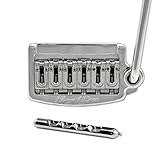
- Narrow 2 1/16" (modern) string spacing. Fits Strat Style Guitars with...
- Full contact, dive-only tremolo designed to retrofit your existing...
- Computer designed and precision-machined
If you want to stay in tune for a long period, this bridge is a good option. When compared to other bridges, you can sustain it for a significantly longer amount of time, making it a great find and selection. If you’re searching for a hardtail bridge, this is the one to get. Floyd Rose’s latest design is the Rail Tail. Many players have fallen in love with the traditional Floyd Rose system over the years, but installing one on your guitar necessitates a lot of routing and drilling, which many of us are hesitant to accomplish.
Floyd Rose came up with the Rail Tail as a solution to this problem. Simply screw the fulcrum into your six-screw strat and place the bridge on top of it. This bridge has a lot of advantages, including the fact that it doesn’t have any wear and tear after years of use because it doesn’t have knife edges.
It also allows you to upgrade Strats with a six-screw bridge system without having to fill in the screw holes, which is required when installing a Wilkinson unit. One disadvantage of this bridge is that it must rest flat on the body, preventing it from being set up to float.
Fender American Series Stratocaster Tremolo Bridge Assembly

- Two heavy-duty pivot screws let you do vibrato work, with solid steel...
- Set of six powder-coated steel block saddles with off-center intonation...
- Includes mounting hardware, adjustment wrenches and tremolo arm with white...
This bridge assembly is available as a single unit, and it’s a significant increase over what you’ve got if it’s from the Standard Strat range. The entire item is built of exquisite steel and feels far superior to cheaper alternatives. It’s also always on the Fender website’s stock.
Everything in this kit is steel, and it seems a lot heavier than the cheaper bridges. The tremolo bar’s two hefty pivot screws make it far more durable and less likely to create tuning troubles. This is comparable (and in some cases identical) to the versions used in many of Fender’s most expensive guitars, the American Stratocasters. This bridge update is expected to be a major improvement in overall quality for any guitar in the Standard Strat line or lower.
You’ll see that instead of the six-screw vintage style configuration, this bridge has two larger screws going into bushings. If you’re switching from an existing two-point pivot bridge to this one, this is the best scenario. To put it another way, it’s a one-for-one boost. It’s a two-point game.
Wilkinson Vintage Steel Saddles Guitar Tremolo Bridge with Full Solid Steel Block
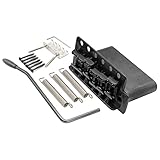
- It fits American vintage Strat like Vintage Reissue, Custom Shop Vintage...
- String spacing is 10.8mm, totally 54mm (2-1/8 "), Six mounting screws hole...
- Genuine Wilkinson parts, made in Korea and distributed by Musiclily...
The Wilkinson six-screw bridge stands out among the competition by giving players with a bridge that feels robust, sounds excellent, and, most importantly, stays in tune. A solid steel tone block, a chrome-plated baseplate, and bent steel saddles make up the T-WVCS-C. This allows for better vibration transfer, resulting in a more solid-sounding tone.
The pop-in whammy bar is another major selling feature for this amazing bridge. You have to screw in the arm on a stock Fender bridge, which means you don’t have perfect control over the tightness of the arm, and it usually wiggles around in the arm socket. The Wilkinson bridge eliminates this problem by allowing you to tighten the arm with a grub screw in the tone block’s back. Simply insert the arm and tighten the screw until the arm feels comfortable when moved around. It’s also our value recommendation for individuals on a tight budget due to its inexpensive pricing.
The Wilkinson T-WVCS-C is another fantastic find, a finely built solid steel bridge that sounds great and remains in tune. This bridge, unlike others, has a pop-in bar. With a grub screw, you can easily fasten the arm to it. Simply adjust the arm’s tightness and feel until you’re satisfied with the result.
Hipshot 6-String US Fixed Guitar Bridge

- Premium Guitar Bridge: Enhance your guitar's performance with this...
- Uncoated Finish Type: This guitar bridge boasts an uncoated finish...
- Wide Applicability: Suitable for 6-string guitars, this bridge is...
Hipshot has a lengthy history in the aftermarket parts industry. Their machine heads and bridges are well-known for their durability. Given the abundance of two-point strat bridges available, one might question what sets the Hipshot US Contour unique.
The US Contour bridge addresses the issue of knife edge wear and tear by using only one knife edge on the low E-string side and two locator pins where the high E string is.
The locating pins keep the bridge from sliding side to side, which reduces wear on the knife-edge, and the knife-edge continues to function as expected. This means that after hours of heavy use, this bridge is less likely to require repair. This bridge is great for the player who wants something current and sturdy, but doesn’t need a longer setup than the Vega-Trem.
Callaham Vintage S Model Strat Bridge Assembly

We’ve had to tweak our guitars to get near to the mojo of a vintage instrument because many vintage guitars are out of reach for us mere mortals. When it comes to replicating antique strat bridges, Callaham has long been the industry standard. Their bridges are made of top-grade steel, which produces a fantastic tone. Because all bridges are hand-inspected for flaws, the chances of receiving a faulty bridge are extremely slim. One of the bridge’s drawbacks, in my opinion, is the screw-in whammy bar, but that is to be anticipated from a true vintage replica.
This strat bridge is for you if you need anything for older guitars. When it comes to replicating ancient, vintage items, Callaham takes their time, hand-checking for the tiniest hint of flaws—perfect for your guitar. Because it’s composed of steel, it’s tough and durable, so you won’t have to replace it anytime soon.
Babicz Full Contact Hardware FCH Z Series 6 Hole Strat Tremolo
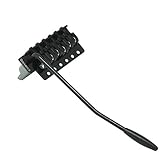
- Patented eCAM saddle technology
- Z-Series single saddle lock screw design
- Individual string height adjustment
It’s as simple as removing the old tremolo and screwing in the new one to install this Babicz tremolo. The saddles are adjustable, allowing you to better manage string height than a traditional bridge. As an added bonus, this bridge boosts the sustain and adds some brightness to the sound.
This bridge will not only be very adaptable, but it will also stand the test of time. It keeps everything in good working order and, once installed, requires no further maintenance. You might receive a lemon, which will require some extra labour to install, but aside from that, this is a great bridge for anyone wishing to upgrade from the normal Stratocaster bridge.
Stratocaster Bridge Compatibility Checklist
Use this sequence before ordering any replacement:
1. Identify the existing bridge type. Determine whether the guitar has a six-screw tremolo, a two-point tremolo, or a fixed hardtail.
2. Measure mounting spacing center to center. On a six-screw bridge, measure between the outer mounting-screw centers. On a two-point bridge, measure between post centers.
3. Measure outer E-to-E string spacing separately. Measure between the centers of the two outside strings at the saddles.
4. Check body thickness and clearance. Tremolo block depth, cavity shape, and movement clearance all matter.
5. Confirm handedness, string routing, and hardware. Check screws, posts, inserts, arm fittings, and any required string ferrules.
Choosing the Right Strat Bridge Design
Six-Screw vs Two-Point Tremolos
A six-screw tremolo pivots along a plate secured by six mounting screws. A conventional two-point tremolo pivots against two posts seated in body inserts.
For replacements, the important difference is mounting architecture. Switching between them generally requires modification. Neither design is inherently superior for tuning or tone; sound pivots, suitable adjustment, and a friction-free string path matter more than screw count.
Floating vs Decked Tremolos
Floating and decked describe setup states, not mounting types.
A floating tremolo allows downward and upward pitch movement within its available clearance. It can also respond to palm pressure, string bends, and tuning changes because string tension and spring tension interact.
A decked tremolo rests against the body and generally allows downward movement only. Both six-screw and suitable two-point bridges can use these setups.
Hardtail Bridges for Fixed-Bridge Players
A hardtail suits players who do not need vibrato and prefer a fixed string anchor. Without a moving, spring-balanced bridge, alternate tunings and string changes avoid the same balancing process.
Keep hardtail replacement separate from tremolo-to-hardtail conversion. An existing tremolo cavity may require substantial structural work before it can support a fixed bridge safely and accurately.
Setup Checks Before Buying a New Bridge
A tuning problem is not automatically a bridge problem. Check these areas first:
- Nut-slot friction: Pinging while tuning or inconsistent return after bends can indicate binding.
- String installation: Secure wraps and properly stretched strings reduce avoidable movement.
- Pivot condition: Worn contact surfaces, loose posts, or damaged screw holes need attention.
- Spring balance: Set spring tension for the string gauge, tuning, and intended bridge position.
- Loose arms: Inspect the socket, threads, bushings, or tension adjustment.
- Damaged saddles: Look for burrs, stripped height screws, and seized intonation screws.
A replacement saddle, block, or arm component may solve the problem without replacing the complete assembly. Match component dimensions and threads carefully. Locking tuners can simplify string installation, but they do not eliminate nut friction.
Conclusion
Choose a replacement bridge by working outward from the guitar’s dimensions and your playing requirements. Preserve a compatible mounting pattern where possible, distinguish string spacing from screw spacing, and decide whether you actually need vibrato. Diagnose setup faults before replacing hardware, then prioritize secure installation, comfortable adjustment, and a clean string path over appearance or upgrade promises.
FAQ
What bridge do Stratocasters use?
Stratocasters commonly use traditional six-screw synchronized tremolos, modern two-point tremolos, or fixed hardtail bridges. The configuration depends on the model and production year. Before buying replacement hardware, identify the existing design and measure its mounting pattern, string spacing, and available body clearance rather than relying on the guitar’s name.
What tremolo did David Gilmour use?
David Gilmour’s Black Strat is associated with a vintage-style six-screw synchronized tremolo and a shortened tremolo arm. The guitar underwent hardware changes, including a Kahler installation before returning to a traditional arrangement. That history applies to this specific instrument and should not be generalized to every Stratocaster he played.
Will any Strat bridge fit a Squier or Mexican Strat?
No. Squier and Mexican-made Stratocasters vary by model and production year, including mounting spacing, string spread, body thickness, and tremolo block clearance. Measure the actual guitar and compare those measurements with the replacement’s dimensional drawing. A general compatibility label does not guarantee a direct fit without modification.
Can I replace a six-screw Strat bridge with a two-point bridge?
Usually, a conventional conversion requires drilling accurately located holes for two mounting inserts and addressing the original screw holes. It is not normally a direct exchange. Purpose-designed retrofit systems are different: some retain existing mounting locations, but their specified dimensions and installation requirements still need checking before purchase.