Small, eccentric soprano saxophones have a unique voice in a jazz band because they are full of attitude and eccentricity. A soprano saxophone’s note is similar to an alto or even a tenor saxophone’s note. The soprano saxophone won’t help you tune the notes, though. Several well-known jazz musicians, including John Coltrane and Kenny G, use professional soprano recordings in their compositions. If you want to create a lively and complete sound in the higher registers, this style of saxophone is a great investment.
The soprano saxophone, also known as “the straight sax,” has played a significant role in many great jazz recordings even though it may not be utilised as frequently as its alto and tenor equivalents. In this post, we’ll examine some of the most well-known soprano saxophone performers and highlight our suggested options for purchasing one because it’s a fantastic option for the contemporary saxophonist who wants to expand his or her range.
Top Soprano Saxophones
Yamaha YSS-475II Intermediate Soprano Saxophone – Gold Lacquer
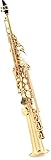
- Bb Soprano Saxophone with 1-piece Yellow Brass Body Straight Neck
- Case - Gold Lacquer
- 4C Mouthpiece
For intermediate players, the Yamaha YSS-475II is a great soprano saxophone. To help the keys seal, it has leather pads with plastic tone boosters. Playing the note will be considerably simpler if you use the high F# key rather than an altissimo fingering. Additionally, this model is lighter than some soprano saxophones, making it suitable for extended playing.
Most musicians are aware of Yamaha’s quality because of its reputation as a professional brand. The Yamaha YSS-475II in this instance is identical. It is an intermediate soprano saxophone with styling and playability modelled by the renowned custom EX sax. Similar to that, the 475II provides superb tone and intonation. The key set is made to be comfortable to play and provide the performer with outstanding finger responsiveness.
The specially crafted Bb spatula improves proper finger technique while also enhancing comfort, resulting in more seamless note transitions. A movable thumb rest allows for more precise finger manipulation. The high F# key for improved intonation on this instrument is a major benefit. The lower vent tube design also offers greater air flow and noise reduction.
The price of this intermediate saxophone, which is comparable to that of some professional sopranos, isn’t particularly low, but Yamaha instruments are renowned for their superb design and construction quality, and the Yamaha 475 has several features in common with the professional Yamaha Custom EX saxophone. For maximum comfort, the thumb rest may be adjusted, and the laser etching on the gold lacquer gives it a neat, fashionable appearance. This is the Best Soprano Saxophone in 2023.
Jean-Paul USA SS-400SP

- PROFESSIONAL SETUP – Each saxophone is expertly setup and play-tested by...
- PRECISE INTONATION – Engineered for accurate intonation across the entire...
- READY TO PLAY – Comes with all the essentials needed to start playing...
You can get value for your money when purchasing a new sax with the Jean Paul USA SS-400SP. If you want to improve your performance, this instrument is a fantastic option. This is what you need if you want a low-cost solution that won’t sacrifice quality. You not only receive a product of exceptional quality, but you also pay an unbelievable price for it. The soprano sax weighs only a little over 7.5 pounds. You can practise whenever you have the chance while carrying your instrument with you. This instrument is compact and simple to grip because it is shaped like a soprano sax.
Despite the fact that this sax is not pricey, it nonetheless produces high-quality tones. Once they use and get to know this little gem, most people are impressed with how well it plays in tune and the overall quality of the sax. The soprano sax has a gorgeous silver-plated body construction. Additionally, the keys are ergonomically made to fit the user’s fingertips.
The sax has a gorgeous silver-plated body construction. Additionally, the keys are ergonomically made to fit the user’s fingertips. When you buy it, it also comes with everything you need. A case, mouthpiece, swab, cleaning cloth, reed, cork grease, and ligature are also included. Once you make this decision, you won’t need to buy anything else. A strong soprano sax is a great way to start your musical career. This is the Best Soprano Saxophone for Beginners in 2023.
Selmer SSS280R La Voix II Soprano Saxophone Outfit Lacquer

The ergonomic keys of the Selmer LaVoix II allow for rapid finger movement and have a flowing sound. The neck of this sax is unique since it is designed to respond better. For musicians looking for a distinct, bespoke darker or mid-range tone, it works nicely. Additionally, this sax has all the qualities of a contemporary soprano sax. It performs well, is lightweight, and offers a wide variety of tones. The high G# and numerous adjustment screws are advantages here. It has a clean finish and a rose brass appearance.
The name Selmer Paris is arguably the most prestigious in the saxophone manufacturing industry. The French company has been producing woodwind instruments since 1885. They have created some of the most recognisable saxophone models in history, including the well-known Mark VI, and many notable musicians have played them. Their saxophones are some of the priciest items available due to their reputation as the best-of-the-best and the fact that they continue to do the majority of their craftsmanship by hand at a factory outside of Paris.
Allora Vienna Series Intermediate Straight Soprano Saxophone with Two Necks AASS-502 – Lacquer

The Allora, which is made by VMI in Germany, is a great option for musicians looking for an intermediate soprano sax with more playing freedom and a wider sound spectrum but without paying a premium price. The Allora accomplishes this. Be aware that this sax has a sturdy design for intermediate players. It is tight, sturdy, and has good handling. Additionally, it is a cost-effective instrument upgrade for intermediate musicians. It provides the flexibility that the majority of seasoned players desire, as well as a greater tone and play range, a superior ergonomic key fit, etc. All for a cost that the majority of us can afford.
In essence, the Allora sets itself apart from rivals thanks to its pleasant tonal range. This gives the artist more playing freedom, enabling them to aim for both quiet notes and blow out tones, which benefits the player (depending on the piece he is playing). This is what distinguishes a saxophonist’s abilities. This saxophone has additional features like two additional necks, pro-style keys, and a high F# key.
To offer the player the desired darker tones, one of these necks is bent. The straight neck, however, produces a sound that is more direct. You’ll discover right away that the keys are comfy and allow you to play more organically. The high F# key, which provides you greater versatility, is an added bonus. The Allora Vienna is a great option for musicians looking for a soprano sax with a warm tone, especially in the middle and bottom octaves.
P. Mauriat Le Bravo Soprano Saxophone

- Bb Soprano Saxophone with Gold Brass Body
- Silver-plated Straight Curved Necks
- Mother-of-pearl Key Touches
For schools or even novices on a tight budget, the P. Mauriat Le Bravo is a fantastic option. This can be the greatest option if you want to acquire a good instrument without going broke. This saxophone is an improvement above any previous low-cost instrument you may have because of numerous outstanding characteristics.
The saxophone was designed with students and beginners in mind, and Allora made sure that it met their needs. An instrument that was long thought to be delicate had been rendered playable. It has superb sound quality and is made to make learning to play it for inexperienced musicians simple. One of the few intermediate saxes with a greater play and tone range is the P. Mauriat Le Bravo. A musician will be able to access both soft notes and blow-out sounds thanks to this.
It is an adaptable instrument with ergonomically built keys to provide musicians with the finest playing experience. Two necks are included with this model. Due to its curvature, one neck emits deeper tones to the player while the straight neck produces a more direct sound. The soprano saxophone’s flexibility is also improved by the instrument’s high F# key. If you want a soprano saxophone with a warm tone, the P. Mauriat Le Bravo is a fantastic option, especially in the low and middle octaves. All of this for a reasonable cost.
EASTROCK B-flat Curved Soprano Saxophone

- Top Material:Our beautiful instrument used selected h68 copper material...
- Excellent Sound:The EASTROCK saxophone have been professionally adjusted...
- Advanced Design:EASTROCK saxophone used upgraded quality leather so that...
The EASTROCK B-flat curved soprano saxophone is an entry-level option marketed toward beginners and students. Its defining feature is its curved body: rather than extending straight outward, the instrument bends upward at the bell, creating a compact playing position.
Best suited to: Budget-conscious buyers who specifically want to explore a curved soprano sax and can arrange an inspection during the return period. An existing saxophonist adding soprano may be better equipped to assess it than a complete beginner shopping without help.
The curved design deserves attention because posture matters on soprano. Depending on your proportions and how you support the instrument, bringing the body closer can feel more comfortable than holding a straight soprano farther forward. The upward-facing bell also changes the sound reaching your ears, although that does not establish how the instrument sounds to an audience.
The listed B-flat pitch is standard for modern soprano saxophones. Alto players will need to adjust their transposition expectations, while tenor players already read for a B-flat instrument. Both groups still need to develop soprano-specific voicing and pitch control.
Its gold-colored appearance should not drive the decision. Finish does not tell you whether pads seal, keys align, or octave transitions speak cleanly. Likewise, a package containing accessories is not automatically better value than an instrument sold with fewer extras.
Buying caveat: Confirm the exact package contents, warranty, seller support, and return terms before ordering. Have a technician check pad sealing, regulation, neck fit, and spring tension while a return remains possible. Do not assume an inexpensive instrument needs extensive repairs—or that it arrives perfectly adjusted.
Verdict: A conditional budget candidate for buyers prioritizing curved-body ergonomics. Choose it only when inspection and return arrangements make the purchase manageable; appearance and beginner-oriented marketing are not substitutes for playable condition.
Choosing the Right Soprano Saxophone
Budget and Total Ownership Cost
The best budget soprano sax is the one that remains affordable after setup, accessories, and foreseeable maintenance. A low purchase price can lose its advantage if the instrument immediately needs substantial mechanical work.
Build your budget around four essentials:
- Mouthpiece: A suitable facing and moderate tip opening can make initial response more manageable.
- Reeds: Allow room to try several strengths rather than committing to a large supply immediately.
- Setup: Even a new saxophone may benefit from adjustment after shipping.
- Repairs: Used instruments may need pads, corks, or regulation beyond routine servicing.
Include a secure stand, appropriate swab, and supportive strap where needed. Ask whether the case protects the instrument properly rather than merely fitting around it.
At the lowest budgets, compare dealer-serviced used instruments with new entry-level options. Neither category is automatically the better purchase. Condition, support, and return rights matter more than a bargain label.
Straight Versus Curved Designs
A curved soprano has a bent body and upward-facing bell. A straight soprano with a curved detachable neck still has a straight body; the neck changes the mouthpiece angle, not the instrument’s overall layout.
A soprano saxophone with straight and curved necks offers more ways to adjust playing position. However, neck options do not guarantee comfortable hand positioning. Palm-key reach, thumb support, wrist angle, and pinky-table movement also matter.
Try each design while sitting and standing. Keep your head balanced rather than reaching toward the mouthpiece or lifting your shoulders.
Sound feedback differs, too. A curved bell may make your playing feel more immediate to you, while a straight instrument directs sound differently. Neither shape is inherently easier to tune, and perceived loudness behind the mouthpiece is not a reliable measure of audience projection.
Intonation and Mechanical Condition
Testing soprano saxophone intonation requires more than checking one note against a tuner. Your embouchure, voicing, mouthpiece position, and instrument temperature can all affect the result.
Use this repeatable audition checklist:
1. Warm up fully. Let both player and instrument settle before judging pitch.
2. Use a familiar setup. Keep the mouthpiece and reed consistent when comparing instruments.
3. Compare registers. Play slow scales, octave intervals, palm-key notes, and the lowest notes.
4. Vary dynamics. Check whether pitch and response remain manageable when playing softly and loudly.
5. Check mechanical consistency. Investigate delayed attacks, unstable low notes, and uneven resistance with an experienced player or technician.
Listen against a drone as well as watching a tuner. Avoid repeatedly correcting every note before noticing its natural tendency. An instrument that requires constant compensation may be a poor match, but leaks should be ruled out before blaming its acoustic design.
Mouthpiece and Reed Setup
Mouthpiece and reed setup can change response enough to confuse an instrument comparison. A large tip opening paired with an overly resistant reed may make soprano feel unnecessarily demanding, especially for someone accustomed to alto.
Start with a manageable combination recommended by a knowledgeable teacher or specialist. Reed strength numbers are not directly interchangeable across every brand and cut.
A setup that produces an appealing sound for another musician may not suit your air support or voicing. Avoid buying a more expensive saxophone simply to solve a problem caused by an unsuitable mouthpiece or exhausted reed.
For auditions, bring several reliable reeds. One inconsistent reed should not decide which instrument you purchase.
New Versus Used Instruments
A used soprano can offer access to better construction or more comfortable keywork within the same budget. Its value depends on condition, however—not simply its original market position.
Request clear photographs, service records where available, and a written description of repairs. Check the body, neck receiver, posts, guards, and case for evidence of damage. An overhaul claim is more useful when supported by details about who performed it and what was done.
Obtain an independent repair estimate before accepting an instrument with known problems. Confirm return deadlines, shipping responsibility, and any restocking charges.
Buyers researching the best vintage soprano saxophones should also consider ergonomics. Older keywork, limited adjustment options, or previous repairs may require adaptation. Vintage instruments are not automatically troublesome, but neither age nor collectability guarantees practical value.
Skill Level and Playing Frequency
A first soprano is not necessarily a first saxophone. Experienced alto and tenor players already understand fingering, articulation, and basic maintenance, but soprano still demands adjustments in voicing and pitch awareness.
Occasional doublers should prioritize easy response, dependable condition, and straightforward ownership. Paying for additional neck options or specialized keywork makes more sense when those features solve a real comfort or performance problem.
Regular performers may reasonably place greater value on refined ergonomics, service support, and consistency during demanding passages. Premium positioning alone does not establish those advantages for an individual player.
Before upgrading, identify the limitation you want to remove. “My wrist angle becomes uncomfortable” is a more useful buying criterion than “I want a professional sound.”
Conclusion
A worthwhile soprano saxophone should support comfortable posture, consistent response, and continued musical development. Treat setup and mechanical condition as essential parts of the purchase, and keep tonal preferences separate from claims of universal superiority. Audition your final two choices under comparable conditions before deciding.
FAQ
Is Yamaha or Selmer better?
Neither brand is universally better for soprano buyers. Compare the individual instruments for hand comfort, response, neck configuration, condition, and local service support. A suitable choice should let you play comfortably and control pitch without excessive compensation. Brand reputation cannot replace a side-by-side audition using the same setup.
What soprano sax does Kenny G play?
Kenny G is historically associated with a straight Selmer soprano and has also been associated with instruments sold under his own name. Historical performance equipment and commercial endorsements are not necessarily the same thing. Confirm any claim about his current stage equipment through a recent artist statement or documented performance.
What saxophones do professionals use?
Professional soprano players use instruments from makers including Yamaha, Yanagisawa, and Selmer Paris, alongside other modern and vintage options. Their choices reflect ergonomics, musical requirements, maintenance support, and personal response. Professional suitability is about dependable performance in a particular player’s hands, not one universally preferred brand or body shape.
Is soprano saxophone a good choice for beginners?
Soprano is possible for a motivated beginner, especially with regular instruction, but its pitch-control demands can make early progress less forgiving. Alto is often a more straightforward starting point. Experienced saxophonists new to soprano face a different challenge: adapting established technique rather than learning every fundamental simultaneously.
Does a curved soprano saxophone play more easily?
A curved body may improve posture or sound feedback for some players, but it does not automatically improve response or intonation. Hand size, support, mouthpiece angle, and mechanical condition remain important. Try both shapes long enough to notice wrist tension, neck position, and how comfortably you reach the keys.