What is a MQA DAC?
An MQA DAC is a digital-to-analog converter specifically designed to handle Master Quality Authenticated (MQA) audio files. MQA is a proprietary audio codec that compresses high-resolution audio into smaller file sizes suitable for streaming, while preserving the quality of the original master recording. This technology allows listeners to enjoy hi-res sound without the large bandwidth requirements typically associated with high-resolution audio files.
MQA DACs have the capability to decode and unfold MQA files, which means they process the compressed audio stream and reconstruct it to deliver the best possible sound quality. There are two types of MQA DACs: renderers and full decoders. A renderer completes the final stage of the MQA unfolding process, enhancing playback quality, while a full decoder performs all stages, unlocking the full resolution and detail intended by the original master.
Key features of MQA DACs
MQA Decoding and Unfolding
MQA DACs are distinguished by several key features that make them ideal for audiophiles seeking the best possible digital audio experience. First and foremost, they support the Master Quality Authenticated (MQA) format, enabling them to decode and unfold MQA files to reveal the full detail and nuance of the original master recording. This capability requires advanced DAC chipsets, often from industry leaders like ESS Sabre or AKM, and sophisticated digital signal processing algorithms.
High-Resolution Audio Support
Another important feature is support for high-resolution audio formats beyond MQA, including PCM files with bit depths up to 32-bit and sample rates as high as 768kHz, as well as DSD files often up to DSD256 or DSD512. This broad format compatibility ensures versatility for various audio sources and file types and a better job in reproducing the music’s depth and clarity.
Connectivity Options
Connectivity options are also crucial. MQA DACs typically include multiple digital inputs such as USB (Type-A, Type-B, or USB-C, sometimes micro USB), optical, and coaxial, allowing seamless integration with computers, music streamers, smartphones, and other digital devices. Some models also incorporate Bluetooth with support for high-quality codecs like LDAC and aptX HD, providing wireless streaming flexibility and compatibility with a broader range of audio equipment.
Built-in Headphone Amplifiers
Many MQA DACs feature built-in headphone amplifiers with sufficient power output to drive a wide range of headphones, including power-hungry planar magnetic models. These amplifiers often include hardware volume knobs or digital volume controls for precise level adjustment. Devices like the hip DAC exemplify this feature, offering portability and power in one unit.
Balanced and Variable Outputs
Balanced outputs, such as XLR connectors, are common in higher-end MQA DACs, offering reduced noise and improved signal integrity in complex audio setups. Additionally, some DACs provide variable outputs, enabling them to function as preamplifiers in hi-fi systems. Balanced outputs are especially important for reducing interference in the digital domain and maintaining signal clarity.
User Interface and Build Quality
Finally, user interface and build quality are important considerations. Intuitive controls, informative displays, and robust chassis construction contribute to a satisfying user experience and long-term reliability. Many MQA DACs also receive firmware updates to maintain compatibility and improve performance over time. Good DACs often have a solid build to minimize jitter and noise, essential for delivering a clean analog signal from the digital domain.
Best MQA DACs
Topping D90 III

- Two ES9039SPRO chips - Each of the left and right audio channels...
- Advanced CPLD processing - We achieved incredible jitter rejection using...
- Brand new I/V conversion - A brand new I/V conversion circuit is designed...
The Topping D90 III is a high-performance desktop DAC renowned for its exceptional MQA decoding capabilities and versatile connectivity options. Equipped with top-tier DAC chips, it supports a wide range of audio formats including PCM up to 32-bit/768kHz and DSD512, making it suitable for audiophiles seeking the best quality sound reproduction. Its robust build quality and user-friendly interface contribute to its appeal among enthusiasts who demand precision and reliability.
The D90 III stands out due to its full MQA decoding and rendering capabilities, allowing it to fully unfold MQA files for the highest resolution playback. It features a comprehensive set of inputs including USB, optical, coaxial, and AES, ensuring compatibility with various digital sources. The inclusion of balanced XLR outputs reduces noise and interference, delivering a clean analog signal ideal for high-end audio setups. Additionally, the D90 III’s firmware is regularly updated, enhancing performance and maintaining compatibility with evolving audio standards.
This DAC is best suited for desktop users who prioritize high-end audio fidelity and require extensive connectivity options. It appeals to audiophiles with complex setups involving balanced outputs and those who stream MQA content from services like Tidal. Its precision and feature set also make it a strong candidate for use in professional audio environments where accurate digital-to-analog conversion is critical.
Key strengths include full MQA decoding and rendering for maximum audio detail, support for high-resolution PCM and DSD formats, multiple digital inputs including USB, optical, coaxial, and AES, balanced XLR outputs for reduced noise and superior signal integrity, and regular firmware updates to ensure long-term performance. Possible limitations are a larger desktop footprint compared to more compact DACs, a higher price point that may be a consideration for budget-conscious buyers, and no built-in headphone amplifier, requiring external amplification for headphones.
FiiO K15 Full Balance HiFi DAC

- Flagship Dual AK4497SVQ DACs – Authentic Hi-Res Sound After years of...
- Discrete Class AB Amplifier – 3000mW x2 Balanced Power Engineered with a...
- 8-in-1 Versatility – Hi-Fi Hub for All Sources Switch between USB DAC...
The FiiO K15 is a versatile desktop DAC and headphone amplifier designed to deliver excellent sound quality and comprehensive connectivity options at a competitive price point. It supports a wide range of high-resolution audio formats, including PCM up to 32-bit/768kHz and DSD512, making it suitable for audiophiles who demand detailed and dynamic sound reproduction. The K15 features a full balanced design, providing improved noise rejection and enhanced audio clarity through its balanced headphone outputs and line-level connections.
Why the K15 made the list is due to its all-in-one functionality that combines a high-performance DAC with a powerful headphone amplifier and multiple digital inputs, including USB, optical, and coaxial. This makes it an ideal choice for users who want a single device capable of handling various digital sources and driving a broad spectrum of headphones, from sensitive IEMs to more demanding planar magnetic models.
The K15 stands out for its robust build quality and user-friendly interface, which includes a clear OLED display and intuitive controls. Its balanced output design helps reduce interference and noise, delivering a cleaner and more immersive listening experience. Additionally, the device supports MQA decoding, allowing users to enjoy high-resolution MQA streams fully unfolded.
Best suited for desktop use, the FiiO K15 excels in setups where space and budget are considerations but without compromising on sound quality or connectivity. It is particularly recommended for audiophiles seeking a reliable DAC-amp combo that can serve as the centerpiece of a desktop audio system or a compact home hi-fi setup.
Key strengths of the FiiO K15 include its full balanced audio path for superior signal integrity, extensive format support including MQA and high-resolution PCM/DSD files, versatile connectivity with USB, optical, and coaxial inputs, and a powerful headphone amplifier capable of driving a wide range of headphones. Possible limitations include its relatively larger desktop footprint compared to more compact DACs and the absence of wireless connectivity options like Bluetooth, which may be a consideration for users seeking wireless streaming capabilities.
SMSL DO200 PRO

- 【Multi Chip Combination】SMSL DO200PRO DAC has 12 pieces CS...
- 【Full MQA Decoding & Multiple Inputs】It has...
- 【HDMI(ARC) Audio Return for TV】Allowing TV to send audio signals back...
The SMSL DO200 PRO is a powerful and versatile desktop DAC that excels in delivering high-quality audio performance with full MQA decoding capabilities. It is equipped with advanced ESS Sabre DAC chips, which ensure precise digital-to-analog conversion and support for a wide range of audio formats, including PCM up to 32-bit/768kHz and DSD512. This makes the DO200 PRO suitable for audiophiles looking for detailed, dynamic sound reproduction in a desktop environment.
What sets the SMSL DO200 PRO apart is its robust build quality and comprehensive connectivity options, including USB, optical, and coaxial inputs, allowing seamless integration with various digital sources such as computers, streamers, and CD transports. The inclusion of balanced XLR outputs alongside unbalanced RCA outputs provides flexibility for different audio setups, helping to minimize noise and interference for a cleaner sound.
This DAC is particularly well-suited for users who demand full MQA decoding and rendering, ensuring that MQA files are unfolded completely to deliver the highest possible fidelity. Its user-friendly interface and clear display make navigating settings straightforward, while the stable firmware contributes to reliable long-term performance.
Best for desktop audiophiles who want a high-end DAC option with extensive format support and connectivity. Its key strengths include full MQA decoding, support for high-resolution PCM and DSD files, balanced and unbalanced output options, and solid build quality. Possible limitations include a relatively larger size compared to ultra-compact models and the absence of a built-in headphone amplifier, requiring an external amp for headphone use.
Cambridge Audio DacMagic 200M
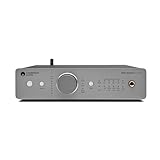
- ✓ AMAZING SOUND CONVERSION. DacMagic 200M performs the...
- ✓ ARTIST APPROVED AUDIO. DacMagic 200M is Cambridge Audio’s first...
- ✓ POWERFUL PROCESSING. Inside is a pair of extremely high-quality ESS...
The Cambridge Audio DacMagic 200M is a highly regarded desktop DAC that has earned its place among the best MQA DACs due to its excellent sound quality and comprehensive feature set. It supports full MQA decoding, allowing listeners to experience the highest resolution streams from services like Tidal with remarkable clarity and detail. Beyond MQA, the DacMagic 200M is compatible with a wide range of high-resolution audio formats, including PCM up to 32-bit/768kHz and DSD512, making it a versatile choice for audiophiles with diverse music libraries.
One of the standout features of the DacMagic 200M is its robust and user-friendly design. It offers multiple digital inputs such as USB, optical, and coaxial, enabling seamless connectivity with various sources including computers, streamers, and CD transports. The DAC also provides balanced XLR outputs alongside unbalanced RCA outputs, which help reduce noise and interference, delivering a clean and precise analog signal. This makes it suitable for integration into both desktop and home hi-fi systems.
The device’s build quality is solid, with a well-constructed chassis designed to minimize jitter and electrical noise, which are critical factors in maintaining signal integrity and achieving superior audio performance. The Cambridge Audio DacMagic 200M also features clear LED indicators that display sample rates and input sources, enhancing user experience by providing straightforward operational feedback.
Ideal for desktop audiophiles and home audio enthusiasts, the Cambridge Audio DacMagic 200M balances performance, connectivity, and ease of use at a competitive price point. Its ability to fully decode MQA files, combined with extensive high-resolution format support and balanced outputs, makes it a compelling choice for those seeking to elevate their digital audio experience without venturing into the highest price tiers.
Key strengths include full MQA decoding and rendering, broad support for high-resolution PCM and DSD formats, multiple input options including USB, optical, and coaxial, balanced XLR and unbalanced RCA outputs for flexible integration, and a sturdy build quality that minimizes noise and jitter. Possible limitations might include a somewhat conservative aesthetic design and a learning curve for users unfamiliar with DAC operation, but these are minor compared to its overall capabilities.
Conclusion
MQA DACs are essential for audiophiles who use music streaming services like Tidal that offer MQA content, as they ensure that the digital signal is accurately converted into an analog audio signal with minimal loss or distortion. MQA DACs often feature advanced DAC chips, high-quality headphone amplifiers, and multiple input options such as USB-C, optical, and coaxial, to connect seamlessly with a variety of digital devices. Many also come as external DACs or portable DACs, providing flexibility for desktop or on-the-go use. They are known for their excellent support of high-resolution formats like DSD and often include headphone amplifiers to drive a broad range of headphones. Comparative testing often highlights certain brands for their superior sound quality and build. While some MQA DACs serve as MQA renderers only, others offer full decoding capabilities. Expensive DACs set high standards, but there are also affordable options that deliver impressive performance in the audio game.
FAQ
What is the difference between an MQA renderer and a full MQA decoder?
An MQA renderer completes only the final stage of the MQA unfolding process, improving playback quality but not unlocking the full resolution of the original master recording. In contrast, a full MQA decoder performs all stages of unfolding, delivering the maximum audio detail and fidelity intended by the source. Choosing between these depends on your listening setup and how much you value the highest possible sound quality.
Can I use an MQA DAC with any digital source?
Most MQA DACs support common digital inputs like USB-A, USB-C, optical, and coaxial, allowing connection to a wide range of digital sources such as smartphones, computers, music streamers, and digital audio players. However, to fully benefit from MQA decoding, your source should provide MQA content, typically from streaming services like Tidal or local MQA files.
Will an MQA DAC improve the sound quality of non-MQA files?
Yes. High-quality MQA DACs generally use advanced DAC technology that also enhances playback of standard PCM and DSD files. Even when playing non-MQA content, these DACs can deliver clearer, more detailed audio than typical built-in DACs, providing a better listening experience across file types.
What are the advantages of using a portable MQA DAC?
Portable MQA DACs offer the convenience of high-resolution audio decoding on the go, often featuring compact designs, battery power, and support for wired headphones. They are ideal for users who want to improve sound quality from phones or laptops without being tethered to a desktop setup. Some models also include Bluetooth connectivity for wireless convenience.
How important is headphone amplifier power in an MQA DAC?
If you use power hungry headphones, such as planar magnetic or high-impedance models, an MQA DAC with a strong built-in headphone amplifier is essential to drive them properly and achieve the best sound quality. Many desktop DAC-amps provide ample power, while some portable models also cater to these demanding headphones.
Can I use an MQA DAC with powered speakers?
Yes. Many MQA DACs include line-level outputs or variable outputs that can connect directly to powered speakers or external power amplifiers. This allows you to integrate the DAC into a hi-fi or desktop audio system without needing a separate headphone amplifier or preamp.
What file types do MQA DACs typically support?
Besides MQA files, most MQA DACs support a wide range of high-resolution audio formats including PCM up to 32-bit/768kHz and DSD files (often up to DSD256 or DSD512). This broad file type compatibility ensures flexibility for audiophiles with diverse music collections.
Are expensive MQA DACs always better?
While high-end MQA DACs often feature superior build quality, advanced components, and extensive features, some affordable price models deliver excellent performance for their price points. It is important to consider your specific needs, listening environment, and headphone or speaker setup when choosing the best MQA DAC for you.
What role does build quality play in MQA DACs?
Build quality affects durability, noise isolation, and overall user experience. Premium materials and solid construction can reduce unwanted interference and vibrations, contributing to better sound integrity. Additionally, well-designed DAC stands or chassis can enhance both aesthetics and performance.