What is a Marine Two Way Radio?
A marine two way radio is a specialized communication device designed specifically for use on waterways. It facilitates clear and reliable voice communication between boats, ships, marinas, and shore stations such as harbormasters or the Coast Guard. Unlike standard radios, marine two way radios operate on specific marine VHF frequencies allocated internationally to ensure interference-free communication for maritime purposes. These radios are primarily designed to withstand the harsh marine environment, featuring waterproof construction and durable components that resist corrosion from saltwater and exposure to the elements.
Marine two way radios come equipped with features tailored to maritime safety and convenience. One key feature is Digital Selective Calling (DSC), which allows users to send automated distress signals including GPS coordinates, significantly improving emergency response times. Additionally, many marine radios provide access to NOAA weather channels, enabling boaters to receive real-time weather updates and alerts critical for safe navigation.
The ability to communicate ship to shore and ship to ship is vital for coordinating navigation, reporting emergencies, and maintaining situational awareness on the water. Marine two way radios support this by offering a full range of channels, including international channels and US maritime frequencies, ensuring connectivity no matter where you sail. Whether you are a recreational user or operating a commercial vessel, these radios are an indispensable tool for maintaining safety and effective communication on the water.
Types of Marine Two Way Radios: Handheld vs. Fixed Mount
When selecting marine radios, you will typically choose between handheld VHF radios and fixed mount marine radios. Both types have their unique benefits depending on your boating style and communication needs. You can find radios equipped with advanced features such as GPS, MMSI transponders, and safety technology in both handheld and fixed mount categories.
Handheld VHF Marine Radios
Handheld VHF marine radios are compact, portable units that offer flexibility and convenience. They are perfect for recreational boaters who want a lightweight radio that can be easily carried on board or even taken ashore. Many handheld VHF radios come equipped with built-in GPS receivers, enabling users to transmit GPS coordinates during DSC calls, which enhances safety by providing precise location information.
Models like the Standard Horizon HX890 are popular among boaters for their excellent battery life, waterproof design, and features such as tri-watch, which allows monitoring of multiple channels simultaneously. Handheld units often include rapid chargers and aqua quake technology, which helps clear water from the speaker after being dropped overboard or exposed to splashes.
Fixed Mount Marine Radios
Fixed mount marine radios are installed permanently on boats and offer higher power output and enhanced durability. These radios are ideal for commercial vessels, larger boats, and users who require continuous communication capabilities. Fixed VHF radios often include more advanced features, such as dual band radio functionality, allowing access to both marine frequencies and VHF business frequencies. Some fixed mount radios can also be programmed to access VHF GMRS frequencies, making them suitable for land-based or combined communication needs. Standard Horizon VHF radios can be preprogrammed with all marine frequencies for the United States, Canada, and International waterways.
Fixed mount units typically have larger displays, more extensive channel memory, and may come preprogrammed with US maritime frequencies, international channels, and business frequencies. This makes them suitable for navigating international waterways and communicating with a broad range of maritime users.
Key Features to Look for in the Best Marine Two Way Radios
To ensure you buy marine radios that meet your needs, consider the following essential features:
Waterproof Construction: Marine radios must be waterproof to withstand exposure to water, rain, and splashes. Look for radios with high waterproofing ratings such as IPX7 or IPX8 to ensure durability and reliable operation in harsh marine environments.
Built-in GPS Receiver: A built-in GPS or internal GPS allows for accurate location reporting via DSC calls, which is vital for emergencies.
Digital Selective Calling (DSC): Enables quick access to distress calls and direct communication with the coast guard and other vessels.
NOAA Weather Channels and Alerts: Access to NOAA weather and weather channels helps you stay updated on weather changes and receive critical alerts.
Bluetooth Connectivity: Bluetooth integration allows for wireless connectivity with smartphones and other devices, making it easier to access GPS, weather alerts, and hands-free communication on the water.
Battery Life and Charging: Long battery life is crucial for extended trips. Radios with rapid chargers or rechargeable batteries offer convenience.
Channel Coverage: Ensure the radio covers all necessary marine frequencies, including US maritime frequencies, international channels, and business frequencies if required.
Ease of Use: Features like tri-watch, aqua quake, and clear displays improve user experience and ensure reliable operation.
Three Year Warranty: A three year warranty provides added confidence in the radio’s reliability and durability, offering peace of mind for both recreational and commercial users. Standard Horizon Marine Radios are protected by an industry leading three year warranty.
FCC License Requirements: Some radios require an FCC license, especially for transmitting on certain frequencies. Verify licensing requirements based on your usage.
Best VHF Marine Radios
Standard Horizon HX890 Black Handheld VHF

The Standard Horizon HX890 Black Handheld VHF radio is a top choice for many boaters due to its combination of advanced features and user-friendly design. This handheld unit is waterproof with an IPX8 rating, ensuring reliable performance even in harsh marine environments. Its built-in GPS receiver allows for precise location tracking, which is crucial during emergency DSC calls. The tri-watch function enables simultaneous monitoring of three channels, including the vital channel 16 for distress and calling, enhancing situational awareness on the water.
Equipped with a powerful 6-watt transmitter, the HX890 provides clear communication over long distances. The radio also features aqua quake technology, which helps clear water from the speaker after exposure to splashes or accidental drops overboard. A rapid charger is included, allowing for quick battery replenishment, so users are always ready for extended trips. The ergonomic design and intuitive interface make it easy to operate even in challenging conditions, making the Standard Horizon HX890 a reliable companion for both recreational and commercial users.
Additionally, the HX890 supports Digital Selective Calling (DSC), which streamlines emergency communication by enabling users to send automated distress alerts with GPS coordinates directly to rescue authorities and nearby vessels. This feature significantly improves response times during critical situations. The radio also includes NOAA weather channels and alerts, keeping boaters informed about changing weather conditions that could impact safety on the water.
For convenience, the HX890 offers a built-in FM radio, allowing users to listen to music or news while boating. Its robust battery life ensures extended use between charges, and the radio floats, making it easier to retrieve if dropped overboard. These features combined make the Standard Horizon HX890 not only a practical communication tool but also a versatile device that enhances the overall boating experience.
Cobra MR HH350 FLT Handheld Floating VHF Marine Radio

- Noise-Cancelling Microphone - When embarking on a marine adventure, you...
- 6 Watt VHF – This radio provides the ability to customize your...
- Backlit Plus Floats - This marine VHF radio is backlit and has an...
The Cobra MR HH350 FLT is a versatile handheld floating VHF marine radio designed to provide reliable communication and safety features for boaters. Its floating design ensures that if accidentally dropped overboard, the radio will remain afloat, making retrieval easier and reducing the risk of losing this essential device. The radio is waterproof, built to withstand the harsh marine environment, and rated to handle splashes, rain, and brief immersion in water.
Equipped with a powerful transmitter, the MR HH350 FLT offers clear communication over long distances, which is critical when navigating open waters or coordinating with other vessels and the Coast Guard. It includes Digital Selective Calling (DSC) capabilities, allowing users to send automated distress signals with GPS coordinates, significantly improving emergency response times.
This model features NOAA weather channels and alerts, keeping boaters informed of changing weather conditions that could affect safety on the water. The radio also incorporates a large, easy-to-read display and intuitive controls, making it user-friendly even for beginners. With long battery life and a rechargeable battery system, the Cobra MR HH350 FLT ensures you stay connected during extended outings.
Ideal for both recreational users and commercial vessels, this handheld VHF marine radio combines durability, functionality, and essential safety features, making it a trusted choice for marine communication needs.
Uniden Atlantis 275 Handheld Two-Way VHF Marine Radio
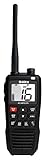
- The Atlantis 275 comes with 6 Watts of Big-Ocean Power in a compact...
- With the Largest LCD screen in its class 25mm (h) x 40mm (w), and Paper...
- Built to throw in your pocket or tuck away on deck, its compact size is...

The Uniden Atlantis 275 is a reliable and affordable handheld two-way VHF marine radio designed for both recreational boaters and commercial users. Known for its clear transmission and reception, this model offers excellent communication capabilities that are essential for safe navigation and coordination on the water. One of its standout features is its floating design, which ensures the radio remains buoyant if accidentally dropped overboard, making retrieval easier and preventing loss.
This handheld radio is waterproof, built to endure the demanding marine environment and rated to withstand splashes, rain, and brief immersion in water. It features a large, easy-to-read display and user-friendly controls, making it accessible even for those new to marine radios. While it does not include Digital Selective Calling (DSC), it covers all standard marine VHF channels, including NOAA weather channels, providing vital weather updates and alerts to keep boaters informed of changing conditions.
The Uniden Atlantis 275 has a robust battery life, allowing for extended use during long trips. Its compact and ergonomic design makes it comfortable to hold and operate, whether on deck or during emergencies. This radio is an excellent choice for boaters seeking a dependable handheld VHF marine radio that balances functionality, durability, and value.
How to Use Marine VHF Radios Effectively
To maximize the benefits of your marine VHF radios, it is important to understand proper usage:
Always monitor channel 16, the international distress and calling frequency, before switching to other channels.
Use DSC calls to send automated distress signals with GPS coordinates when in emergency situations.
Communicate clearly and concisely using standard marine communication protocols to avoid misunderstandings.
Regularly check weather channels and alerts to stay informed about changing conditions.
Ensure your radio is fully charged and in good working condition before heading out on the water.
Obtain an FCC license if required, especially when using radios that operate on VHF business frequencies or other regulated channels where an fcc license required may apply.
Marine radios are intended for use on waterways and should not be used on land unless talking to boats on the water.
Conclusion
Reliable marine two way radios are essential companions on the water, providing clear communication, crucial weather updates, and peace of mind during every journey. Equipped with features like waterproof construction, GPS integration, and digital selective calling, these radios empower boaters to stay connected with fellow vessels and emergency services alike. Embracing the right marine radio technology ensures that every adventure is safer, smoother, and more enjoyable, no matter where the waves take you.
FAQ
Do I need a license to operate a marine two way radio?
No, an FCC license is generally not required to use a marine radio for recreational boating in the United States. However, if you are using radios that operate on VHF business frequencies or other regulated channels, an FCC license may be required. Always check local regulations to ensure compliance.
What is Digital Selective Calling (DSC) and why is it important?
DSC is a feature that allows marine radios to send automated distress signals including your GPS coordinates to other vessels and rescue authorities. This significantly improves emergency response times and enhances safety at sea.
Are all marine radios waterproof?
Most marine radios, especially handheld VHF marine radios, are waterproof with ratings such as IPX7 or IPX8. This ensures they can withstand exposure to water, rain, and splashes common in marine environments. Always check the specifications before purchase.
What is the range of marine two way radios?
Marine radios typically have a transmitter power limited to 25 watts, providing a communication range of about 100 kilometers (62 miles) under ideal conditions. Actual range may vary depending on antenna height, weather, and other factors.
What are MMSI transponders and do I need one?
An MMSI (Maritime Mobile Service Identity) number is a unique 9-digit identifier assigned to your vessel. MMSI transponders enable DSC functionality, allowing for direct communication and automated distress alerts. While not always mandatory, having an MMSI registered with your radio enhances safety and compliance.
Can I communicate with boating friends using marine radios?
Yes, marine radios allow you to communicate with other ships and boating friends on the water using designated marine frequencies. For communication with land based crew, consider radios programmed with VHF business frequencies or dual band capabilities.