What is a Delta-Sigma DAC?
A Delta-Sigma DAC is a type of digital-to-analog converter that uses oversampling and noise shaping techniques to convert digital audio signals into analog sound. This technology relies on a delta-sigma modulator, which processes the digital data by converting it into a high-frequency bitstream. The bitstream is then filtered to produce a high-quality analog output. The oversampling increases the sample rate significantly above the original audio sample rate, which pushes quantization noise to frequencies beyond the audible range, making it easier to filter out and resulting in cleaner sound quality.
Delta-Sigma DACs are widely used in modern audio equipment due to their ability to deliver excellent dynamic range, low distortion, and high resolution. They are often favored for their technical performance, including reduced jitter and improved signal-to-noise ratio, which contribute to a more accurate and detailed audio reproduction. These DACs typically incorporate sophisticated digital filters and analog output filters to further refine the audio signal, ensuring a smooth and natural listening experience.
Key Features for Delta‑Sigma DACs
Oversampling and Noise Shaping
Delta-Sigma DACs are characterized by several key features that make them popular choices in modern hi-fi audio equipment. One important aspect is their use of oversampling and noise shaping, which significantly improves the dynamic range and reduces distortion in the digital-to-analog conversion process. These DACs often incorporate advanced digital filters and analog output filters to refine the audio signal further, ensuring a smooth and natural sound quality.
Power Supply Design
Another critical feature is the implementation of sophisticated power supply designs, as a stable and low-noise power supply helps minimize jitter and other artifacts that can degrade audio performance. Many high-end Delta-Sigma DACs utilize linear power supplies or well-regulated switching supplies to achieve this.
Digital Inputs and Outputs
Delta-Sigma DACs typically support a wide range of digital inputs, including USB connections, optical, and coaxial inputs, providing versatility for integration with various audio sources. Balanced outputs such as XLR are also common, offering improved noise immunity and better signal integrity, especially in professional and audiophile setups.
Additional Features and Customization
The architecture of Delta-Sigma DACs allows for integration with additional features like volume control, multiple digital filters, and support for high-resolution audio formats. Some models also incorporate field programmable gate array (FPGA) technology to enable customizable digital signal processing, giving users full control over the sound characteristics.
Sound Quality Characteristics
In terms of sound quality, Delta-Sigma DACs are renowned for their clear transient response, precise tonal balance, and wide dynamic range, which bring out subtle details in complex passages of music. Their ability to accurately convert digital data into analog signals makes them a great DAC choice for both standalone DAC units and integrated amplifiers, delivering killer sound performance across various setups.
Delta‑Sigma Vs Multibit DACs
Overview of Delta-Sigma and Multibit DACs
Delta-Sigma DACs and Multibit DACs (often referred to as R2R or ladder DACs) represent two distinct approaches to digital-to-analog conversion, each with its own sonic characteristics and technical advantages. Delta-Sigma DACs utilize oversampling and noise shaping to push quantization noise out of the audible range, relying heavily on digital filters and analog output filters to produce a clean and precise sound. In contrast, Multibit DACs use a resistor ladder network to convert digital signals directly into analog voltages, often resulting in a richer, warmer, and more analog-like tonal density.
Sound Quality Comparison
While Delta-Sigma DACs generally excel in delivering high resolution, low distortion, and wide dynamic range, Multibit DACs are often praised for their natural tonal balance and organic sound quality. Audiophiles frequently describe R2R DACs as offering a fuller, more nostalgic listening experience, sometimes perceived as more forgiving in terms of implementation quality. On the other hand, Delta-Sigma DACs tend to provide superior technical performance, including better signal-to-noise ratios and transient response, making them a favorite in many modern hi-fi and professional audio setups.
Situations Where Multibit DACs Excel
Multibit DACs are particularly well-suited for listeners who prioritize musicality and analog warmth in their sound. They often shine in systems where a natural, immersive soundstage and rich harmonic content are desired. R2R DACs can also be advantageous in setups where the listener prefers a less clinical and more emotionally engaging audio experience. Additionally, these DACs can be more adaptable to tube amplification, complementing the smoothness and coloration tubes provide.
When to Prefer Delta-Sigma Designs
Delta-Sigma DACs are recommended when accuracy, detail retrieval, and precision are paramount. They are ideal for audiophiles seeking killer sound with excellent transient response and clarity across complex recordings. Thanks to their advanced digital processing capabilities, including field programmable gate array (FPGA) technology in some models, Delta-Sigma DACs offer extensive customization options such as selectable digital filters and support for high-resolution audio formats. These DACs also typically feature a fully balanced design and robust power supply implementations, contributing to superior audio performance in controlled environments. For those integrating DACs with modern digital audio sources and power amplifiers, Delta-Sigma designs often provide the best compatibility and performance.
Best Delta‑Sigma DACs
Gustard R30 True 1-bit DAC

- Discrete R-2R Module: Experience unparalleled sound purity. Unlike common...
- Versatile Inputs: The R30 DAC supports multiple digital input methods such...
- True-1Bit Decoding: The Gustard R30 features a true 1-bit DSD DAC...
The Gustard R30 is a flagship true 1-bit Delta-Sigma DAC that has garnered significant attention in the hi-fi world for its exceptional sound quality and advanced engineering. This DAC employs a discrete delta-sigma architecture combined with a fully balanced design, delivering a dynamic range and signal-to-noise ratio that meet the highest audiophile standards. Its implementation includes four independent DAC chips operating in mono mode, which drastically reduces channel crosstalk and enhances stereo imaging, resulting in an expansive and immersive soundstage.
One of the key selling points of the Gustard R30 is its robust power supply design, featuring dual linear power supplies dedicated separately to the digital and analog sections. This separation minimizes interference and jitter, ensuring that the incoming signals are processed with maximum fidelity. The R30 also offers multiple digital filters and a non-oversampling (NOS) mode, providing users with the flexibility to tailor the tonal balance and transient response to their preferences or the right setup.
In terms of build quality, the R30 is housed in a solid, well-constructed chassis that helps with heat dissipation and electromagnetic shielding, contributing to its stable performance. It supports a wide range of digital inputs, including USB, optical, coaxial, and I2S, making it compatible with various audio sources. Balanced XLR outputs and unbalanced RCA outputs provide versatile connectivity options, suitable for integration with power amplifiers or preamps in both stereo and headphone systems.
The sound signature of the Gustard R30 is often described as natural and organic, with a rich tonal density that rivals many pricier converters. Its bass energy is tight and controlled, delivering impactful lows without sacrificing clarity. The midrange is detailed and lifelike, while the treble is smooth and effortless, avoiding harshness even during complex passages. This makes the R30 an excellent choice for listeners seeking a Delta-Sigma DAC that combines technical excellence with musicality.
Benchmark DAC3
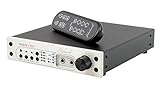
- ES9028PRO
- Active 2nd and 3rd Harmonic Compensation
- Asynchronous 192kHz USB Audio 2.0
The Benchmark DAC3 is widely regarded as a reference-level Delta-Sigma DAC, known for its exceptional accuracy, transparency, and neutrality. It employs advanced harmonic filtering technology and boasts extremely low distortion and noise levels, making it a favorite among audiophiles and professionals alike. Its robust build quality and fully balanced design ensure reliable performance and excellent signal integrity, which is critical for maintaining the purity of the audio signal through the digital-to-analog conversion process.
One of the standout features of the Benchmark DAC3 is its high output voltage, which allows it to drive a wide range of power amplifiers with ease, ensuring optimal system integration. The DAC3 supports high-resolution audio formats, delivering a highly resolving and detailed soundstage that brings out subtle nuances in complex recordings. Its implementation matters greatly, as Benchmark is known for meticulous engineering and attention to technical details that translate into superior sound quality.
The DAC3’s user-friendly interface includes selectable digital filters, allowing listeners to tailor the tonal balance and transient response to their preferences or the specific requirements of their audio equipment. Balanced XLR outputs and unbalanced RCA outputs provide versatile connectivity options, making it suitable for integration with various analog devices and power amps.
In addition to its technical excellence, the Benchmark DAC3 is praised for its musicality and natural tonal density, striking a perfect balance between analytical precision and engaging sound quality. It measures great in objective tests, with low jitter and excellent dynamic range, ensuring that the digital data is faithfully converted in the digital domain without unwanted artifacts. This makes it an excellent choice for audiophiles seeking a good resolution and a DAC that can reveal the full potential of their speakers and audio system.
Benchmark DAC3 is a standout high-end Delta-Sigma DAC that combines cutting-edge technology with practical features, making it a top contender for those looking to elevate their digital audio experience to the highest level.
Cambridge Audio EVO 150

- DAC: ESS Sabre ES9018K2M
- Frequency Range: 20Hz to 20kHz (+/-3dB)
- Supported Audio Formats: ALAC, WAV, FLAC, AIFF, DSD, MP3, etc
The Cambridge Audio EVO 150 is a versatile and powerful Delta-Sigma DAC and integrated amplifier designed to deliver high-quality audio performance for modern hi-fi enthusiasts. It combines a state-of-the-art DAC with a robust amplifier in a sleek, compact chassis, making it an excellent choice for those seeking an all-in-one solution without compromising sound quality.
Equipped with a high-performance Delta-Sigma DAC chip, the EVO 150 supports high-resolution audio playback, including formats up to 32-bit/384kHz and DSD256. This ensures that the digital audio signal is converted with exceptional accuracy and detail, preserving the nuances and dynamics of complex recordings. The device also features multiple digital inputs, such as USB, optical, and coaxial connections, allowing seamless integration with a wide range of audio sources, including computers, CD players, and streaming devices.
One of the standout features of the EVO 150 is its integrated Class D amplifier, delivering 150 watts per channel into 8 ohms. This powerful amplifier section enables the EVO 150 to drive a variety of speakers with ease, providing clean, dynamic, and controlled sound reproduction. The unit also includes balanced XLR outputs and unbalanced RCA outputs, offering flexible connectivity options for both professional and consumer audio equipment.
The Cambridge Audio EVO 150 incorporates advanced digital filters and an analog output filter to refine the audio signal further, resulting in a smooth and natural tonal balance. Its robust power supply design minimizes jitter and noise, contributing to a low noise floor and high dynamic range. Additionally, the EVO 150 features user-selectable digital filters, allowing listeners to tailor the sound to their preferences or to better match their audio system.
Topping D70 Pro Sabre

- Powerful Performance : TOPPING D70 Pro SABRE DAC adopts the powerful...
- New I/V Conversion : Experience higher quality audio playback with the D...
- Aurora UI for an Enhanced Experience : The D70 Pro SABRE features a...
The Topping D70 Pro Sabre is a highly regarded Delta-Sigma DAC that combines advanced technology with excellent build quality to deliver outstanding audio performance. It features the ESS Sabre ES9038PRO DAC chip, which is known for its high dynamic range and low distortion. This DAC supports high-resolution audio formats up to 32-bit/768kHz and DSD512, making it suitable for audiophiles who demand the highest level of detail and clarity in their music.
One of the standout features of the Topping D70 Pro Sabre is its fully balanced architecture, including balanced XLR outputs, which help minimize noise and crosstalk, resulting in a clean and transparent soundstage. The device offers multiple digital inputs such as USB, optical, coaxial, and I2S, providing flexibility for integration with various audio sources.
The D70 Pro Sabre also includes a high-quality analog output filter and a robust power supply design to ensure stable operation and reduce jitter. Users can select from several digital filters to customize the tonal balance and transient response according to their preferences or system requirements.
In terms of sound quality, the Topping D70 Pro Sabre excels in delivering precise transient response, a natural tonal balance, and a wide dynamic range, making complex passages in music come alive with clarity and detail. Its bass energy is tight and controlled, midrange is rich and detailed, and treble is smooth without harshness, offering a well-rounded and engaging listening experience.
This DAC is an excellent choice for those seeking a high-end Delta-Sigma DAC that combines technical excellence with musicality. Whether used in a standalone setup or integrated with power amplifiers and preamps, the Topping D70 Pro Sabre provides killer sound quality and reliable performance, solidifying its position among the best Delta-Sigma DACs available today.
Conclusion
Audible benefits of Delta-Sigma DACs include clear transient response, precise tonal balance, and a wide dynamic range that can bring out subtle details in complex recordings. Their architecture allows for integration with various digital inputs such as USB, optical, and coaxial connections, making them versatile for both standalone DAC units and integrated amplifiers. Additionally, many Delta-Sigma DACs feature balanced outputs like XLR outputs, which provide better noise immunity and are preferred in professional and audiophile setups.
FAQ
How does a Delta-Sigma DAC differ from an R2R DAC?
Delta-Sigma DACs use oversampling and noise shaping to process digital audio, typically employing a single-bit or multi-bit delta-sigma chip. In contrast, R2R DACs (also known as ladder DACs) use a resistor ladder network to directly convert digital signals into analog voltages. R2R DACs are often praised for their natural tonal density and analog-like sound, while Delta-Sigma DACs are known for their high resolution and accuracy. The choice between them often depends on personal preference and the specific implementation quality.
What should I consider when choosing a Delta-Sigma DAC?
When selecting a Delta-Sigma DAC, consider factors such as the quality of the DAC chips used, the power supply design, available inputs and outputs (including balanced outputs like XLR), and features like volume control and support for various digital formats. A good implementation with a robust signal path and analog output filter can significantly impact sound quality. Also, consider whether you need a standalone DAC or a portable DAC, depending on your audio setup.
Can a Delta-Sigma DAC improve my audio system compared to an internal DAC?
Yes. Most internal DACs built into computers, smartphones, or integrated amplifiers are designed for general use and may not offer the best audio performance. Upgrading to a dedicated standalone Delta-Sigma DAC can provide a significant improvement in sound quality, including better dynamic range, tonal balance, and transient response, resulting in a more engaging listening experience.
Are portable Delta-Sigma DACs effective for on-the-go listening?
Portable Delta-Sigma DACs are designed to enhance audio performance from smartphones, tablets, or laptops while on the move. Many include headphone amplifiers and USB connections, allowing for better sound quality and the ability to drive higher-impedance headphones. However, their performance and battery life vary, so it’s important to choose a model that fits your specific needs.