What are Car Audio Crossovers?
Car audio crossovers are essential components in any advanced car audio system. Their primary function is to divide the audio signal into separate frequency bands and direct these bands to the appropriate speakers, such as tweeters, midrange speakers, and subwoofers. This division ensures that each speaker only handles the frequencies it is designed to reproduce, which not only improves sound quality but also protects the speakers from damage caused by receiving frequencies outside their optimal range.
The crossover frequencies, or crossover points, are the specific frequencies at which the audio signal is split. These points are carefully chosen to match the capabilities of the speakers and to create a seamless transition between them. For example, a crossover point might be set so that frequencies below 80 Hz go to the subwoofer, while frequencies above that go to the midrange speakers. Properly setting these crossover points is critical to achieving a balanced and natural sound in your car audio system.
Using the right car audio crossovers can make a big difference in the overall audio experience. Without crossovers, speakers might attempt to reproduce sounds they are not designed for, which can result in distortion, reduced clarity, and even permanent damage. Crossovers help prevent these issues by ensuring that low frequency sounds are sent to subwoofers, midrange frequencies to midrange speakers, and high frequencies to tweeters.
Types of Car Audio Crossovers: Active vs. Passive
When selecting the best car audio crossovers, it’s important to understand the differences between active and passive crossovers, as each has its advantages and applications. Crossovers manage various frequency ranges—including bass, mid, and treble—to ensure clear and balanced sound reproduction.
Passive Crossovers
Passive crossovers are typically installed between the amplifier and the speakers. They do not require an external power source and use capacitors, inductors, and resistors to split the audio signal. Because they are simpler and cheaper, passive crossovers are common in factory-installed sound systems and basic aftermarket setups. However, passive crossovers have fixed crossover points that cannot be adjusted after installation, which can limit their flexibility in fine-tuning the audio system.
However, passive crossovers can introduce some signal loss and distortion, especially at higher power levels. They offer less control over the frequency range and settings, which can limit the ability to fine tune your sound system for optimal performance. Additionally, passive crossovers can lead to heat build-up and reduced speaker efficiency because they filter frequencies after they have been amplified.
Active Crossovers
If you are familiar with advanced car audio setups, you know that active crossovers are often used in high-end systems for superior sound control.
Active crossovers, on the other hand, are powered devices placed before the amplifier in the signal chain. These setups typically involve multiple amps to control different channels, such as 3-way front and 2-way rear configurations, providing precise control over crossover points, slope, and frequency range. Active crossovers are separate units that connect between a car stereo and the amplifier, allowing for greater flexibility in system design. This allows car audio enthusiasts to tailor their sound system to their exact preferences. Active crossovers can significantly improve sound quality by reducing distortion and ensuring that amplifiers and speakers operate within their ideal frequency ranges. Additionally, active crossovers can send more power directly to each speaker, resulting in clearer sound reproduction.
Because active crossovers require additional components, such as multiple amps, and more complex wiring, they tend to be more expensive, but the improvement in audio performance is often worth the investment, especially for those seeking the best sound and a truly immersive listening experience. Active crossovers require their own power source to operate effectively, which adds to their complexity but also enhances their performance capabilities.
Key Features of Car Audio Crossovers
Car audio crossovers come equipped with a range of features designed to optimize your sound system’s performance and provide flexibility for customization. Understanding these key features will help you make an informed decision when selecting the best car audio crossovers for your setup.
Adjustable Crossover Frequencies
One of the most important features of quality car audio crossovers is the ability to adjust crossover frequencies. This means you can set the exact points where the audio signal is split between different speakers, such as tweeters, midrange speakers, and subwoofers. This adjustability allows you to tailor the sound output to match your specific speaker capabilities and the acoustic environment of your vehicle, resulting in a more balanced and natural audio experience.
Slope Control
The slope of a crossover refers to how sharply it attenuates frequencies outside the designated range. Many active crossovers offer adjustable slope settings, typically measured in decibels per octave (dB/oct). Steeper slopes (like 24 dB/oct) provide more precise frequency separation, reducing overlap between drivers and minimizing distortion. This control is essential for fine tuning your system and achieving the best sound quality possible.
Multiple Channels and Outputs
Advanced car audio crossovers often support multiple channels and outputs, allowing you to manage complex speaker configurations. Whether you have a simple 2-way system or a more elaborate 4- or 5-way setup with multiple amplifiers, the crossover can handle routing frequencies appropriately to each speaker or amplifier channel. This flexibility is crucial for building a high-performance audio system tailored to your preferences.
Built-in Equalization and Time Alignment
Some high-end active crossovers include built-in equalizers and time alignment features. Equalization lets you adjust the frequency response to compensate for acoustic anomalies in your car’s interior, while time alignment ensures that sound from all speakers reaches the listener simultaneously. These features significantly enhance the overall listening experience by improving clarity, imaging, and soundstage.
Protection Features
Protecting your speakers is a key function of crossovers. Many crossovers incorporate features such as high pass filters to shield tweeters from damaging low frequencies and subsonic filters to protect subwoofers from inaudible but potentially harmful frequencies. These protection mechanisms help extend the lifespan of your speakers and maintain consistent sound quality over time.
User-Friendly Interface and Controls
Ease of use is another important consideration. Modern active crossovers often come with intuitive interfaces, including digital displays, remote controls, or software applications that allow you to adjust settings conveniently. This user-friendly approach makes it easier to experiment with different configurations and fine tune your system without hassle.
Compatibility and Integration
Finally, the best car audio crossovers are designed to integrate seamlessly with your existing audio components, including your head unit, amplifiers, and speakers. They support standard input and output connections, such as RCA or speaker-level inputs, and work well with both analog and digital audio signals. Ensuring compatibility helps avoid installation headaches and guarantees optimal performance.
How to Choose the Perfect Crossover for Your Car Audio System
Selecting the best crossover depends on several factors, including your existing gear, budget, and desired sound quality. Here are some key considerations:
Compatibility with your head unit and amplifiers: Ensure the crossover matches the input and output requirements of your audio system components. This helps avoid connectivity issues and ensures smooth integration with your current setup.
Type of speakers: Different drivers such as tweeters, midrange speakers, and subwoofers require specific crossover points and slopes. Understanding your speaker specifications helps in choosing a crossover that can properly manage frequency distribution to each driver, preventing damage and optimizing performance.
Adjustability: Look for crossovers that allow you to fine tune the crossover line (frequency) settings to match your car’s acoustics. This flexibility is especially important if you want to tailor the sound to your listening preferences or compensate for the unique sound characteristics of your vehicle’s interior.
Price: Consider the price of different crossover options, especially if you are looking at high-end active crossovers or DSPs that offer advanced features and flexibility. Many audiophiles prefer integrating a Digital Signal Processor for enhanced customization options in their setups. While pricier models often provide more customization and better components, there are also budget-friendly options that can significantly improve your system’s sound quality.
Brand reputation and reliability: Investing in a quality brand ensures durability and consistent performance over many years. Established brands often provide better customer support, firmware updates (for digital models), and higher quality components, which can make a big difference in long-term satisfaction.
Ease of installation and wiring: Consider whether you want a simpler passive crossover or a more complex active crossover setup with additional cables and tuning options. Passive crossovers are generally easier to install but offer less control, while active crossovers require more wiring and setup but provide superior sound customization.
System complexity and future upgrades: Think about your current system’s complexity and whether you plan to expand it in the future. Some crossovers support multiple channels and advanced tuning features, making them a better choice if you anticipate adding more speakers or amplifiers later on.
Power handling capabilities: Ensure the crossover can handle the power output of your amplifiers without distortion or damage. This is particularly important for high-powered systems where the crossover components need to maintain signal integrity at loud volumes.
Top Car Audio Crossovers
Clarion Mobile Electronics Mcd360

- Country Of Origin : China
- Package Weight : 1.157 Kg
- Package Quantity : 1
The Clarion Mobile Electronics Mcd360 is a versatile and highly regarded active crossover unit favored by many car audio enthusiasts. It offers excellent control over frequency distribution, allowing users to tailor their audio system with precision. This model supports multiple channels, making it suitable for complex audio setups involving tweeters, midrange speakers, and subwoofers.
One of the key advantages of the Mcd360 is its user-friendly interface, which simplifies the process of adjusting crossover points and slopes. This ease of use makes it accessible not only to experienced installers but also to those new to active crossovers who want to achieve professional-level sound quality in their vehicle.
The Mcd360 includes built-in protection features such as high pass and low pass filters that safeguard delicate speakers from damage by preventing inappropriate frequencies from reaching them. Additionally, its robust construction and reliable performance have earned it a reputation for durability and long-term use.
By integrating the Clarion Mcd360 into your car audio system, you can significantly enhance the clarity, balance, and overall audio experience. Its precise tuning capabilities help ensure that each speaker receives the optimal frequency range, resulting in a clean, powerful, and immersive soundstage that truly elevates your listening experience on the road.
Skar Audio SKEC23

- 3-Way Electronic Crossover
- 6-Channel (3 RCA Inputs, 3 RCA Ouputs) - Front, Rear, and Subwoofer
- Operating Voltage: 14.4 Volts DC | Output Voltage Level: 5V Max
The Skar Audio SKEC23 is a popular choice among car audio enthusiasts looking for a reliable and affordable active crossover. This unit offers precise control over crossover points and slopes, allowing users to tailor the sound to their specific speaker setup. With its compact design and straightforward interface, the SKEC23 is well-suited for both beginners and experienced installers aiming to improve their car audio system’s performance.
One of the standout features of the Skar Audio SKEC23 is its ability to handle multiple channels, making it versatile enough for complex audio configurations involving tweeters, midrange speakers, and subwoofers. The adjustable crossover frequencies enable fine tuning that helps in achieving a balanced and immersive listening experience, ensuring that each speaker only receives the frequencies it is best equipped to reproduce.
Additionally, the SKEC23 includes built-in protection features such as high pass and low pass filters that safeguard delicate speakers from damage caused by inappropriate frequency ranges. This not only extends the lifespan of your car speakers but also maintains consistent sound quality over time.
PRV Audio EX3.5
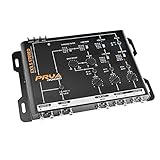
- CAR AUDIO CROSSOVER: Unlock the power to customize your sound like never...
- 2 WAY OR 3 WAY CROSSOVER CAR AUDIO: Connect with ease using the 2/4 RCA...
- FINE TUNE CAR AUDIO: Featuring 3-way adjustable HIGH PASS and LOW PASS...
The PRV Audio EX3.5 is a standout active crossover that offers excellent value and performance for car audio enthusiasts seeking precise control over their sound system. Designed to handle multiple channels efficiently, this crossover provides adjustable crossover points and slopes, allowing users to fine tune the frequency distribution to match their specific speaker setup. Its robust build quality and straightforward interface make it a reliable choice for both beginners and experienced installers.
One of the key features of the EX3.5 is its ability to support complex audio configurations, including 3-way front and 2-way rear speaker setups. This flexibility enables users to create a balanced and immersive soundstage by ensuring each speaker receives the appropriate frequency range. Additionally, the EX3.5 includes built-in protection filters, such as high pass and low pass filters, to safeguard delicate components like tweeters and subwoofers from damage caused by inappropriate frequencies.
The crossover’s power handling capabilities and low noise operation contribute to a clear and distortion-free audio experience, even at higher volume levels. With the PRV Audio EX3.5, car audio enthusiasts gain the perfect tools to elevate their sound system, achieving a big difference in sound quality that transforms their listening experience into the ultimate music machine.
Its user-friendly design simplifies installation and tuning, making it easier to integrate with existing car audio components such as head units and amplifiers. Whether you are upgrading from passive crossovers or looking to expand your active crossover setup, the PRV Audio EX3.5 offers the control and reliability needed to fine tune your car audio system for the best sound possible.
Conclusion
Elevating your car audio setup with the right crossovers transforms every drive into a rich, immersive sound journey. By expertly directing frequencies to the perfect speakers, crossovers unlock clarity, depth, and power in your music, making each note come alive. Whether you’re chasing crisp highs, vibrant mids, or deep, controlled bass, fine-tuned crossovers are the key to achieving a harmonious balance that truly brings your sound system to life. Additionally, older high-quality equipment can often exceed the performance of newer budget models, making them a valuable consideration for audiophiles seeking exceptional sound quality.
FAQ
Can I use multiple crossovers in my car audio system?
Yes, using multiple crossovers is common in complex car audio setups with several speakers and amplifiers. Each crossover can manage a specific frequency range, ensuring accurate sound distribution and enhancing overall audio performance. However, an active crossover alone is not going to make your car sound the best; it must be part of a well-designed and balanced system.
Do I need a professional to install and set up crossovers?
While some enthusiasts may install and tune crossovers themselves, professional installation is recommended for optimal results. Professionals have the expertise to set crossover points accurately, ensure proper wiring, and fine tune the system for the best sound quality and speaker protection.
How often should I maintain or check my car audio crossovers?
Regular maintenance is important to keep your crossovers and overall sound system in good condition. Check connections, cables, and settings periodically to prevent signal loss, distortion, or damage. Proper care helps maintain sound quality and prolongs the life of your audio components.
Can upgrading to a better crossover improve my car audio system?
Upgrading to a high-quality crossover, especially an active crossover or one with DSP capabilities, can significantly enhance your car audio system. Digital Signal Processors (DSP) can act as effective all-in-one solutions for optimizing audio performance. They allow for precise control over frequency distribution, reduce distortion, and improve clarity, resulting in a more immersive and enjoyable listening experience.
What brands are known for making the best car audio crossovers?
Several brands are recognized for producing high-quality car audio crossovers, including AudioControl, Behringer (notably the modified 2496 model), McIntosh, Nakamichi, and others. The Behringer 2496 is popular among audiophiles for modifications that enhance sound quality. Choosing a reputable brand ensures reliability, durability, and excellent sound performance.