What are Analog Equalizers?
Analog equalizers are hardware devices used to adjust the balance of different frequency components within an audio signal. Unlike digital equalizers that process audio through software algorithms, analog EQs utilize physical components such as resistors, capacitors, and inductors to shape sound. This hardware-based approach often imparts a unique coloration and character to the audio, which many engineers find desirable for adding warmth and musicality.
These equalizers come in various designs, including parametric, graphic, and mastering EQs, each serving different purposes in audio production. Analog equalizers are widely used in professional studios for mixing and mastering, as well as in live sound environments, due to their ability to provide hands-on control and distinctive sonic qualities.
One of the defining traits of analog EQs is their ability to add subtle harmonic distortion and saturation, especially those with tube-based output stages. This characteristic can enhance the perceived sound quality by enriching the tonal texture and adding depth. Additionally, the tactile interface of analog EQs, with knobs and switches, allows for intuitive and precise adjustments, which many engineers prefer over digital controls.
Types of Analog Equalizers
Parametric EQ
Parametric equalizers are among the most versatile analog EQ types. They allow precise control over three main parameters: frequency, gain, and bandwidth (Q). This means you can select the exact frequency to adjust, determine how much to boost or cut that frequency, and control the width of the affected frequency band. This level of control makes parametric EQs ideal for surgical adjustments during mixing, enabling engineers to target problematic frequencies or enhance desired tonal characteristics with accuracy.
Graphic EQ
Graphic equalizers feature a series of fixed frequency bands, each controlled by a slider that boosts or cuts that band’s level. The bands are arranged in a linear fashion, providing a visual representation of the frequency spectrum, which makes it easy to see and adjust the overall tonal balance quickly. Graphic EQs are often used in live sound reinforcement and broadcast applications where fast, repeatable adjustments are necessary. While they lack the precision of parametric EQs, their straightforward interface and broad frequency coverage make them valuable tools for general tone shaping.
Mastering EQ
Mastering equalizers are specialized analog EQs designed for subtle, musical enhancements during the mastering stage. They typically offer smooth curves and gentle slopes, minimizing phase distortion to preserve the integrity of the original mix. Mastering EQs often have fewer bands than parametric EQs but provide broad control over low, mid, and high frequencies. Their goal is to refine the overall tonal balance and add clarity and polish to the final stereo mix without introducing harshness or coloration.
Shelf and Bandpass Filters
Some analog equalizers include shelf filters, which boost or cut frequencies above or below a certain cutoff point, useful for adjusting bass or treble content broadly. Bandpass filters allow focusing on a specific range of frequencies while attenuating frequencies outside that range. These filters expand the tonal shaping capabilities of analog EQs, enabling both broad and focused adjustments.
Specialized Analog EQ Designs
Certain analog equalizers incorporate unique design features or circuitry that contribute to their distinctive sound. For example, the Pultec EQP-1a is famous for its ability to simultaneously boost and cut frequencies in the low end, creating a characteristic tonal curve that adds warmth and presence. Other units, like the Maag Audio EQ4M, feature an exclusive Air Band that enhances high-frequency clarity beyond the typical audible range. These specialized designs give analog EQs their signature character and appeal among engineers seeking particular sonic qualities.
Key Features of Analog Equalizers
Analog Circuitry and Sound Coloration
Analog equalizers are distinguished by several key features that contribute to their unique sound and usability. One primary feature is the use of physical components such as resistors, capacitors, and inductors to shape the audio signal. This analog circuitry often imparts a warm, musical coloration that is difficult to replicate with digital processing. Many analog EQs also incorporate transformers and tube-based output stages, which add harmonic distortion and subtle saturation, enhancing the tonal richness and depth of the sound.
Tactile Control Interface
Another notable feature is the tactile control interface. Unlike digital EQs that rely on software menus and graphical interfaces, analog EQs provide hands-on control through knobs, switches, and sliders. This physical interaction allows engineers to make intuitive adjustments and fine tune frequency bands with precision. Many analog units offer multiple bands, including low bands, middle bands, and high bands, each with selectable frequency ranges and adjustable gain and bandwidth (Q). This flexibility enables both broad tonal shaping and surgical frequency correction.
Proportional Q and Unique EQ Techniques
Some analog equalizers feature proportional Q, a design where the bandwidth of the EQ cut or boost narrows as the gain increases. This results in more natural and musical equalization, particularly when making significant boosts or cuts. Additionally, many analog EQs allow simultaneous boosting and cutting of frequencies, a technique famously utilized by the Pultec EQP-1a to create unique and pleasing tonal curves.
Types of Analog Equalizers
Analog equalizers also vary in their design types, including parametric EQs, graphic EQs, and mastering EQs. Parametric EQs provide precise control over frequency, gain, and bandwidth, making them ideal for detailed sound sculpting. Graphic EQs offer fixed frequency bands with slider controls for quick and straightforward adjustments, often used in live sound or broadcast environments. Mastering EQs focus on subtle, musical enhancements with smooth curves and minimal phase distortion, preserving the integrity of the original mix.
Top Analog Equalizers
dbx 231s Dual Channel 31-Band Equalizer

- Dual 31-band, 1/3-octave constant Q frequency bands
- Switchable boost/cut ranges of 6 or 12 dB
- Front panel bypass switch
The dbx 231s is a classic example of a graphic analog equalizer that offers extensive control over the audio spectrum with its 31-band design. Each channel provides 31 fixed frequency bands, allowing for precise adjustments across the entire audible range. This makes it an excellent tool for both corrective equalization and creative tone shaping in various audio environments, including live sound reinforcement and studio mixing.
One of the standout features of the dbx 231s is its simplicity and reliability. The unit uses sliders for each frequency band, making it easy to visualize and manipulate the frequency response curve. Unlike parametric EQs, which require setting frequency, Q, and gain parameters, graphic EQs like the dbx 231s provide a straightforward approach that can be quicker to dial in, especially in live settings where fast adjustments are crucial.
The dbx 231s also includes features such as a low cut switch to remove unwanted subsonic frequencies and range controls that allow users to select between different boost/cut levels (e.g., 6dB or 15dB). These options provide additional flexibility to tailor the EQ’s response to the specific needs of the audio signal and the acoustics of the environment.
While graphic EQs like the dbx 231s may not offer the surgical precision of a parametric EQ, their ability to shape the overall tonal balance effectively makes them a valuable part of any audio engineer’s toolkit. They are particularly useful for managing room resonances, feedback control, and general tonal adjustments on live sound systems or in broadcast applications.
Behringer Ultragraph Pro FBQ6200HD

- Pink-noise Generat
- Revolutionary FBQ Feedback Detection system instantly reveals critical...
- Pink noise generator provides test signals to adapt your sound system to...
The Behringer Ultragraph Pro FBQ6200HD is a popular graphic analog equalizer known for its affordability and comprehensive control over the audio spectrum. Featuring 31 bands per channel, it provides detailed frequency shaping capabilities that are useful for both live sound and studio applications. Its dual-channel design allows for stereo operation, making it suitable for mastering equalization or stereo mix adjustments.
One of the standout features of the FBQ6200HD is the FBQ Feedback Detection System, which visually identifies problem frequencies by lighting up the corresponding sliders. This helps engineers quickly locate and reduce feedback-prone frequencies, especially in live sound environments. The unit also offers switchable low-cut filters to remove unwanted subsonic rumble and a variable input gain control for optimal signal matching.
Despite being a more budget-friendly option compared to high-end analog equalizers, the Behringer Ultragraph Pro provides a solid build quality and clean sound with minimal noise. Its extensive frequency range and precise control make it a versatile tool for shaping tone, controlling room acoustics, and managing feedback. While it may not impart the same warmth or coloration as tube-based or transformer-equipped analog EQs, it remains a reliable and effective choice for engineers seeking a graphic EQ with a large number of bands.
Behringer Ultragraph Pro FBQ6200HD is a good EQ for those needing detailed frequency control without breaking the bank. Its combination of features and user-friendly interface makes it a valuable addition to both live sound rigs and studio setups, especially for users who want the convenience of a graphic EQ with a high number of bands and practical feedback management tools.
Art EQ355 Dual Channel 31-Band Equalizer
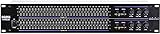
- Constant Q circuitry 20mm center detent sliders Selectable boost/cut range...
The Art EQ355 is a classic graphic analog equalizer that offers extensive frequency control through its 31 bands per channel. Designed for both professional studios and live sound applications, it provides engineers with the ability to shape the tonal balance of audio signals with precision and ease.
Each channel of the EQ355 features 31 fixed frequency bands, allowing for detailed adjustments across the entire audible spectrum. The sliders provide a clear visual representation of the frequency response curve, making it straightforward to identify and modify specific frequency ranges. This design is particularly useful for addressing room resonances, feedback issues, and general tonal shaping in real-time environments.
The unit also includes a bypass switch for quick A/B comparisons, enabling engineers to hear the effect of their adjustments instantly. Its rugged build quality ensures reliability in demanding studio and live settings. While the Art EQ355 may not offer the surgical precision of parametric equalizers, its broad frequency coverage and intuitive interface make it a valuable tool for both corrective and creative equalization tasks.
In addition to its primary function as a graphic EQ, the Art EQ355’s dual-channel design supports stereo operation, making it suitable for mastering applications where balanced adjustments across both channels are essential. Its straightforward controls and effective frequency shaping capabilities have made it a staple in many professional audio setups over the years.
Conclusion
Analog equalizers bring a unique blend of warmth, character, and precise control that can transform any mix or master into a rich, vibrant listening experience. Their tactile interfaces and distinctive sonic qualities offer a hands-on approach to shaping sound that digital tools often strive to replicate but rarely match. Embracing these classic tools in your workflow opens up endless possibilities for creative tone sculpting and musical enhancement, making every project sound truly special.
FAQ
Are analog equalizers suitable for both mixing and mastering?
Yes, analog equalizers are versatile tools used in both mixing and mastering contexts. Parametric EQs with precise control over frequency, gain, and bandwidth are ideal for surgical adjustments during mixing, while mastering equalizers—often featuring broad, smooth curves—help shape the final tonal balance of a track. Many popular analog EQ models, like the Massive Passive and Solid State Logic units, are designed to excel in mastering applications, offering subtle enhancements without compromising clarity.
What is proportional Q, and why is it important in analog EQs?
Proportional Q is a feature found in some analog equalizers, such as the API 5500, where the bandwidth of a frequency boost or cut narrows as the gain increases. This means that large boosts or cuts affect a narrower range of frequencies, allowing for more musical and natural-sounding equalization. Proportional Q provides engineers with fine tuning capabilities that help avoid harsh or unnatural tonal changes, making it a valuable characteristic in both mixing and mastering EQs.
Can I integrate analog equalizers with digital plugins in my studio?
Absolutely. Many engineers combine the tactile, musical qualities of analog equalizers with the convenience and recallability of digital plugins. Using analog EQs for broad tonal shaping or adding character, paired with digital parametric EQs for precise surgical cuts, can provide a flexible and powerful approach to mixing and mastering. Rack-mounted stereo EQ units are often integrated into outboard chains, complementing in-the-box workflows.
What should I look for when choosing an analog equalizer for my studio?
When selecting an analog equalizer, consider factors such as the quality of components (transformers, tubes, inductors), the type of output stage (tube vs. solid state), the number and type of bands (parametric, graphic, mastering), and the presence of features like proportional Q and band switching. Build quality, reliability, and the reputation of the manufacturer are also important. Finally, think about your specific needs—whether you require subtle mastering EQ adjustments, surgical mixing control, or a versatile unit for tracking and live sound.