What are Acoustic Sealants?
Acoustic sealants, also known as acoustical caulk or acoustic caulk, are specially formulated sealants designed to create an airtight seal that prevents sound leakage. Acoustic sealant is not suitable as an adhesive and should not be used for bonding materials. Unlike regular caulk, which is often rigid and hardens completely, acoustic sealants maintain permanent flexibility even after curing. This flexibility is the key difference that allows them to absorb and dampen sound vibrations, effectively reducing sound transmission through walls, ceilings, windows, and other building materials.
These sealants are commonly used in soundproofing projects to seal gaps around mud sills, sill plates, drywall seams, joints, and cracks where sound can easily pass. Acoustic sealant is also referred to as acoustical caulking. Before applying acoustical caulking, it is important to thoroughly clean the surface to ensure proper adhesion and a successful seal. By applying a continuous bead of acoustical sealant in these areas, you create a barrier that blocks sound waves and enhances the acoustic properties of your space.
Top Acoustic Sealants
Green Glue Noiseproofing Sealant Caulk
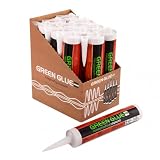
- Green Glue Noiseproofing caulk Sealant Tubes w/ nozzles - each tube is...
- Includes Specialty Cleanup wipes and TMS installation guide
- Sound rated caulk - Seal penetrations and perimeter gaps from sound leaks
Green Glue Noiseproofing Sealant Caulk is widely recognized as one of the best acoustic sealants available on the market. It is specifically formulated to provide superior soundproofing performance by creating a flexible, airtight barrier that effectively blocks sound transmission through gaps and seams. This sealant is a viscoelastic compound, which means it not only seals but also absorbs and dissipates sound vibrations, making it highly effective in reducing noise.
One of the key advantages of Green Glue Noiseproofing Sealant is its permanent flexibility. Unlike regular caulks that harden and crack over time, Green Glue remains soft and pliable, ensuring long-lasting soundproofing without the risk of gaps forming due to building movement or temperature changes. This elasticity is crucial for maintaining an airtight seal in areas prone to expansion and contraction, such as around sill plates, drywall seams, and window frames.
Green Glue is also user-friendly. It comes in standard 28-ounce tubes compatible with most caulk guns, allowing for precise application and easy handling. The sealant lays down smoothly and can be painted over after curing, making it a versatile choice for both professional contractors and DIY enthusiasts. Its low odor and non-toxic formulation make it safe to use indoors without compromising air quality.
In addition to its acoustic properties, Green Glue Noiseproofing Sealant adheres well to a variety of building materials including drywall, concrete, wood, and metal. This strong adhesion helps create a continuous sound barrier, eliminating weak points where sound could potentially leak. The sealant is ideal for use in residential and commercial soundproofing projects such as home theaters, recording studios, offices, and multi-family housing, where controlling noise is essential.
Overall, Green Glue Noiseproofing Sealant Caulk stands out as a premium choice for anyone looking to enhance the soundproofing effectiveness of their space. Its combination of flexibility, durability, ease of application, and proven acoustic performance makes it a trusted product among soundproofing professionals.
TMS Soundproofing Acoustical Sealant Caulk
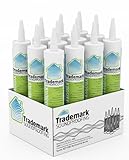
- SOUND, DRAFT AND SMOKE SEALANT - Provides an effective barrier to the...
- MADE IN THE USA, HIGH QUALITY LATEX BASED SEALANT - Adheres to drywall...
- SPECIALLY FORMULATED FOR ACOUSTICAL/SOUND LEAK PROTECTION - Designed to...
TMS Soundproofing Acoustical Sealant Caulk is a highly regarded option for those seeking effective soundproofing solutions. This sealant is specially formulated to provide a durable, flexible, and airtight barrier that significantly reduces sound transmission through gaps and cracks. It is designed to adhere well to a variety of building materials including drywall, concrete, wood, metal, and foam, making it versatile for many applications.
One of the standout features of TMS Soundproofing Acoustical Sealant Caulk is its excellent permanent flexibility. This means that even after curing, the sealant remains soft and pliable, allowing it to absorb and dampen sound vibrations effectively. This flexibility also helps accommodate the natural expansion and contraction of building materials due to temperature changes or settling, preventing cracks and gaps that could compromise soundproofing.
TMS sealant is also known for its ease of application. It comes in standard 28-ounce tubes compatible with most caulk guns, allowing for precise and controlled application. The sealant lays down smoothly and can be easily tooled or smoothed with a caulking tool or finger to create a neat, continuous bead. This continuous bead is essential for creating an airtight seal that blocks sound waves from passing through seams and joints.
Additionally, TMS Soundproofing Acoustical Sealant Caulk is low VOC and safe for indoor use, making it a good choice for residential and commercial projects where indoor air quality is a concern. It can be painted over once fully cured, allowing it to blend seamlessly with existing surfaces and finishes.
This sealant is particularly effective when used around sill plates, mud sills, drywall seams, windows, doors, and any other areas where sound leakage is a concern. It helps enhance the overall performance of other soundproofing materials by sealing potential weak points and preventing sound from bypassing insulation or barriers.
MasterSeal NP1 Stone 10.1oz Polyurethane Sealant

- Sikaflex NP 1 (Formerly MasterSeal NP 1) is a premium grade, moisture cured...
- Resists aging and weathering and is highly flexible with joint movement...
- Designed for all types of joints where the sealant joint depth falls...
MasterSeal NP1 Stone is a high-performance polyurethane-based acoustic sealant designed for professional soundproofing applications. It offers excellent adhesion to a wide range of building materials, including concrete, wood, metal, and drywall, making it a versatile choice for sealing gaps and joints that are critical to preventing sound leakage.
One of the standout features of MasterSeal NP1 Stone is its permanent flexibility, which allows it to accommodate building movement without cracking or losing its soundproofing effectiveness. This elasticity is essential in areas subject to expansion and contraction due to temperature changes or structural settling, such as around sill plates, mud sills, and drywall seams.
The sealant is also moisture-resistant, which makes it suitable for use in environments where humidity or occasional exposure to water might be a concern. Its durability ensures that the sound barrier remains intact over time, maintaining the acoustic properties of the space.
MasterSeal NP1 Stone is user-friendly and can be applied with a standard caulk gun. It lays down smoothly and can be tooled or smoothed easily to create a neat, continuous bead that forms an airtight seal. Once cured, the sealant can be painted over to match the surrounding surfaces, providing both functional and aesthetic benefits.
This polyurethane sealant is ideal for both residential and commercial soundproofing projects, including home theaters, recording studios, offices, and multi-family housing. Its combination of strong adhesion, flexibility, and moisture resistance makes it a reliable solution for enhancing soundproofing performance in a variety of settings.
OSI SC175 Draft & Acoustical Sound Sealant

- Designed for Sound-Rated Wall Systems
- Permanently Flexible
- Easy Application & Clean-Up
OSI SC175 Draft & Acoustical Sound Sealant is a popular choice among homeowners and professionals for its reliable performance and cost-effectiveness. This latex-based acoustic sealant offers excellent adhesion to a variety of building materials including wood, drywall, concrete, and metal. Its formulation allows it to remain flexible after curing, which is essential for maintaining an airtight seal that prevents sound leakage over time.
One of the key benefits of OSI SC175 is its ease of application. It comes in standard 28-ounce tubes compatible with most caulk guns, making it convenient for both DIY enthusiasts and contractors. The sealant applies smoothly and can be tooled easily to create a neat, continuous bead, which is critical for effective soundproofing. Additionally, OSI SC175 is paintable after curing, allowing it to blend seamlessly with surrounding surfaces and maintain the aesthetic of the space.
This acoustic sealant is particularly suitable for sealing gaps around sill plates, mud sills, drywall seams, window and door frames, and other small cracks or joints where sound can easily travel. Its water-based, low VOC formula makes it safe for indoor use and environmentally friendly. While not as durable as some polyurethane-based sealants in high-moisture or exterior applications, OSI SC175 provides excellent value for interior soundproofing projects.
How to Apply Acoustic Sealant for Best Results
Applying acoustical sealant correctly is essential to maximize its soundproofing effectiveness. Properly applying sealant during soundproofing projects ensures all gaps are sealed and acoustical insulation is maximized. Here are some steps and tips to follow:
- Prepare the Surface: Ensure that the surfaces to be sealed are clean, dry, and free of dust, grease, or loose materials. This preparation helps the sealant adhere properly.
- Use a Caulk Gun: Most acoustic sealants come in a tube designed for use with a caulk gun. Cut the nozzle of the tube at a 45-degree angle to ensure optimal application and control over the bead size.
- Apply a Continuous Bead: When you apply acoustical sealant, lay down a continuous bead along the gap, seam, or joint. For larger gaps, consider inserting a backer rod first to fill the space before sealing over it with the acoustic sealant.
- Smooth the Sealant: Use a caulking tool, your finger, or a damp cloth to smooth the bead, ensuring full contact with the surfaces and a neat finish.
- Seal Key Areas: Focus on sealing around sill plates, mud sills, wall meets, drywall seams, windows, ceilings, and any cracks or gaps where sound might leak.
- Allow to Cure: Acoustic sealants typically require a curing period to achieve full flexibility and adhesion. Follow the manufacturer’s instructions regarding drying time before painting or applying additional soundproofing materials. Many acoustical sealants can be painted after drying to match the surrounding surfaces.
- Use a Utility Knife for Cleanup: If excess sealant remains after curing, a utility knife can help trim it for a clean appearance.
Tips: High-quality acoustic sealants are formulated to remain flexible and do not crack, suffer from cracking, harden, or experience hardening over time, unlike cheaper alternatives.
Conclusion
Effective soundproofing hinges on sealing every gap and crack with the right acoustic sealant, creating a flexible, airtight barrier that stands the test of time. By paying attention to proper application techniques and using sealants designed to absorb sound vibrations, you can transform any space into a quieter, more comfortable environment where unwanted noise is kept firmly at bay.
FAQ
What is the difference between acoustic sealant and regular caulk?
Acoustic sealants are specially formulated to remain flexible after curing, allowing them to absorb and dampen sound vibrations effectively. Regular caulk hardens over time and can crack, making it less suitable for soundproofing purposes.
Where should I apply acoustic sealant in my soundproofing project?
Apply acoustic sealant around sill plates, mud sills, drywall seams, wall meets, windows, doors, electrical outlets, and any cracks or joints where sound might leak. Sealing floor-to-wall junctions is especially important to prevent sound transmission.
Can acoustic sealants be painted over?
Most water-based acoustic sealants can be painted after fully curing, typically within 24 to 48 hours. However, some silicone-based sealants may be more challenging to paint, so always check the product guidelines.
Do I need to use a backer rod with acoustic sealant?
For gaps wider than 1/4 inch, using a backer rod is recommended to provide support, reduce sealant usage, and create a stronger, airtight seal.
How long do acoustic sealants last?
High-quality acoustic sealants maintain their soundproofing properties and flexibility for over a decade when properly applied and protected from harsh environmental conditions.