What are Microphone Boom Arms?
Microphone boom arms are adjustable stands designed to hold microphones in place, allowing for hands-free operation and precise positioning. They are essential tools in recording studios, podcast setups, streaming environments, and broadcasting stations. By mounting the microphone on a boom arm, users can easily move the mic closer or further away, adjust angles, and maintain an ergonomic posture during long recording sessions.
Typically, a boom arm consists of a series of articulated joints and springs or internal mechanisms that provide smooth movement and stability. It usually attaches to a desk or table via a clamp or a mounting hole, minimizing the footprint on your workspace. This setup not only keeps your desk clear but also reduces the risk of unwanted noise caused by desk vibrations or accidental bumps.
Microphone boom arms come in various styles and sizes, catering to different needs and preferences. Some are designed to be low-profile to keep the microphone out of the camera’s picture for video podcasters and streamers, while others prioritize heavy-duty construction to support larger, heavier microphones. The versatility and convenience of boom arms make them a popular choice for professionals and hobbyists alike.
Benefits of Using a Boom Arm
- Using a boom arm provides increased flexibility and confidence during recording sessions.
- Boom arms help reduce unwanted noise and vibrations, resulting in better audio quality.
- They also free up desk space, allowing for a more organized and clutter-free setup.
- With a boom arm, you can easily adjust the direction and position of your microphone for optimal sound capture.
Types of Microphone Boom Arms
Microphone boom arms come in a variety of types to suit different recording setups and preferences. Understanding the different types can help you determine the best solution for your needs.
- Standard Boom Arms: These are the most common type, featuring adjustable arms with springs or internal mechanisms to hold the microphone securely. They typically attach to a desk or table with a clamp and offer good flexibility for positioning. Standard boom arms are suitable for most podcasting, streaming, and studio recording applications.
- Low Profile Mic Arms: Designed specifically for streamers and video podcasters, low profile mic arms keep the microphone out of the camera’s picture, providing a cleaner visual setup. These arms tend to have a sleeker design and sit closer to the desk, making them ideal for smaller workspaces or setups where aesthetics matter.
- Heavy-Duty Boom Arms: Built for heavier microphones or professional studio setups, these boom arms feature reinforced construction and stronger springs to support microphones weighing up to 2 kg or more. They provide maximum stability and durability, ensuring your microphone stays securely in place during long recording sessions.
- Telescoping Boom Arms: These arms offer extendable lengths, allowing for greater reach and positioning versatility. They are useful in larger studios or setups where the microphone needs to be positioned further away from the desk or other equipment.
- Desktop Stand Boom Arms: Some boom arms come integrated with a weighted desktop stand instead of a clamp. While less common, these offer portability and do not require desk mounting, making them suitable for temporary setups or locations where desk clamps are not feasible.
Each type of boom arm offers unique features and benefits, so it’s important to consider your specific recording environment, microphone weight, and aesthetic preferences when selecting the right boom arm for your setup.
Key Factors of a Mic Boom Arm
Weight Capacity
When selecting the best microphone boom arms for your setup, the first key factor to consider is the weight capacity. It’s crucial to choose a boom arm that can comfortably hold microphones weighing up to or exceeding your mic’s weight. For example, popular heavy microphones like the Shure SM7B or Blue Yeti require sturdy boom arms that can support weights around 0.5 to 1.2 kg without sagging or losing stability.
Adjustability
Adjustability is another important consideration. A flexible boom arm with smooth, quiet springs or internal mechanisms allows you to easily position your microphone at the perfect height and angle. This increased flexibility not only helps you find the optimal sound capture position but also lets you maintain a comfortable posture during long recording sessions, reducing fatigue.
Mounting System
The mounting system matters as well. Most boom arms attach to your desk or table using a desk clamp or a mounting hole, which minimizes desk space usage and keeps your setup tidy. A solid desk clamp with rubber padding can prevent unwanted movement and protect your furniture surface.
Noise Management
Noise management features, such as shock mounts or rubberized contact points, help reduce vibrations and handling noise that could otherwise interfere with your audio quality. Many premium boom arms incorporate these features to ensure clean recordings.
Cable Management
Cable management is often overlooked but highly convenient. Integrated cable routing systems keep your microphone cables organized and out of sight, preventing tangles and accidental disconnections during recording sessions.
Build Quality and Materials
Lastly, build quality and materials affect the boom arm’s durability and longevity. Look for arms made from robust materials like steel or aluminum, which provide a solid, stable foundation for your microphone and withstand daily use without wear.
By carefully considering these factors—weight capacity, adjustability, mounting system, noise management, cable management, and build quality—you can select a microphone boom arm that perfectly suits your recording needs, budget, and workspace constraints.
Best Microphone Boom Arms
Rode PSA1+ Professional Studio Arm
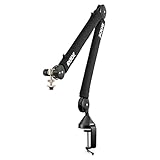
- FITS YOUR DESK AND MIC: clamps to desks up to 70mm thick and holds...
- SILENT ON AIR: internal spring damping moves the arm mid-recording without...
- FULL REACH, CLEAN LOOK: 360 degree rotation with full extension, integrated...
The Rode PSA1+ is a premium microphone boom arm favored by podcasters, broadcasters, and content creators for its durability and flexibility. It supports microphones weighing between 94g and 1.2kg, including heavy models like the Shure SM7B.
Its smooth, quiet internal springs enable effortless, noise-free adjustment, essential for professional audio quality. Built with robust steel and reinforced joints, the PSA1+ offers long-lasting stability and ample reach for precise mic positioning.
Integrated cable management channels keep cables tidy, while the sturdy desk clamp with rubber padding protects furniture and ensures secure mounting. Although it comes at a higher cost compared to cheap alternatives, many users are impressed by its professional-grade performance and reliability.
Replacement parts and accessories from the company are readily available, making maintenance and upgrades convenient. When considering other brands, the PSA1+ stands out as a solid investment for those who expect quality and durability in their mic stand.
Elgato Wave Mic Arm LP

- Premium Design: all-metal, anti-torsion construction.
- Low Profile: sits below the shoulder line for an unobstructed view.
- Cable Channels: magnetic covers hide cables and provide easy access.

The Elgato Wave Mic Arm LP is a sleek, low-profile microphone boom arm designed for streamers and content creators needing a space-saving, affordable solution without compromising quality. Its compact design keeps your workspace neat while allowing easy access and optimal mic positioning.
Despite its smaller size, the Wave Mic Arm LP offers smooth, quiet internal springs for effortless and precise microphone adjustment. This makes it ideal for keeping your mic out of the camera frame while maintaining control.
A key feature is its improved cable management system with strong magnetic cable covers that securely hold cables, preventing tangles and accidental disconnections during recording sessions or live streams. This clean cable routing enhances setup aesthetics and organization.
Supporting microphones weighing up to 1 kg (2.2 lbs), it’s compatible with many popular condenser and dynamic mics. Its sturdy construction ensures stability and durability during use.
The arm attaches firmly to your desk with a reliable desk clamp featuring rubber padding to protect furniture surfaces. This mounting system minimizes unwanted movement and vibrations, reducing unwanted noise for cleaner audio.
Fifine Boom Arm Mic Stand

- [Low Profile Style] Sleek and space-saving design ensures the boom arm mic...
- [Sturdy Metal Build] The microphone boom arm boasts a robust metal...
- [Tailored to Most Angle] Mic stand boom arm can be extended to 29 inches...
The Fifine Boom Arm Mic Stand offers an affordable yet reliable solution for podcasters, streamers, and content creators seeking a budget-friendly option without compromising essential features. Made from sturdy materials, it supports microphones weighing up to around 1 kg, suitable for many popular condenser and dynamic mics.
Its easy installation includes a robust desk clamp with rubber padding to protect surfaces. The flexible, adjustable arm allows precise mic positioning for optimal audio capture and comfort during recording sessions.
While lacking premium features like integrated cable management or ultra-quiet springs, the Fifine boom arm delivers solid performance for its price. It’s an excellent entry-level choice or a practical secondary setup.
Users appreciate its combination of affordability, durability, and functionality. For those who want to upgrade later, the Fifine boom arm serves as a reliable starting point before moving to more advanced boom arms with features like shock mounts and improved noise reduction.
Conclusion
Microphone boom arms transform your recording space by combining flexibility, stability, and convenience, allowing you to focus on creating great audio without the hassle of clutter or awkward positioning. Whether you’re streaming, podcasting, or recording in a studio, a well-crafted boom arm elevates your setup, giving you the freedom to adjust your mic effortlessly while maintaining a clean and professional environment. Investing in the right boom arm means less distraction and more confidence behind the microphone, helping you capture your best sound every time.
FAQ
What is a microphone boom arm?
A microphone boom arm is an adjustable stand designed to hold a microphone securely in place while allowing for hands-free operation and precise positioning. It typically attaches to a desk or table with a clamp or mounting hole, helping to save desk space and reduce unwanted noise caused by vibrations.
Why should I use a boom arm for my microphone?
Using a boom arm offers several benefits, including increased flexibility in positioning your microphone for optimal sound capture, freeing up valuable desk space, reducing unwanted noise and vibrations, and improving your overall recording experience and confidence.
Can a boom arm hold heavy microphones?
Yes, many boom arms are designed to support microphones weighing up to 2 kg or more. Heavy-duty boom arms with reinforced construction and stronger springs provide maximum stability for professional-grade microphones such as the Shure SM7B or Blue Yeti.
How do I attach my microphone to a boom arm?
Microphones connect to boom arms using standard threaded mounts, typically 3/8″ or 5/8″ sizes. You can screw the microphone or an adapter onto the boom arm securely. Adding a shock mount can further reduce noise from handling or movement.
How do I choose the best microphone boom arm for my setup?
Consider factors such as the weight of your microphone, the boom arm’s weight capacity, adjustability, build quality, noise reduction features, cable management, and your workspace size. Also, factor in your budget and intended recording applications.