What is a FM Tuner?
An FM tuner is a specialized electronic device designed to receive and decode frequency modulation (FM) radio signals broadcast by radio stations. Its primary function is to capture these signals and convert them into audio signals that can be amplified and played through speakers or headphones. Unlike general-purpose radios, FM tuners are often engineered with enhanced sensitivity and selectivity to provide superior reception quality and sound fidelity, making them a favored choice among audiophiles and radio enthusiasts.
FM tuners operate by locking onto a specific frequency within the FM band, typically ranging from 88 to 108 MHz in most countries. They use sophisticated circuitry to filter out unwanted signals and reduce noise and interference, ensuring that the audio output is as clear and natural as possible. Many high-end FM tuners incorporate features such as analog tuning dials for precise frequency selection, digital displays for ease of use, and advanced signal processing technologies like HD Radio to improve sound quality and offer additional channels.
The performance of an FM tuner is often judged by its ability to pick up distant stations, maintain stable reception, and reproduce sound with minimal distortion. This makes them particularly valuable for listeners who enjoy tuning into live broadcasts, including music, news, and special events, as well as those who appreciate the unique character and warmth that analog and tube tuners can bring to the listening experience.
Types of FM Tuners
FM tuners come in various types, each offering unique features and catering to different listener preferences. Understanding these types can help you choose the best FM tuner for your needs.
Analog FM Tuners
Analog FM tuners are the traditional type that use a manual tuning dial or knob to select stations. They offer a tactile and engaging experience, allowing users to slowly dial through frequencies and discover new stations. Many audiophiles appreciate analog tuners for their natural sound quality and the nostalgic feel they provide. Some analog tuners incorporate tube technology, which adds a warm, musical character to the audio output. Vintage analog tuners from brands like Kenwood, Sansui, and Scott are highly sought after for their build quality and sound performance.
Digital FM Tuners
Digital FM tuners use electronic tuning with digital displays, making it easier to select and memorize stations precisely. They often come with presets, remote controls, and additional features like signal strength meters. Digital tuners provide convenience and accuracy, reducing the guesswork involved in finding stations. Many modern digital tuners also support HD Radio technology, offering improved sound quality and additional digital subchannels.
HD Radio Tuners
HD Radio tuners are a subset of digital tuners that receive both traditional analog FM signals and digital HD Radio broadcasts. HD Radio technology enhances the listening experience by delivering higher fidelity sound and multiple program streams on the same frequency. This allows listeners to enjoy a broader range of content, including news, music, and talk shows, with clearer audio. Some HD Radio tuners also feature artist and song information displays, further enriching the user experience.
Internet Radio Tuners
While not traditional FM tuners, internet radio tuners combine FM reception with internet streaming capabilities. These devices provide access to thousands of internet radio stations worldwide, alongside llocal FM broadcasts. Internet radio tuners are ideal for listeners who want the convenience of streaming with the authenticity of FM radio. They often support Wi-Fi connectivity, app control, and integration with smart home systems.
Tube Tuners
Tube tuners utilize vacuum tube technology in their signal processing stages, producing a warm and natural sound that many audiophiles prefer. Although tube tuners may require more maintenance and are typically more expensive, their distinctive audio character makes them prized collectibles. They are often found in vintage models or specialized modern designs aiming to replicate classic sound quality.
Portable FM Tuners
Portable FM tuners are compact devices designed for on-the-go listening. They are commonly built into portable radios, car stereos, or personal audio players. While they may not offer the advanced features or sound quality of home tuners, portable FM tuners provide convenience and accessibility for casual listeners.
Key Features of FM Tuners
Sensitivity and Selectivity
FM tuners come equipped with a variety of features that enhance the listening experience and improve signal reception. One of the key features is sensitivity, which refers to the tuner’s ability to detect weak signals from distant stations. High sensitivity ensures that you can hear broadcasts that are far away or have low transmission power. Selectivity is another important feature, allowing the tuner to distinguish between closely spaced stations on the dial, reducing interference and providing clearer sound.
Presets and Tuning Options
Many FM tuners include presets and memory functions, enabling you to save your favorite stations for quick access. This is especially useful for users who like to switch between multiple FM stations without manually tuning each time. Some tuners offer both analog and digital tuning options, with digital displays providing precise frequency readouts and easier station navigation.
Advanced Technologies and Output Options
Advanced models may incorporate HD Radio technology, which delivers digital-quality sound and additional subchannels alongside traditional FM broadcasts. This feature expands the variety of content available and improves audio clarity. Other enhancements can include stereo and mono mode selection, signal strength meters, and remote control capabilities for convenient operation from a distance.
The output options of FM tuners vary, with many providing line-level outputs to connect directly to amplifiers or receivers. Some tuners also feature headphone jacks for private listening. For audiophiles, the quality of internal components such as the tuner’s front-end circuitry, demodulator, and audio output stage plays a significant role in achieving natural sound reproduction and minimizing distortion.
Top FM Tuners
Denon RCD-N12

- COMPACT STEREO MUSIC PLAYER- The Denon RCD-N12 Mini Stereo System brings...
- ENHANCED HOME AUDIO EXPERIENCE - Connect your audio system to a TV via HDMI...
- HEOS MUSIC STREAMING - Enjoy the benefits of multi-room HEOS wireless...

The Denon RCD-N12 is a versatile FM tuner and network player that combines traditional FM radio reception with internet streaming capabilities. This hybrid device allows users to enjoy both local FM stations and thousands of internet radio stations from around the world, making it an excellent choice for those who want the best of both worlds. The unit features digital tuning with presets, a clear display, and support for HD Radio broadcasts, ensuring high-quality sound and easy navigation.
Equipped with Wi-Fi connectivity, the Denon RCD-N12 enables seamless access to popular internet radio platforms and streaming services, providing a vast collection of music genres, talk shows, and live broadcasts. Its compact design fits well into most audio setups, while the intuitive interface makes it user-friendly for both beginners and experienced listeners. The device also offers multiple output options, including line-level and headphone outputs, allowing flexible integration with various amplifiers and speaker systems.
With its combination of reliable FM reception and expansive internet radio access, the Denon RCD-N12 appeals to audiophiles and casual listeners alike as one of best fm tuners. Whether you want to tune in to your favorite local NPR station, explore college radio stations from different regions, or discover new music from all the stations worldwide, this tuner provides a convenient and high-quality listening experience. Its natural sound reproduction and robust signal processing ensure clear audio, making it a valuable addition to any home audio collection. This unit is designed with audiophiles in mind, offering upgraded components and a build quality that ensures years of reliable performance. Many audiophiles have owned these tuners for several years, attesting to their durability and consistent performance.
Sangean HDT-20
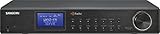
- HD Digital Radio/ FM-Stereo/AM Component Tuner with Analog or Digital...
- 20 Memory Presets (10 AM, 10 FM) 10 Key Button for AM / FM Frequency Direct...
- In/Out Jacks: AC In, Analog Audio Line Output, Optical Digital SPDIF or...
The Sangean HDT-20 is a highly regarded FM tuner that combines traditional analog tuning with modern digital features. It offers excellent sensitivity and selectivity, allowing users to receive a wide range of FM stations with clear and natural sound quality. This model is appreciated for its robust build and user-friendly interface, making it suitable for both audiophiles and casual listeners.
Equipped with digital frequency readout and presets, the HDT-20 simplifies station selection while preserving the tactile experience of analog tuning. It supports stereo and mono reception modes, enabling optimal sound depending on the broadcast signal strength. Additionally, the tuner includes a headphone jack for private listening and line-level outputs for seamless integration with amplifiers and home audio systems.
One of the standout features of the Sangean HDT-20 is its ability to handle multipath interference effectively, which is common in urban environments with many reflective surfaces. This ensures stable reception and reduces audio distortion. The tuner also boasts a low noise floor, contributing to its reputation for delivering clear and natural sound that audiophiles.
Rolls HRS84 FM Digital Tuner

- Rolls HRS84 FM Digital Tuner with XLR Outputs - Rolls 90 Day Parts & Labor...
- Output Level control
- XLR and RCA Outputs
The Rolls HRS84 FM Digital Tuner is a compact and versatile device designed for both casual listeners and audiophiles who seek clear and reliable FM reception. It features digital tuning with an easy-to-read display, allowing users to quickly find and lock onto their favorite FM stations with precision. The tuner supports presets, enabling you to save multiple stations for convenient access, which is especially useful for those who enjoy switching between different formats or genres throughout the day.
One of the key strengths of the Rolls HRS84 is its robust signal processing capabilities, which help reduce interference and improve sound clarity even in challenging reception environments. This makes it a good tuner choice for urban areas where signal congestion can be an issue. Additionally, the unit includes a headphone output for private listening and line-level outputs to connect seamlessly with a range of audio systems, from simple setups to more advanced amplifiers.
The compact design of the Rolls HRS84 allows it to fit easily into various audio collections without taking up much space. Its straightforward interface and reliable performance have earned it positive reviews from users who appreciate a balance of convenience, quality, and affordability. Whether you are tuning into a local NPR station for news and talk shows or exploring college radio stations for diverse music programming, the Rolls HRS84 provides an accessible entry point into the world of FM radio listening.
Beyond its core features, the Rolls HRS84 supports both mono and stereo reception, ensuring optimal audio quality depending on the broadcast signal. Its durable construction and simple plug-and-play setup make it an excellent option for those new to FM tuners as well as experienced listeners looking for a dependable secondary unit. Overall, the Rolls HRS84 FM Digital Tuner offers an awesome combination of performance and ease of use, making it a valuable addition to any audio system focused on enjoying the rich variety of FM stations available today.
Analog Tuners vs. Digital and Internet Radio
While internet radio stations provide unmatched convenience and access to global content, many listeners still prefer the authentic experience of tuning into FM radio. Some may wonder if a streamer can pick up local FM stations as effectively as a traditional tuner. Analog tuners offer a tactile, engaging way to discover new music and news broadcasts, with the added benefit of no internet connection required. Many vintage tuners from the 1970s, such as those from Kenwood and Sansui, are considered top-notch in performance, making them a favorite among enthusiasts.
HD Radio technology enhances traditional FM stations by providing digital-quality sound and additional channels, bridging the gap between analog and internet radio. A connected audio system can seamlessly integrate both traditional tuners and modern streamers, allowing for a versatile listening experience. However, the charm of analog tuners lies in their natural sound and the joy of manually dialing through stations, which many audiophiles find superior to streaming.
Conclusion
FM tuners continue to captivate listeners with their ability to deliver rich, immersive sound and connect us to the vibrant world of live radio broadcasts. Whether tuning into distant signals or enjoying the warm tones of analog reception, the experience offers a unique blend of nostalgia and high-fidelity audio that digital streams often can’t replicate. With the right setup and a passion for quality sound, every broadcast becomes an opportunity to discover something new and enjoy music and stories in their purest form.
FAQ
What is the difference between an FM tuner and a receiver?
An FM tuner is a device dedicated solely to receiving and decoding FM radio signals, whereas a receiver typically combines an FM tuner with an amplifier and other audio processing components. This means a receiver can directly drive speakers, while a tuner usually requires connection to an external amplifier or receiver.
Can I use a vintage FM tuner with modern audio equipment?
Yes, many vintage FM tuners can be connected to modern amplifiers or receivers. However, some older models may require refurbishing or repairs to perform at their best. Additionally, ensure the output connections are compatible, or use appropriate adapters if needed.
Do I need a special antenna for FM reception?
A quality antenna is essential for optimal FM tuner performance. While indoor dipole antennas can work if you are close to transmitters, a rooftop antenna is generally recommended for the clearest reception, especially for distant stations. Proper grounding and placement of the antenna also improve signal strength and reduce interference.
How do analog tuners compare to digital and internet radio?
Analog tuners offer a tactile experience and natural sound quality that many audiophiles appreciate, especially for live broadcasts and certain music genres. Digital and internet radio provide access to a vast array of global stations and often higher fidelity streams, but may lack the charm and immediacy of traditional FM listening.
Are tube tuners better than solid-state tuners?
Tube tuners are prized for their warm, musical sound and natural tonal qualities, which some listeners prefer over the cleaner, more precise sound of solid-state tuners. However, tube tuners may require more maintenance and can be more expensive.
Can I listen to internet radio stations on an FM tuner?
Traditional FM tuners do not receive internet radio stations. However, some modern devices combine FM tuners with internet radio capabilities, allowing you to seamlessly switch between local FM stations and internet streams from around the world.