
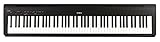

Which digital piano gives you the best foundation for enjoyable, consistent practice? Start with 88 fully weighted keys, an expressive piano sound, and pedal support that matches your goals. Extra voices and wireless features can be useful, but comfortable playing and a stable setup matter more. Your budget also needs room for a suitable stand, bench, and headphones—not just the instrument.
Top Digital Pianos under $1000
Yamaha DGX-670B 88-Key Weighted Digital Piano
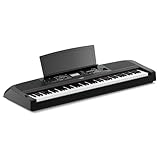
- Acoustic Piano Touch: Weighted keyboard action is heavier in the low keys...
- Grand Piano Sound: CFX Stereo Sampling faithfully reproduces the sound of...
- Variety of Instrument Sounds: Features 630 instrument Voices, including...

The Yamaha DGX-670 is designed for players who want the keyboard to function as both a piano and a backing ensemble. It suits home musicians, singers, and songwriters who enjoy building complete performances rather than practicing exclusively with a solo-piano sound.
Its 88-key Graded Hammer Standard keyboard provides graded resistance across the range. Yamaha’s CFX piano sampling and Virtual Resonance Modeling contribute to the acoustic-piano presentation, while the broader voice library supports arrangements that need strings, organs, guitars, or other instrumental colors.
The defining feature is automatic accompaniment. Styles respond to your playing and supply coordinated backing parts, allowing you to explore harmony, timing, and song structure without programming every instrument separately. Adaptive Style and related arrangement functions offer more musical interaction than a simple fixed drum loop.
A color display helps with selecting sounds, navigating settings, and following supported score information. The microphone input adds another useful dimension for singers who want vocals and keyboard accompaniment through one instrument.
Connectivity also supports home music-making. Bluetooth audio handles playback from a compatible device, while the USB audio interface can send the instrument’s sound to a compatible computer. That is different from USB-MIDI, which transmits performance instructions rather than recorded sound.
The main compromise is physical size. At approximately 47.3 pounds, the DGX-670 is substantially heavier than the other portable models here. It is movable, but less appealing for frequent lifting, stairs, or quick rehearsal changes.
Its arrangement features also reward time spent learning the controls. A player who only wants to switch on and practice scales may prefer a simpler instrument.
Verdict: An appealing digital piano with auto-accompaniment for home performers and creative players, provided its current instrument price qualifies and its larger footprint suits the room.
Casio Privia PX-S3100 88-Key Weighted Digital Piano

- AWARD-WINNING PRIVIA DESIGN – Built on the acclaimed PX-S platform, the...
- REALISTIC FEEL WITH DUET MODE – 88 weighted keys with textured...
- CONCERT-QUALITY SOUND – Features a stunning German grand piano with...
The Casio PX-S3100 suits musicians who want a weighted digital piano that also supports songwriting, layered arrangements, and playing beyond solo piano. It occupies the feature-rich end of this selection, making the strongest case when its additional capabilities will receive regular use.
Its 88-key Smart Scaled Hammer Action Keyboard combines graded weighting with a remarkably shallow chassis. At approximately 24.7 pounds without batteries, it is manageable for occasional transport. Battery operation also offers flexibility where convenient power outlets are unavailable, although a stand, pedal, and carrying case remain separate practical considerations.
The substantial sound library is more useful than its size alone suggests. With 700 tones and 200 rhythms, the PX-S3100 can provide electric pianos, strings, bass parts, and accompaniment for different musical styles. Physical control knobs and a pitch-bend wheel make it easier to shape sounds during performance than relying entirely on button combinations.
For home use, the supplied WU-BT10 wireless adapter supports Bluetooth audio and MIDI. Audio lets a compatible device send backing tracks through the piano’s speakers; MIDI supports compatible software connections. Dedicated line outputs are useful when connecting to external amplification.
The principal compromise is keyboard geometry. A slim instrument does not automatically deliver the same leverage as a deeper action, especially when playing toward the backs of the keys. Players working on demanding classical repertoire should audition that area carefully rather than choosing on portability alone.
Piano-only buyers should also consider whether they want to navigate accompaniment and sound-editing options. These features add versatility, not necessarily a better basic practice experience.
Verdict: A compelling portable digital piano with accompaniment features for musicians who will actively use its rhythms, sound selection, and performance controls—not merely its default grand-piano voice.
Kawai ES120 88-key Digital Piano with Speakers

- 88-key Digital Piano with Responsive Hammer Compact Action
- Spatial Headphone Sound
- Bluetooth Audio/MIDI
The Kawai ES120 is aimed at players who want an expressive piano-playing experience without the complexity of an arranger keyboard. Its appeal is particularly clear for adult learners, returning pianists, and students whose practice centers on acoustic-piano repertoire.
Kawai’s Responsive Hammer Compact action uses graded weighting, with greater resistance in the bass than the treble. The practical question is whether that resistance lets you control quiet notes, shape phrases, and balance melody against accompaniment comfortably. Those qualities matter more than a claim that any one action is universally realistic.
The Harmonic Imaging sound system includes samples of Kawai concert grand pianos. Rather than buying for the total number of voices, listen to how the piano tone changes between soft and forceful playing. A useful practice instrument should make those changes easy to hear without turning every stronger passage into an abrupt jump in brightness.
At approximately 26.5 pounds, the ES120 remains reasonably portable. Bluetooth MIDI and Bluetooth audio support compatible app connections and backing-track playback, while dedicated line outputs make external amplification straightforward.
Compared with the Roland FP-30X, the ES120 represents a different combination of action and piano voicing rather than an automatic upgrade. Try both with the same musical passages, especially quiet chords and repeated notes. Compared with the Yamaha P-225, it also requires a little more chassis depth.
The main ownership consideration is the complete setup. The optional matching stand and three-pedal assembly create a more permanent home installation, but they increase both cost and bulk.
Verdict: A strong piano-focused choice for buyers who value expressive practice and uncomplicated operation more than extensive accompaniment features. Choose it because its touch and tone suit you, not because the brand alone guarantees the right fit.
Roland FP-30X 88-Note Digital Piano

- Affordable Superior Performance: Balancing affordability with superior...
- Enhanced Portable Design: This slim and stylish portable piano builds on...
- SuperNATURAL Piano Sound Engine: Rich expression from pianissimo to...
The Roland FP-30X deserves attention from shoppers who prioritize keyboard response and control. It combines a piano-focused layout with connections useful for home practice, software instruments, and occasional amplified playing.
Its PHA-4 Standard keyboard includes graded weighting, escapement simulation, and textured key surfaces. These are relevant design details, but the purchase decision should come down to controllability: can you voice a quiet melody, repeat notes cleanly, and play for a sustained period without unnecessary tension?
The closest comparison here is the Kawai ES120. Both target serious piano practice, but their actions and piano tones differ. Neither specification sheet can tell you which will feel more natural. Testing the same slow passage, repeated-note figure, and chord progression on both is more revealing than comparing sensor counts.
Roland’s SuperNATURAL Piano sound engine supplies the main acoustic-piano experience. Built-in speakers make the instrument self-contained for practice, while dedicated stereo outputs allow connection to powered speakers or a sound system without using a headphone socket.
Bluetooth audio supports backing-track playback, and Bluetooth MIDI connects to compatible applications. USB audio and MIDI expand its usefulness with a computer, particularly for players who want to record the onboard sound or control software instruments.
At approximately 32.6 pounds, however, the FP-30X is heavier than the compact Yamaha and Casio models in this selection. Its portability is better described as occasional transport than effortless daily carrying.
The controls are another compromise. Some functions require button-and-key combinations or an app rather than direct access through a large screen. Also budget for an appropriate pedal if nuanced sustain control is important.
Verdict: An action-focused finalist for buyers seeking a weighted digital piano for sustained practice. Compare its touch directly with the ES120 before letting connectivity or brand preference decide.
Yamaha P225 88-Key Digital Piano with Weighted Keys

- Acoustic Piano Touch: Weighted keyboard action is heavier in the low keys...
- Grand Piano Sound: Experience the sound of Yamaha's flagship CFX Full...
- Variety of Instrument Sounds: Features 24 instrument Voices, including...
The Yamaha P-225 suits buyers who want a relatively compact, straightforward digital piano for home practice. It is particularly relevant where the instrument needs to share a bedroom, living room, or multipurpose workspace.
Its chassis measures approximately 52.3 inches wide and 10.7 inches deep, with a height of about 5.1 inches before accounting for the music rest. At approximately 25.4 pounds, it is also practical to move between rooms or transport occasionally.
Those dimensions need context. A shallow keyboard does not necessarily produce the smallest complete setup: the stand may extend beyond the chassis, rear connections require clearance, and the bench needs space for comfortable posture. Measure the assembled playing position rather than the instrument alone.
Yamaha’s Graded Hammer Compact action reduces the keyboard mechanism’s footprint while retaining graded weighting. Whether that action suits you depends on your playing style and hand position. Include chords played farther back between the black keys when auditioning it.
The CFX grand-piano voice and VRM Lite resonance processing support a piano-focused experience. Headphone practice is helped by Yamaha’s Stereophonic Optimizer, although personal headphone choice still has a substantial effect on the result.
Bluetooth audio allows playback from a compatible device, and USB supports audio and MIDI communication with compatible equipment. Smart Pianist integration offers an alternative way to access settings and supported functions.
The main compromise is that compactness takes priority over extensive onboard controls and arranger features. Against the Kawai ES120, the decision is principally about action preference, tone, and placement—not which model has the longer feature list.
Verdict: A sensible compact digital piano for home practice when its touch feels comfortable and the complete stand-and-bench arrangement genuinely fits your available space.
Choosing the Right Digital Piano Under $1000
Weighted Key Action for Piano Practice
Fully weighted hammer action uses a mechanism intended to approximate aspects of acoustic-piano resistance. Semi-weighted keyboards generally rely more on springs and feel different, even when they offer touch sensitivity.
For long-term piano study, prioritize these three checks:
1. Quiet control: Play soft notes repeatedly and listen for consistency.
2. Comfort: Check relaxed playing at both the fronts and backs of the keys.
3. Response: Try repeated notes, scales, and contrasting dynamics.
Graded hammer action usually makes lower notes heavier than higher notes. Sensor count, escapement simulation, and textured surfaces describe features—not a universal ranking of playing quality.
Piano Sound Through Headphones
Use the same wired headphones when comparing finalists. Keep volume levels similar and start with the default piano sound, neutral equalization, and comparable reverb settings.
Listen to single-note decay, quiet chords, bass clarity, and transitions from soft to loud playing. Then add sustain. The best digital pianos with weighted keys should make musical control audible, not simply produce an impressive loud chord.
Speaker sound deserves a separate audition because room placement changes what you hear.
Portable Versus Cabinet Design
Choose a portable instrument if you need to move it, store it, or take it elsewhere. Choose a cabinet-style installation if a permanent practice position, integrated pedals, and furniture-like appearance matter more.
Portability includes more than instrument weight. Add the stand, pedal, case, cables, and carrying distance. Conversely, a portable keyboard on a sturdy matching stand can work very well as a permanent home piano.
Sustain Pedals and Half-Pedaling
Half-pedaling allows intermediate sustain behavior rather than only fully on or fully off. It helps players control resonance and clear overlapping harmonies more gradually.
Check both the piano’s support and the exact compatible pedal. An included footswitch may provide basic sustain without supporting half-damper operation. Matching three-pedal assemblies may also require a specific furniture stand, so compatibility affects both cost and format.
Bluetooth MIDI, Bluetooth Audio, and USB
Bluetooth MIDI carries performance information for compatible apps or software instruments. Bluetooth audio usually lets a phone or tablet play backing tracks through the piano; it does not automatically support wireless headphones.
USB-MIDI carries notes and controller data. USB audio carries sound, but only when explicitly supported. A USB socket alone proves neither capability.
For recording, confirm the supported computer or mobile-device connection, cable requirements, and whether you want editable MIDI or finished audio.
Complete Setup Costs Under $1000
A qualifying instrument is a new piano priced below the ceiling before sales tax. Shipping and essential accessories are separate. Do not rely on an expired promotion or assume a pictured bench is included.
Use this checklist for each finalist:
- Instrument: Confirm the exact model, finish, power supply, and music rest.
- Stable stand: Choose suitable height, leg clearance, and weight capacity.
- Adjustable bench: Allow comfortable posture for the intended player.
- Sustain pedal: Check what is supplied and whether an upgrade is needed.
- Headphones: Include any required plug adapter.
- Delivery: Check shipping, assembly, and return freight charges.
A Lower-Cost Practice Setup
Choosing a simpler, lower-cost instrument leaves more room for a rigid stand, adjustable bench, wired headphones, and a suitable pedal. This is often the better allocation for beginners than buying a premium instrument and practicing on an unstable stand or unsuitable chair.
A Higher-Priced Instrument Setup
A feature-rich instrument near the ceiling leaves little room for essentials. Matching furniture stands and three-pedal assemblies can push the complete purchase beyond budget even when the piano itself qualifies.
Compare the final cart totals—not just headline instrument prices. If the setup exceeds your limit, reduce nonessential features before compromising on safe support or comfortable seating.
FAQ
Is a digital piano in this budget suitable for advanced players?
Yes, it can provide useful home practice, quiet rehearsal, and MIDI control for advanced players. Suitability depends on the repertoire and the instrument’s action, pedaling, and dynamic response. Demanding repetition, subtle pedal work, or performance preparation may still require regular access to a suitable acoustic piano.
Do beginners need 88 fully weighted keys?
An 88-key, fully weighted keyboard is the preferred long-term setup for learning piano because it supports the standard range and more familiar resistance. A smaller or unweighted keyboard can be a temporary starting point when money or space is limited, but it may require an earlier replacement.
Can a complete piano setup fit within the same budget?
Yes, provided the instrument leaves enough room for a stable stand, adjustable bench, and suitable pedal. Headphones and delivery may also affect the total. Check package contents carefully: a music rest is not a keyboard stand, and an included sustain switch may not support half-pedaling.
Which matters more: realistic keys or additional sounds?
For piano study, controllable weighted keys usually matter more than a large sound library. The main piano tone and pedal response are also important. Additional voices become valuable when they support a specific activity, such as songwriting, arranging, or performing music that needs sounds beyond acoustic piano.
Conclusion
A satisfying digital piano purchase balances touch, sound, pedaling, and everyday practicality. Narrow your search to two finalists based on your main requirement—expressive piano practice, compact placement, or creative accompaniment—then compare their complete setups. Before ordering, verify the current instrument price, included accessories, warranty, and return policy so the piano fits both your playing goals and your home.